Redistricting Battles: How Maps Shape American Political Power
Explore the intense national debates over redistricting, the legal battles over racial gerrymandering, and the impact on electoral outcomes and minority representation.
Additional reporting by Liam Walker, Oliver Brown
Redistricting—the redrawing of electoral district boundaries—has surged to the forefront of America’s political and legal battlegrounds. It shapes who holds influence in Congress and state legislatures by determining which voters are grouped together, often deciding the fate of elections before voters cast ballots. The fraught process intertwines constitutional principles, racial justice concerns, and partisan strategy, reflecting ongoing tension between states’ authority to define districts and the federal mandate to protect minority voting rights.
Recent years have witnessed some of the most consequential and controversial redistricting disputes in U.S. history. These conflicts are not merely technical mapmaking exercises but battles with profound implications for representation, policy, and the delicate balance of power between political parties. Examining these developments provides crucial insight into how redistricting continuously reshapes the nation’s political landscape.
The Legal Framework and Key Supreme Court Decisions
"Dismissing the importance of race in this context will cause irreparable harm to Black communities’ political power"
Central to redistricting debates is the Voting Rights Act of 1965 (VRA), a federal law designed to prevent racial discrimination in voting, including drawing district lines that dilute minority voting strength. Courts regularly evaluate whether proposed maps violate Section 2 of the VRA by unfairly disadvantaging racial minority groups. However, determining when race predominates in redistricting or when districts cross constitutional lines is complex and often controversial. The Supreme Court’s decisions in recent years have sought to strike a balance between enforcing the VRA’s protections and limiting unconstitutional racial classifications.
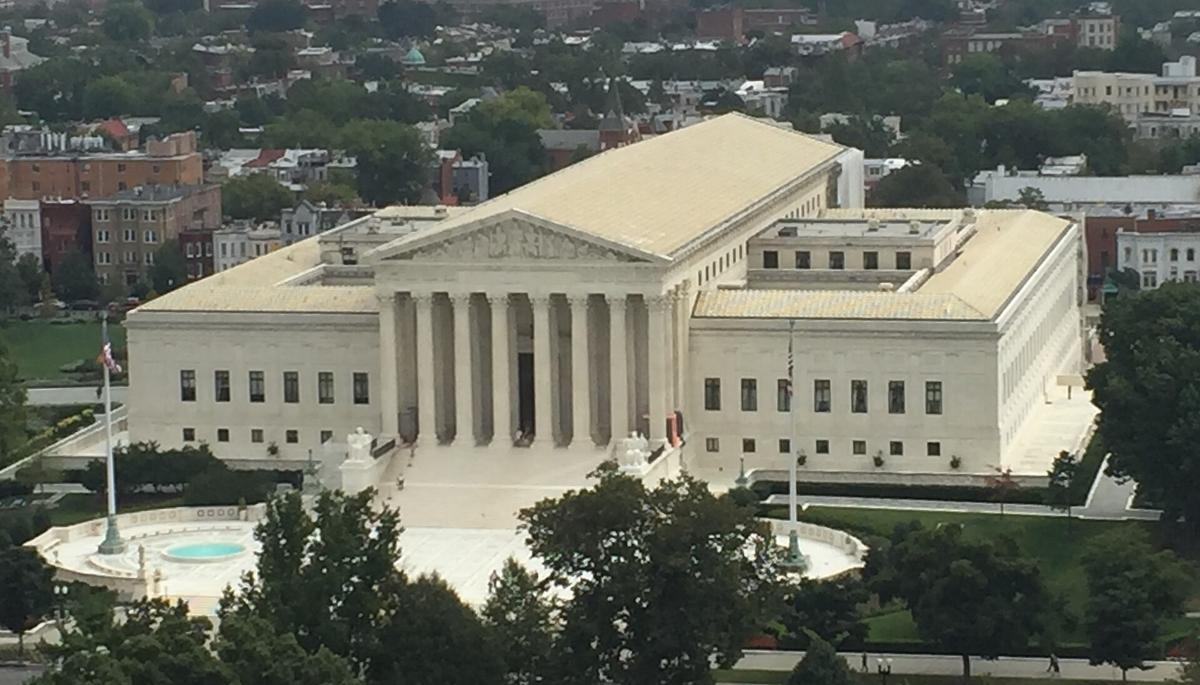
In June 2023, a landmark U.S. Supreme Court ruling determined Alabama's congressional map likely breached the VRA by diluting Black voters’ influence. The justices ordered the creation of a second majority-Black district, as the state had only provided one, despite Black residents comprising approximately 27% of Alabama’s population. This decision underscored the Court’s continued scrutiny over race-based redistricting and affirmed protections intended to ensure minority voters receive fair representation. The ruling emphasized that majority-minority districts remain a vital tool for safeguarding minority voices under federal law while cautioning against reliance on race as a predominant factor without compelling justification.
Nonetheless, the practical implementation of the ruling has proved contentious. Despite the Supreme Court’s directive, Alabama legislators pushed back, approving a new congressional map in July 2023 that maintained only one majority-Black district. This led to renewed legal challenges and intensified scrutiny over whether states continue tactics that undermine minority voting power. In May 2026, the Supreme Court allowed Alabama to proceed with its 2023 map for upcoming midterms, a contentious move potentially costing minority voters an additional seat of influence and possibly shifting a House seat from Democratic to Republican control. Justice Sonia Sotomayor dissented strongly, warning that the decision threatened minority voting rights in the name of state autonomy, highlighting an ongoing judicial divide over balancing federal protections and state discretion.
Alongside Alabama, other states have witnessed pivotal rulings shaping the redistricting landscape. For instance, in November 2025, federal panels upheld Republican-drawn districts in North Carolina, rejecting claims of racial gerrymandering, signaling judicial deference to political considerations when race is not the clear predominant factor. Similarly, the Supreme Court heard a case about a South Carolina congressional district allegedly configured to favor Republicans through racial gerrymandering—a case highlighting the ongoing tug-of-war between partisan interests and minority protections. These developments illustrate the Court’s increasingly nuanced approach to identifying unconstitutional racial considerations while also scrutinizing partisan motives.
These cases illustrate the Supreme Court’s evolving role in defining the boundaries of lawful redistricting, especially regarding how race factors into mapping decisions and the permissible limits of partisan influence under the Constitution. They reflect a heightened judicial skepticism of race as a primary determinant in districting absent strong justification, emphasizing the importance of traditional districting criteria and raising questions about the limits of federal oversight.
Partisan Dynamics and Their Political Consequences
Redistricting has increasingly become a tool for political gain, commonly referred to as gerrymandering. Both major parties have engaged in efforts to draw district lines favoring their electoral prospects, but recent trends reveal stark strategic divides, especially regarding race-based districting motives and methods. The use of data analytics, voter databases, and sophisticated mapping software has augmented the ability of parties to engineer districts that lock in advantages, sometimes at odds with principles of fair representation.
Republicans argue for race-neutral maps that rely on traditional districting criteria, such as geographic contiguity and respect for political subdivisions, pushing back against what they describe as a misuse of racial considerations to create artificial majority-minority seats. They emphasize upholding the rule of law and the original purpose of the Constitution’s equal protection principles, arguing that overemphasis on race risks fragmenting communities and undermining political fairness. GOP leaders contend that race-based districting often fuels political polarization and dilutes the broader citizenry’s influence by segmenting voters primarily along racial lines.
Conversely, Democrats often advocate for creating districts where minority populations can elect candidates of their choice, citing the VRA and historical disenfranchisement. Yet, recent polling suggests some Democrats acknowledge challenges and limits, indicating a willingness to revisit or reshape majority-Black districts to balance legal constraints and electoral viability. It surfaces an internal reassessment amid legal setbacks and broader public scrutiny. This internal reckoning comes amid criticism that overreliance on racial districting could provoke counterproductive legal setbacks or accusations of reverse discrimination, illustrating the tension between advancing minority representation and avoiding judicial invalidation.
The partisan struggle over maps directly impacts state legislatures and Congress, influencing legislative agendas and national policy directions. For example, Florida's governor recently signed a new congressional map favoring Republicans, solidifying GOP advantages ahead of midterm elections. Meanwhile, South Carolina's Senate rejected a redistricting proposal seen as overly partisan, exposing fractures within and between parties about how aggressively to pursue map advantages. These conflicts reveal that redistricting battles not only pit parties against each other but also expose intra-party divisions over political strategy and principles of fair play.
Redistricting's power to predetermine electoral outcomes raises essential questions about democratic legitimacy. Critics on the right argue that protections designed for minority voters sometimes morph into political tools used by entrenched interests, diluting grassroots influence and undermining fair competition. They caution that unchecked partisan gerrymandering, even under the banner of minority protection, threatens the foundational democratic value that elections reflect genuine voter preferences and competition.
The Role of State Courts and Legislatures in Shaping Maps
An increasing number of redistricting disputes unfold at the state level, where legislatures, governors, and courts wrestle with drawing district maps against a backdrop of ever-evolving legal precedents. The latitude given to states and their political branches has led to dramatic variations in how maps are created and challenged nationwide, reflecting the decentralized nature of American federalism.
In Virginia, for instance, lengthy battles over redistricting have sparked dramatic political tension. The state's Supreme Court struck down a Democratic-drawn redistricting plan, emphasizing constitutional violations and procedural concerns. This decision underscored the judiciary’s vital role in maintaining checks and balances amid politically charged mapmaking. Subsequent legislative sessions have been marked by Democratic calls for reforms including controversial measures such as court-packing proposals to shift the judiciary's ideological balance in their favor—a move criticized as undermining institutional integrity by conservatives concerned about the politicization of courts and erosion of judicial independence.
Similar tensions have played out in Indiana, where GOP leadership has faced internal disputes leading to the rejection of redistricting plans. These divisions highlight the broader challenges parties face when attempting to unify behind maps that balance political advantage with legal scrutiny, particularly when factional dynamics complicate consensus. The state's legislative push and gubernatorial involvement reflect how local political culture and control exert outsized influence on district design.
State courts have become pivotal arbiters, often stepping in when legislatures deadlock or pass maps challenged as unconstitutional. Their judgments shape the implementation timeline for states’ election processes and determine the immediate political fortunes of candidates and incumbents alike. Court rulings influence not only district boundaries but voter confidence and campaign strategies, signaling the judiciary’s growing political significance in this domain.
For voters, this judicial activism often means uncertainty about district lines well into election cycles, complicating voter outreach and engagement. However, conservative advocates argue this judicial involvement enforces necessary checks on partisan overreach and protects the principle of equal representation under the law. While some decry perceived judicial activism, many agree that courts serve as crucial bulwarks against abuses of power and safeguards for constitutional rights.
Implications for Minority Representation and Voter Rights
At the heart of redistricting controversy lies the fundamental issue of minority representation. The VRA demands vigilance against dilution of minority voting strength, but how this translates into district maps remains highly contested. The legal tug-of-war reflects broader debates about race, equity, and the proper role of government in ensuring fair political participation.
The Supreme Court’s narrowing of race-based considerations in recent rulings complicates efforts to protect minority voters under the law. States can now avoid creating majority-minority districts, emphasizing race-neutral criteria instead, which critics warn risks reducing minorities’ ability to elect preferred candidates. This shift potentially marks a turning point in minority voting rights protections—a development that could reshape political representation for decades.
Alabama typifies this dilemma. After Court orders, the state resisted drawing a second majority-Black district, and the Supreme Court ultimately permitted the GOP-favored map, a decision seen as undermining the VRA’s intent. Justice Sotomayor’s dissent insisted that dismissing the importance of race in this context ‘will cause irreparable harm to Black communities’ political power.’ The case highlights the tension between enforcing federal civil rights and respecting states' prerogatives in map drawing.
Across the country, minority voters and their advocates struggle to navigate these limitations. While some progress has been made since the Voting Rights Act’s passage, recent developments suggest renewed vigilance is essential to prevent retrogression. Activists stress that ongoing demographic shifts and political realignments make preserving minority electoral influence more critical than ever.
At the same time, opponents of race-based mapmaking caution that overemphasis on racial identity in districting can lead to unintended consequences, including political polarization and the entrenchment of single-race districts that may marginalize other minority voices. They argue that districting should foster broad coalitions and issue-based representation rather than rigid racial enclaves.
Balancing minority protections with constitutional mandates for race neutrality remains a deeply complex and unresolved challenge. This ongoing struggle both shapes and reflects larger debates about America’s commitment to equal opportunity and fair political representation. As demographic and political landscapes evolve, so too will the demand for equitable yet constitutionally sound districting solutions.
Future Outlook: What Lies Ahead for Redistricting Battles
Looking forward, redistricting will continue to be a fiercely contested arena with major election consequences. With each census and electoral cycle, states will face renewed pressures to redraw maps that conform to shifting demographics, legal standards, and political priorities. The increasing national polarization and judicial scrutiny suggest conflicts over fair mapmaking will persist and intensify.
Potential legislative reforms, such as independent redistricting commissions adopted by some states, promise to reduce partisan manipulation, but these initiatives face resistance in others where entrenched political interests seek to maintain control. While commissions have been celebrated as a ‘gold-standard’ for nonpartisan mapmaking, their effectiveness depends on political will and voter engagement.
The Supreme Court’s recent rulings have set important but unsettled legal boundaries that lower courts and state governments must interpret. Future challenges will likely test the limits of race-neutral districting and explore new definitions of unconstitutional gerrymandering—both racial and partisan. Legal battles over these issues will continue to shape the parameters within which states operate.
Meanwhile, the persistence of partisan disputes, shifting political coalitions, and demographic changes across America means that redistricting controversies will remain central to debates over who governs, who votes, and how democracy functions at its most fundamental level. The stakes are nothing less than the representative quality and legitimacy of American elections.
Conservative observers argue that applying constitutional principles rigorously and resisting judicial activism that expands race-based remedies are critical to preserving electoral fairness and political stability. They stress that legal clarity and respect for states’ rights are essential to preventing an endless cycle of litigation and political impasse.
Understanding these multifaceted battles is essential to grasping the broader dynamics influencing America’s political future. Redistricting is not just about drawing lines on a map—it is about the very rules that govern how Americans choose their leaders and influence policy.
For deeper insights, see the state’s Supreme Court rulings on redistricting, the Supreme Court allowing Alabama’s map, and Florida’s recent judicial affirmation of new maps. The South Carolina Senate’s latest rejection of redistricting also highlights ongoing legislative tensions.
Frequently asked questions
What is redistricting and why is it important?
Redistricting is the process of redrawing boundaries for electoral districts, occurring every 10 years after the census. It shapes political representation by determining which voters are grouped together and can influence which party has electoral advantages.
How does the Voting Rights Act affect redistricting?
The Voting Rights Act requires that district maps do not dilute the voting strength of racial minorities. It mandates protections so minority communities can elect candidates of their choice, but its application to each redistricting plan has been the subject of extensive legal debate.
What is racial gerrymandering?
Racial gerrymandering refers to drawing district lines predominantly based on race to either dilute or concentrate minority voters for political gain. Courts scrutinize when race is the primary factor in district boundaries, which can violate constitutional equal protection guarantees.
How have recent Supreme Court rulings impacted redistricting?
Recent rulings have narrowed the scope for race-based districting, emphasizing race-neutral criteria and limiting districts explicitly drawn to favor minority voters. These decisions pose new challenges for minority representation efforts and reshape the legal boundaries for state mapmakers.
Why are partisan disputes central to redistricting battles?
Because how districts are drawn can predetermine election outcomes, parties aggressively seek maps favoring their candidates. This has led to accusations of gerrymandering, internal divisions within parties, and legislative or judicial deadlocks around adopting new maps.
What role do state courts play in redistricting?
State courts often evaluate legal challenges to district maps, resolving disputes about constitutionality and compliance with state laws. They have become key players when legislatures fail to agree or pass contested plans, impacting election preparation timelines.
Can independent commissions solve redistricting controversies?
Independent redistricting commissions aim to create fair maps free from partisan bias. While they have been adopted in some states and praised as 'gold-standard,' they face political resistance in others and are not a universal remedy.
How does redistricting affect minority voters’ political power?
Redistricting that respects minority populations can enhance their ability to elect preferred candidates. However, strict limits on race-based districting or maps that dilute minority votes can reduce political influence, raising questions about equal representation.
Timeline of our coverage
- 2026-06-03 — Supreme Court Upholds Alabama's Congressional Map Amid Controversy
- 2026-05-27 — Florida Judge Upholds New Congressional Map, Denies Elias' Challenge
- 2026-05-26 — South Carolina Senate Rejects Redistricting Proposal Ahead of 2026 Elections
- 2026-05-18 — Virginia Redistricting Ruling Fuels Democratic Criticism of Supreme Court
- 2026-05-14 — Poll Reveals Democrats' Willingness to Redistrict Black Majority Districts
- 2026-05-12 — Supreme Court Allows Alabama to Move Forward with Race-Neutral Congressional Map
- 2026-05-11 — Virginia Democrats Consider Court-Packing Strategy After Redistricting Setback
- 2026-05-08 — Virginia Supreme Court Strikes Down Democratic Redistricting Plan
- 2026-05-04 — DeSantis Signs New Congressional Map Favoring Republicans Ahead of Midterms
- 2026-05-01 — Democrats Renew Court-Packing Threats After Supreme Court Ruling
- 2026-04-30 — Supreme Court Ruling Limits Racial Gerrymandering in Redistricting
- 2026-04-29 — Supreme Court Limits Race-Based Redistricting in Louisiana Case
- 2026-04-24 — Virginia AG Appeals Court Ruling on Gerrymander Ballot Language
- 2026-04-01 — Judges Dismiss Lawsuit Challenging Wisconsin's Congressional Maps
- 2026-03-27 — Virginia's April Referendum on Redistricting Sparks Controversy
- 2026-02-18 — Virginia Democrats Propose Controversial Gerrymandering Ballot Language
- 2026-02-13 — Virginia Supreme Court Allows Redistricting Referendum Amid Controversy
- 2026-01-13 — Virginia Democrats Prepare Legislative Agenda on Abortion, Gun Control, and Redistricting
- 2025-12-15 — Indiana Senate Rejects Redistricting Plan Amid Internal GOP Divisions
- 2025-12-12 — Indiana Senate Rejects GOP Redistricting Plan Ahead of 2026 Midterms
The Bottom Line
- Redistricting shapes electoral outcomes, influencing which party controls Congress and state legislatures.
- Legal rulings on redistricting balance federal protections of minority voters with states’ rights to define districts.
- Partisan gerrymandering threatens democratic fairness by pre-determining election results.
- Recent Supreme Court decisions have limited race-based districting, impacting minority representation.