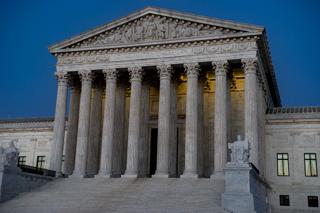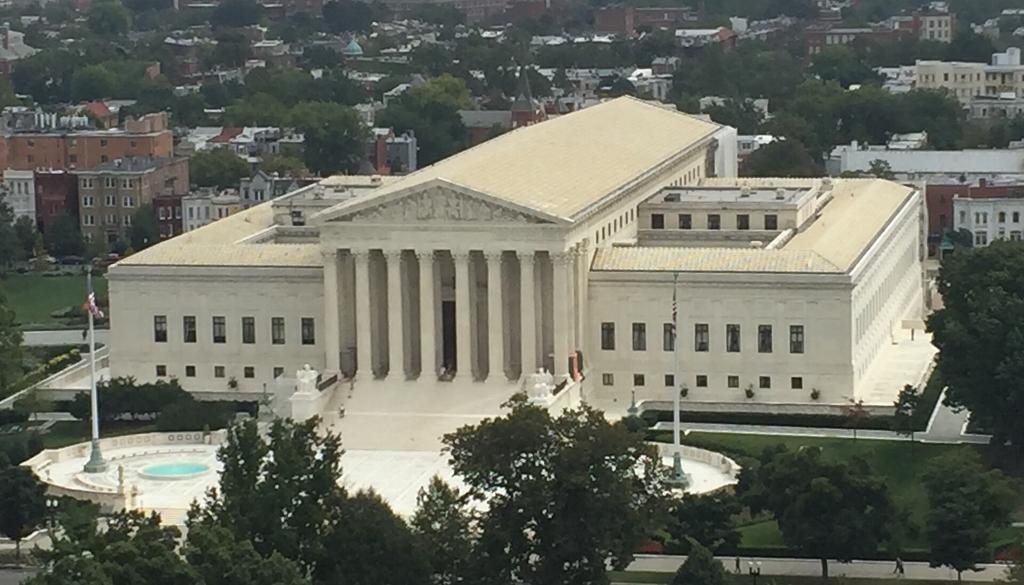
The U.S. Supreme Court has ruled to allow Alabama to use its 2023 congressional map, which includes only one majority-minority district, in the upcoming 2026 midterm elections. This decision, issued on Tuesday, marks the second time in less than a month that the high court has intervened to lift a lower court's block on the state's preferred map. The ruling underscores a significant legal and political tension surrounding race-based redistricting, with critics arguing that the map dilutes Black voting power, while supporters contend it aligns with recent Supreme Court precedents limiting race-based districting.
Explainer Redistricting Unveiled: How It Shapes American Elections and Governance
Supreme Court Upholds Alabama's Congressional Map Amid Controversy
In a 6-3 decision, the Supreme Court issued a per curiam opinion stating that Alabama has demonstrated a likelihood of success on the merits of its claims and has shown irreparable harm due to the district court's injunction. Justices Sonia Sotomayor, Elena Kagan, and Ketanji Brown Jackson dissented, raising concerns about the implications of the ruling for Black voters in Alabama. Their dissent highlights the ongoing struggle over the interpretation of the Voting Rights Act and its application in contemporary redistricting efforts.
Background and Reactions
The Supreme Court's intervention follows its previous decision in Louisiana v. Callais, which restricted states' ability to create race-based congressional districts. In that case, the Court emphasized that the mere fact of different voting patterns among races does not prove racial polarization. This precedent has significant implications for how states, including Alabama, approach the drawing of electoral maps. The Alabama legislature's map, which was initially blocked by a lower court, was designed to comply with this new standard established by the Supreme Court.
The district court had previously ruled that Alabama's map intentionally discriminated against Black voters, arguing that the GOP-controlled legislature aimed to dilute their voting power. The court's injunction was based on its interpretation of the Voting Rights Act, which has historically been used to create majority-minority districts to ensure adequate representation for racial minorities. This legal framework has been a cornerstone of civil rights advocacy, aiming to protect the voting rights of marginalized communities.
In its latest ruling, the Supreme Court criticized the district court for deviating from the principles established in Callais. The justices noted that the lower court's reasoning did not adequately justify its decision to impose a different map close to an election. The opinion stated, "The District Court interposed itself into Alabama’s ongoing efforts to conduct its imminent 2026 congressional elections under maps that its elected representatives selected." This statement reflects the Court's emphasis on the importance of allowing state legislatures to exercise their authority in determining electoral boundaries.
Sotomayor, writing for the dissent, expressed strong opposition to the majority's decision. She claimed that the ruling would lead to a "chaotic election" and accused her colleagues of disregarding democratic values and the rule of law. "Weeks ago, I warned that vacating the District Court’s injunction in these cases would ‘unleash chaos and . . . confuse voters,’" she stated. Her dissent underscores the potential ramifications of the ruling on voter confidence and electoral integrity.
Supporters of the Supreme Court's decision argue that it restores the authority of state legislatures to determine their electoral maps without undue interference from federal courts. They contend that the ruling aligns with the Court's recent trend toward limiting race-based considerations in redistricting. This perspective emphasizes the belief that local governance should have the primary role in shaping electoral districts, reflecting the will of the constituents.
The Supreme Court's stay on the district court's injunction will remain in effect pending the filing of a petition for further review. If such a petition is filed, the stay will terminate if the Court denies the petition or if it agrees to hear the case and issues a final judgment. This procedural aspect adds another layer of complexity to the ongoing legal battle over Alabama's congressional map.
As the 2026 midterms approach, the implications of this ruling could significantly impact the political landscape in Alabama, particularly for minority voters. The ongoing debate over race and representation in congressional maps is likely to continue as various stakeholders assess the ramifications of the Supreme Court's decision. The outcome of this legal struggle will not only shape the electoral map but also influence broader discussions about race, representation, and voting rights in the United States.