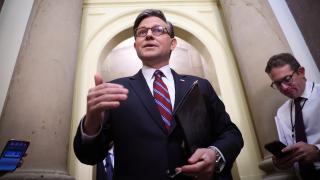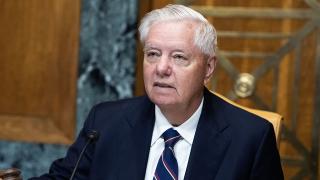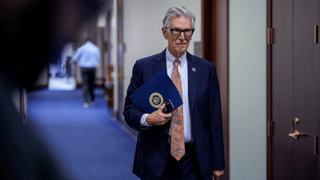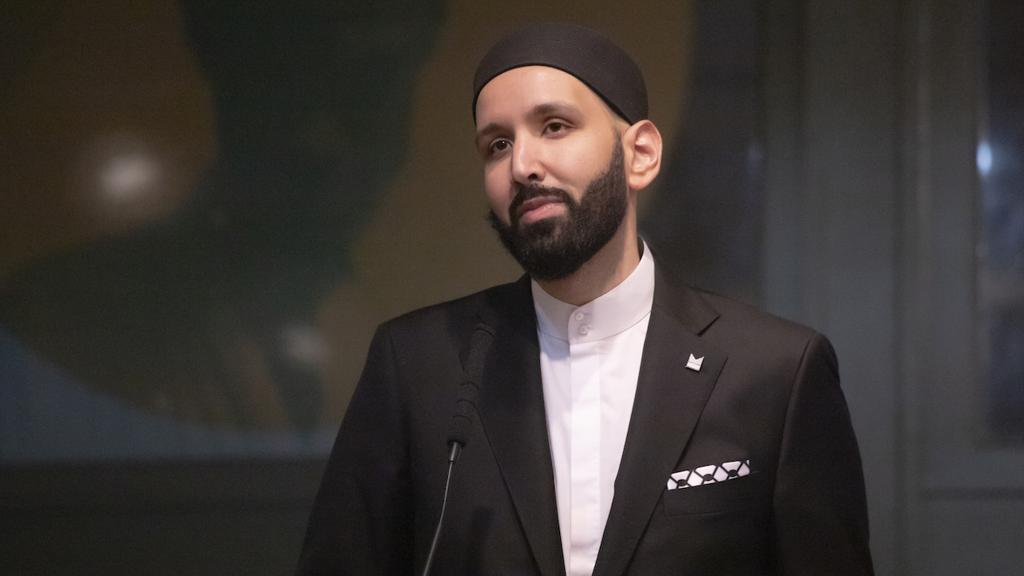
Texas imam Omar Suleiman has come under intense scrutiny after he posted a message on social media celebrating the death of U.S. Senator Lindsey Graham. Suleiman wrote, “May you live an eternity in ruins for the ruins you helped create in Gaza,” just hours after news of Graham’s passing was made public. The post quickly drew widespread condemnation from Republican lawmakers and prompted a formal resolution in Congress denouncing Suleiman’s remarks.
Explainer The Complex Legal Landscape of Abortion Laws After Dobbs
The incident has reignited debate over the role of religious leaders in political discourse, the boundaries of free speech, and the ongoing tensions surrounding Middle East policy in the United States. The backlash against Suleiman underscores the complexities at the intersection of faith, politics, and international affairs, particularly as they relate to the Israeli-Palestinian conflict and U.S. foreign policy.
Suleiman is the president and co-founder of the Yaqeen Institute for Islamic Research, a Dallas-based organization focused on Islamic scholarship and education. He is known for his engagement with national leaders and has previously been recognized for his calls for peace and interfaith dialogue. In 2019, then-House Speaker Nancy Pelosi invited Suleiman to deliver the opening prayer for a session of the U.S. House of Representatives, where he emphasized themes of “peace, not war. Love, not hate.”
However, critics argue that Suleiman’s recent comments about Senator Graham’s death are part of a broader pattern. They point to previous statements and associations that they say contradict his public advocacy for peace. This includes his social media activity and public endorsements of controversial figures.
Lawmakers’ Response and Congressional Action
The response from lawmakers was swift. U.S. Rep. Chip Roy, R-Texas, was among the first to react, posting on social media: “A U.S. Senator dies—and an Imam in Texas celebrates. We are at war—and only one side understands it.”
Shortly after, Rep. Beth Van Duyne, R-Texas, introduced a resolution in the House of Representatives formally condemning Suleiman’s remarks. The resolution not only denounces Suleiman’s comments about Graham’s death but also calls for greater awareness of what it describes as “the dangers of Sharia law and its incompatibility with American legal principles, constitutional governance, and individual liberty.” The resolution reflects concerns among some lawmakers about the influence of certain interpretations of Islamic law in the United States.
The resolution remains pending in the House as lawmakers continue to debate its language and broader implications. It has become a focal point for discussions about free speech, religious freedom, and the appropriate response to rhetoric deemed inflammatory or divisive.
Suleiman’s Record and Public Statements
Suleiman’s critics have cited a special report by the Middle East Forum and a ranking by Israel’s Ministry of Diaspora Affairs, which named him among the top 10 most influential antisemitic figures in the United States. The Israeli government’s Ministry of Diaspora Affairs released its list in April, placing Suleiman alongside other public figures accused of promoting antisemitic views. After being included in the ranking, Suleiman posted a YouTube video in which he shared his father’s congratulatory message for “making the honors list.”
The Middle East Forum has also accused Suleiman of advocating for Sharia law, defending practices such as sex slavery and concubinage, and supporting individuals convicted of terrorism. In one statement cited by critics, Suleiman said, “Islam is about solving real problems; it’s not about idealism. … Society’s welfare always takes precedence over the individual’s welfare.”
Sam Westrop, director of the Middle East Forum’s Islamist Watch project and a senior fellow at the Texas Public Policy Foundation, has described Suleiman as “America’s leading Islamist voice.” Westrop alleges that Suleiman has supported Hamas’ October 7 attacks and convicted Al-Qaeda terrorist Aafia Siddiqui, in addition to his recent remarks about Graham’s death. Westrop further characterizes Suleiman as a “pioneer of the Texas-based modernist Salafi movement, whose influence has shaped the development of Islamism globally in recent years.”
Suleiman has also publicly praised Aidh al-Qarni, a Saudi cleric known for inflammatory rhetoric against Jews and Christians, calling him “one of the greatest scholars and thinkers of the world.”
Broader Context and Reactions
The controversy surrounding Suleiman’s remarks comes at a time of heightened sensitivity regarding antisemitism, Islamophobia, and the role of religious leaders in public life. The Israeli government’s inclusion of Suleiman in its ranking of influential antisemitic figures has added to the scrutiny of his public statements and affiliations. The ongoing conflict in Gaza and debates over U.S. policy in the Middle East have further intensified reactions to Suleiman’s comments.
Despite the criticism, neither Suleiman nor the Yaqeen Institute has issued a public response to the backlash or the congressional resolution. Supporters of Suleiman have also remained largely silent, and there have been no official statements addressing the controversy from his organization or its representatives.
The House resolution introduced by Rep. Van Duyne continues to be a subject of debate among lawmakers. Its progress will likely be closely watched by both supporters and critics of Suleiman, as well as by those concerned about the broader implications for free speech, religious expression, and the boundaries of acceptable public discourse in the United States.
As the situation develops, the controversy serves as a reminder of the challenges faced by public figures—especially those in religious leadership—when navigating the intersection of faith, politics, and international affairs. The reaction to Suleiman’s remarks reflects broader societal debates about the limits of acceptable speech, the responsibilities of community leaders, and the impact of rhetoric on public life and policy.