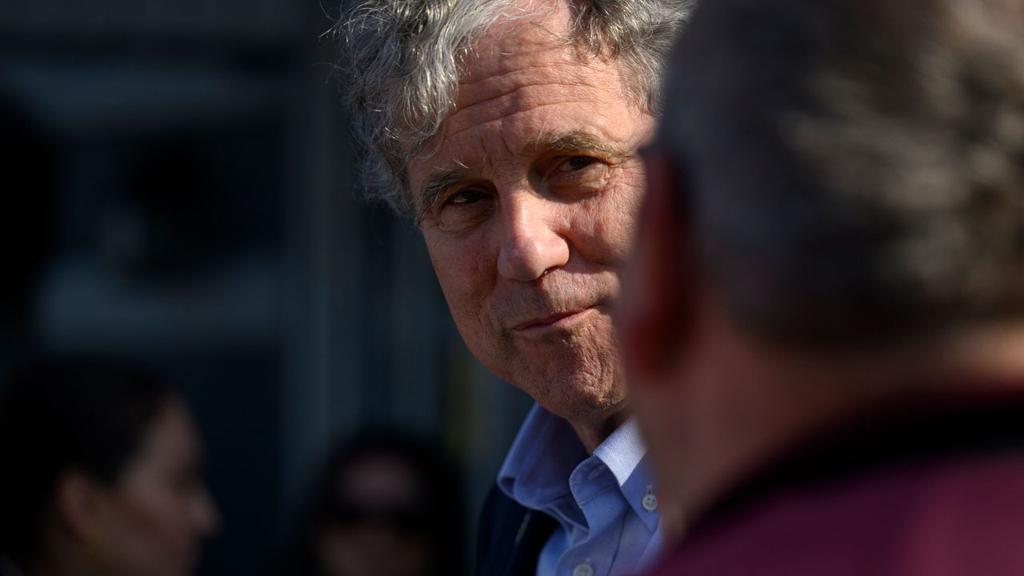
Democrat Sherrod Brown has reported raising more than $17.1 million in the second quarter for the Ohio U.S. Senate special election, outpacing Republican Sen. Jon Husted, who brought in $7.7 million during the same period. The significant fundraising gap underscores the competitiveness of the race, which has drawn national attention as both parties vie for control of the Senate.
Brown’s campaign said it received $14.1 million through its principal committee, Friends of Sherrod Brown, and an additional $3 million via affiliated committees between April 1 and June 30. The campaign highlighted its broad base of support, reporting nearly 70,000 new donors during the quarter. According to the campaign, 96% of individual donations were $100 or less, with an average grassroots contribution of $33. Donations reportedly came from all 88 counties in Ohio, reflecting a statewide fundraising effort.
Husted’s campaign, meanwhile, reported $3.4 million to its principal committee and $4.3 million to affiliated committees, including Husted Victory, Team Husted, and JON PAC. The campaign noted that this total was more than double its first-quarter fundraising and described the $3.4 million as the largest second-quarter fundraising figure ever posted by an Ohio Republican Senate candidate. Husted’s campaign also reported more than $11 million in cash on hand, positioning the senator with substantial resources heading into the final months of the campaign.
Donor Base and Geographic Breakdown
Federal Election Commission data cited by Open Secrets shows a contrast in the geographic sources of the candidates’ fundraising. For the 2025-2026 cycle, 59.3% of Brown’s individual donations for the campaign committee came from out of state, while 40.5% came from Ohio. In comparison, Husted’s profile on Open Secrets showed 55.1% of his individual donations came from within Ohio, with 44.9% from out of state.
The Brown campaign has emphasized its grassroots support, noting nearly 70,000 first-time donors in the quarter and over 135,200 total donors to date. Since launching his campaign, nearly 80,000 Ohioans have contributed to Brown’s effort, according to figures provided by the campaign. This broad donor base is a key talking point for Brown as he seeks to reclaim the seat he lost in 2024.
Campaign Messaging and Criticism
Both campaigns have made economic issues central to their messaging, with affordability and cost-of-living concerns at the forefront. Americans for Prosperity Action, which has endorsed Husted, has also identified affordability as a key issue for Republicans aiming to hold the Senate seat.
Patrick Eisenhauer, campaign manager for Friends of Sherrod Brown, said, “Ohioans across the state are fed up with Jon Husted, who repeatedly puts corporations, billionaires, and special interests first at the expense of hard-working families. While Jon Husted has repeatedly voted to raise the cost of health care, gas, and groceries, Sherrod Brown is fighting for Ohioans who deserve someone who will take on the rigged system in the Senate.”
Husted and his campaign have pushed back, criticizing Brown’s long tenure in Washington and arguing that he supported higher taxes, offshoring jobs, and “open-border policies that put illegal immigrants above the Ohioans he swore to serve.” Husted spokesperson Amy Natoce added, “Democrats will bring out the cavalry to bail out Sherrod Brown, but there is not enough money in the world to erase his failed record. National Democrats poured more than $250 million into Ohio in 2024, and Ohioans still gave Sherrod Brown the boot. The same will happen this November.”
Husted himself stated, “Voters fired Sherrod Brown two years ago, and today’s fundraising haul shows they are eager to keep Brown in retirement. Ohioans deserve a fighter who will put their families first, and that’s what I’ll bring to the U.S. Senate.”
Race Outlook and Next Steps
The Cook Political Report currently rates the Ohio Senate race as a “Toss-Up,” reflecting the state’s competitive political environment. Brown, who was first elected to the Senate in 2006 and lost reelection in 2024, launched his comeback bid last August after being recruited by Senate Minority Leader Chuck Schumer. The winner of the special election will serve the remainder of the term and will need to run again in 2028 if seeking reelection.
Both campaigns are expected to continue their aggressive fundraising and outreach efforts as the election approaches. With national party organizations and outside groups likely to pour additional resources into the state, Ohio is poised to remain a focal point in the battle for Senate control. The outcome of the race could have significant implications for the balance of power in Washington, making every dollar raised and every vote counted critical in the months ahead.