The White House on Thursday released four sets of declassified intelligence documents detailing a multi-year FBI investigation into alleged voter registration fraud in Michigan, including evidence of thousands of suspicious applications submitted ahead of the 2020 election.
Explainer Election Integrity in America: Safeguarding Voter Trust and Ballot Security
The documents, unveiled during President Donald Trump’s primetime address, have intensified scrutiny of Michigan’s election practices and the handling of fraud allegations by state and federal officials.
Michigan, a key battleground state, has been at the center of ongoing disputes over election security, with critics pointing to irregularities and the influence of private funding in election administration.
Details of the FBI Investigation
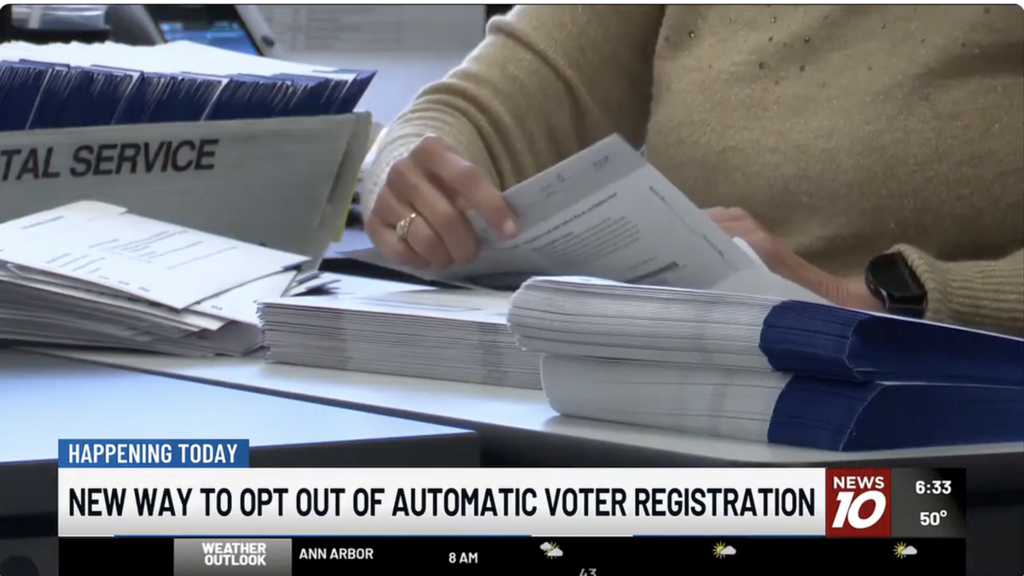
According to the declassified records, the FBI and Muskegon Police Department began investigating after the Muskegon City Clerk’s office received thousands of voter registration applications in the weeks before the 2020 election. Officials identified as many as 10,000 applications with irregularities, including nonexistent addresses, invalid phone numbers, and signatures that did not match state records. Many forms appeared to be completed in the same handwriting and were delivered by a single individual.
FBI emails cited in the documents describe interviews with approximately 100 former employees of a canvassing company involved in the registration drive. Witnesses told investigators that workers were paid per application and sometimes submitted false information for financial gain. One former employee estimated she personally submitted 100 fake applications. Another told agents that canvassers were instructed to fill out forms themselves if they could not collect enough legitimate registrations, sometimes trading marijuana or cash for completed forms.
"Most of the employees submitted the registrations with false information because it was easy money."
— Former registration form wrangler, FBI interview
Official Response and Prosecution Decisions
The investigation, which involved thousands of man hours, was initially prosecuted by Michigan Attorney General Dana Nessel. According to the documents, the Department of Justice’s Public Integrity Section instructed FBI agents in August 2021 that “no further action should be taken in this district at this time.” The investigation later resumed, but no charges were filed.
In 2023, Michigan House Republicans introduced articles of impeachment against Nessel, alleging she failed to prosecute those responsible for submitting fraudulent registrations. The Michigan State Police, which worked with Nessel’s office, stated that none of the irregular registrations resulted in absentee ballots being issued, and that any fraudulent registrations had been voided with no expected impact on election outcomes.
President Trump accused the Biden Justice Department of slow-walking and ultimately ending the case for partisan reasons. During his address, he called on the FBI director to ensure a full investigation and prosecution of any crimes.
Broader Context and Private Funding Concerns
The declassified documents also reference broader concerns about election integrity in Michigan. The state received approximately $8 million in election safety grants from the Center for Technology and Civic Life (CTCL), a nonprofit funded by Mark Zuckerberg and his wife. Detroit, a Democratic stronghold, received $3.5 million of these funds. Critics, including The Federalist editor-in-chief Mollie Hemingway in her House testimony, have argued that such private funding allows partisan interests to influence election administration.
“Instead of having election administration that is rigorously nonpartisan and impartial under the law, we have allowed the private takeover of government election offices by partisan oligarchs and their armies of activists who use those offices and their authorities to tilt the election toward favored candidates,” Hemingway said in her 2024 testimony before the House Administration Committee.
Competing Claims on Election Security
While the newly released documents have fueled criticism of Michigan’s election oversight, federal and state officials have previously described the 2020 election as secure. The Michigan State Police emphasized that fraudulent registrations were caught before affecting the vote. Nationally, top election officials have repeatedly stated there is no evidence of widespread fraud affecting results, as reported by the Associated Press.
Supporters of Michigan’s election administration have not directly addressed the latest declassified findings, but law enforcement and state officials maintain that safeguards prevented any fraudulent registrations from impacting the outcome.