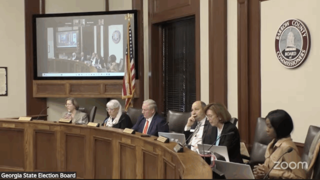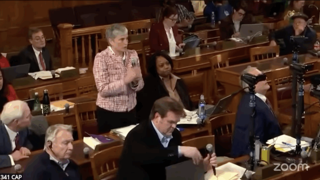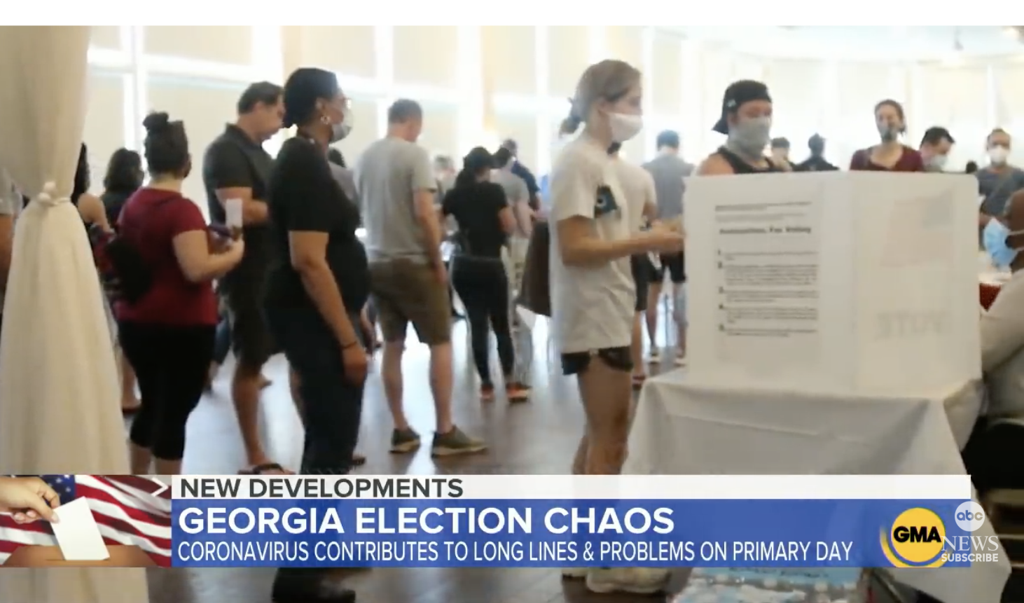
Federal law enforcement officials are investigating Fulton County, Georgia, following a raid on January 28 that seized election records, including ballots and voter rolls. The FBI's actions come more than five years after the county became a focal point for allegations of election irregularities during the 2020 presidential election.
Explainer Election Integrity: Protecting Voter Rights in Modern America
The investigation has sparked significant controversy, with local officials expressing outrage over the federal scrutiny of an election they assert was conducted fairly. Critics, however, argue that the handling of ballots and election processes in Fulton County raises serious questions about the integrity of the election results.
Fulton County has faced scrutiny since the post-Election Day surge of ballots that contributed to Joe Biden's victory in Georgia, a critical swing state. Allegations of irregularities have persisted, with some claiming that the county's election administration was marred by mismanagement and procedural failures.
Federal Investigation Details
Judge J.P. Boulee has mandated that the Department of Justice disclose the affidavit justifying the FBI's search warrant by the end of the day Tuesday. This affidavit is expected to provide insights into the rationale behind the seizure of approximately 700 boxes of ballots, tabulator tapes, and electronic ballot images.
Robb Pitts, chairman of the Fulton County Board of Commissioners, criticized the federal government's actions, claiming they demonstrate a “callous disregard for Fulton County voters’ First Amendment rights.” He expressed concern that such federal interventions could undermine public confidence in the electoral process.
However, some experts argue that the investigation is necessary to address long-standing questions about the election's integrity. Cleta Mitchell, an election law expert, highlighted discrepancies in the reported number of absentee ballots, stating, "The margin between President Trump and Joe Biden was 11,779 votes... and that was the THIRD certified number and didn’t match either of the first two counts."
Allegations of Irregularities
A report from the Election Oversight Group outlines several troubling findings regarding Fulton County's election practices. It notes significant chain-of-custody issues, particularly concerning absentee ballots that were accepted without mandatory signature verification. The report claims that tens of thousands of ballots were transported in unsecured mail carts, violating essential chain-of-custody protocols.
Additionally, the report indicates that the number of absentee ballots counted does not align with the number of voters recorded as having cast absentee ballots. Specifically, it states that 148,318 ballots were counted, while only 125,784 voters are recorded as having voted absentee, creating a discrepancy of 22,534 votes.
Expert Opinions on Election Integrity
Philip Stark, a professor of statistics at Berkeley and an election auditing specialist, noted that while there is no evidence of widespread fraud, there are valid reasons to question the election outcome. He stated, "Some ballots in Fulton County were included in the original count at least twice; some were included in the machine recount at least thrice."
Stark's findings suggest that the discrepancies in the counting process could undermine public trust in the electoral system. He emphasized that without a reliable record of the vote, even thorough audits may not accurately reflect the true outcome of the election.
Georgia Secretary of State Brad Raffensperger, who previously asserted that Georgia's elections are secure, has not publicly addressed the specific concerns raised by the recent investigations. His office has maintained that clerical errors do not invalidate legitimate votes, but critics argue that such errors could have significant implications for election integrity.
The ongoing investigation and the release of the FBI's affidavit are expected to shed further light on the issues surrounding Fulton County's election administration. As the situation develops, both supporters and critics of the election process await clarity on the findings and their potential impact on future elections in Georgia.