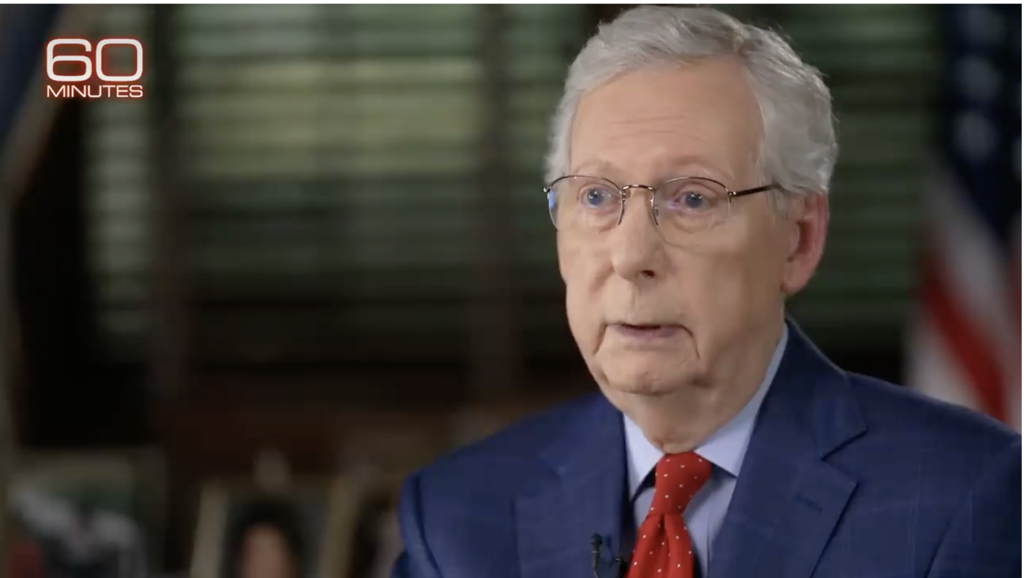
Senate Majority Leader Mitch McConnell is facing increasing pressure from House Republicans to advance the Safeguard American Voter Eligibility Act (SAVE Act), which aims to require proof of U.S. citizenship for voting. Critics allege that McConnell's reluctance to move the bill forward is rooted in personal animosity toward former President Donald Trump, who has championed the legislation as essential for election integrity.
Explainer Election Integrity: Protecting Voter Rights in Modern America
The core tension lies in the contrasting views on election security, with proponents arguing that the SAVE Act is necessary to ensure trustworthy elections, while opponents claim it could disenfranchise voters. The bill has been stalled in the Senate for nearly 300 days since passing the House, raising concerns among Republicans about the upcoming midterm elections.
The SAVE Act, which has garnered support from 48 Republican senators, seeks to address what supporters describe as a critical flaw in current voting regulations, allowing unauthorized individuals to register without proof of citizenship. McConnell, however, has not co-sponsored the bill, leading to frustration among House Republicans. "I just sent a letter to Mitch McConnell asking his committee to stop stalling the SAVE Act," Texas Rep. Brandon Gill stated on social media. "The House did its job. The Senate needs to do theirs."
House Republicans Demand Action
House Republicans are increasingly vocal about their dissatisfaction with McConnell's handling of the SAVE Act. Gill's letter emphasized that Congress cannot afford to delay legislation that aims to secure elections as the midterm elections approach. The urgency is underscored by a Gallup poll indicating that over 80% of Americans support requiring proof of citizenship to vote.
In response to the stagnation, House Republicans have introduced the SAVE America Act, which adds a voter identification requirement to the original measure. Rep. Chip Roy, a co-author of the new bill, expressed hope that the Senate would take action. "Once the bill passes the House, Leader Thune must bring it to the Senate floor and force Democrats to explain why they oppose securing our elections," Roy said.
Bipartisan Concerns and Democratic Opposition
Despite the strong support among Republicans, Democrats have consistently opposed the SAVE Act, framing it as a measure that could disenfranchise millions of voters. Senate Minority Leader Chuck Schumer labeled the bill as "an abomination" and argued that it would disproportionately affect marginalized communities. Critics within the Democratic Party assert that such legislation is unnecessary and could undermine voter participation.
However, proponents argue that the bill is essential for maintaining the integrity of elections. Hans von Spakovsky, a senior legal fellow at Advancing American Freedom, stated that the SAVE Act addresses a significant issue in the National Voter Registration Act of 1993, which currently prohibits states from requiring documentary proof of citizenship for voter registration. "The bill isn’t invading the province of the state, it’s fixing this problem," von Spakovsky said.
The Path Forward for the SAVE Act
As the Senate grapples with the implications of the SAVE Act, the potential for a filibuster looms large. The bill would require 60 votes to advance, a challenging threshold given the current composition of the Senate, where Republicans hold 53 seats. Some Republicans are exploring strategies to circumvent the filibuster, potentially forcing Democrats into a “talking filibuster” to delay the vote.
Despite the challenges, supporters remain adamant that the SAVE Act should be prioritized. Rep. Mary Miller of Illinois urged McConnell to allow the bill to move forward, stating, "There is ZERO excuse for blocking the SAVE Act. Mitch McConnell — let it out of committee and get it DONE."
The ongoing debate over the SAVE Act highlights the broader national conversation about election integrity and the balance between securing the voting process and ensuring access for all eligible voters. As the midterm elections approach, the outcome of this legislative battle could have significant implications for both parties.