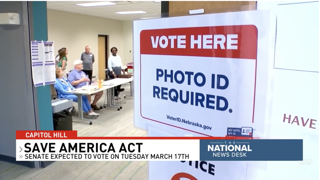
Senate Republicans are currently considering a talking filibuster strategy as a means to advance the SAVE America Act. This proposed legislation mandates voter ID requirements in federal elections and necessitates proof of citizenship for voter registration. The discussion surrounding this approach has sparked both criticism and support, revealing the ongoing tensions that characterize the current landscape of voting legislation in the United States.
Explainer Election Integrity: Protecting Voter Rights in Modern America
The core debate centers on whether the talking filibuster will effectively hold Democrats accountable for their opposition to the bill or if it will merely prolong legislative gridlock. Advocates of the talking filibuster argue that it compels a public discussion on the critical issue of voting security, while detractors claim it could lead to unnecessary delays and exhaustion among senators involved in the legislative process.
The talking filibuster is a method that requires senators to speak continuously in order to obstruct legislation. This tactic has been part of Senate rules since the institution's inception. Proponents believe that this method imposes both a physical and psychological cost on those opposing legislation, compelling them to publicly justify their stance. Critics, including Kimberley Strassel of The Wall Street Journal, argue that this strategy is fraught with challenges and could ultimately backfire.
Key Arguments Against the Talking Filibuster
Strassel contends that the talking filibuster presents what she describes as "false promises and huge problems." She asserts that Democrats could easily take turns speaking, which would undermine the intended effect of the strategy. However, supporters of the talking filibuster argue that the physical demands of continuous speaking would limit the ability of Democrats to maintain a filibuster indefinitely.
Strassel also claims that Democrats would receive two speeches each to oppose the bill. She argues that this would allow them to prolong the debate without consequence. However, supporters clarify that the SAVE America Act is coming from the House in a privileged manner, meaning that the vote to advance it would require only a simple majority, thereby limiting the extent of debate.
The Role of Physical Stamina
Advocates for the talking filibuster emphasize that it would require significant physical stamina from senators. They argue that not all Democrats could sustain the demands of continuous speaking, particularly older senators. One supporter noted, "It strains credulity to believe that Sen. Bernie Sanders, at the age of 84, has the same physical vigor as Sen. Cory Booker, 28 years his junior."
The strategy's effectiveness hinges on the ability of Republicans to maintain discipline and respond to quorum calls, which could disrupt the flow of the filibuster. Critics argue that Republicans would need to keep most of their members present to counter any Democratic maneuvers, which could complicate the process and potentially lead to further delays.
Potential Outcomes and Legislative Implications
Supporters of the talking filibuster assert that it would force Democrats to publicly articulate their reasons for opposing voter ID legislation, which they argue is popular among the public. They contend that making Democrats justify their stance could shift public opinion and alter political dynamics in favor of the Republicans.
However, some experts caution that the talking filibuster may not guarantee a successful outcome for the SAVE America Act. They note that the legislative process is inherently unpredictable, and the strategy could lead to prolonged debates without a clear resolution. As one expert stated, "A talking filibuster forces a process, but a specific outcome is never guaranteed."
The debate over the talking filibuster reflects broader concerns about voting rights and election integrity in the United States. As Republicans push for stricter voting laws, Democrats remain committed to opposing measures they view as restrictive and potentially disenfranchising. The outcome of this legislative battle could have significant implications for future elections and the balance of power in Congress.
As the Senate prepares for potential discussions on the SAVE America Act, both sides are gearing up for what is expected to be a contentious debate. Supporters of the talking filibuster argue that it is a necessary tool to hold opponents accountable, while critics warn that it could exacerbate partisan divisions and lead to legislative paralysis. The stakes are high, and the implications of this debate will likely resonate well beyond the current legislative session.