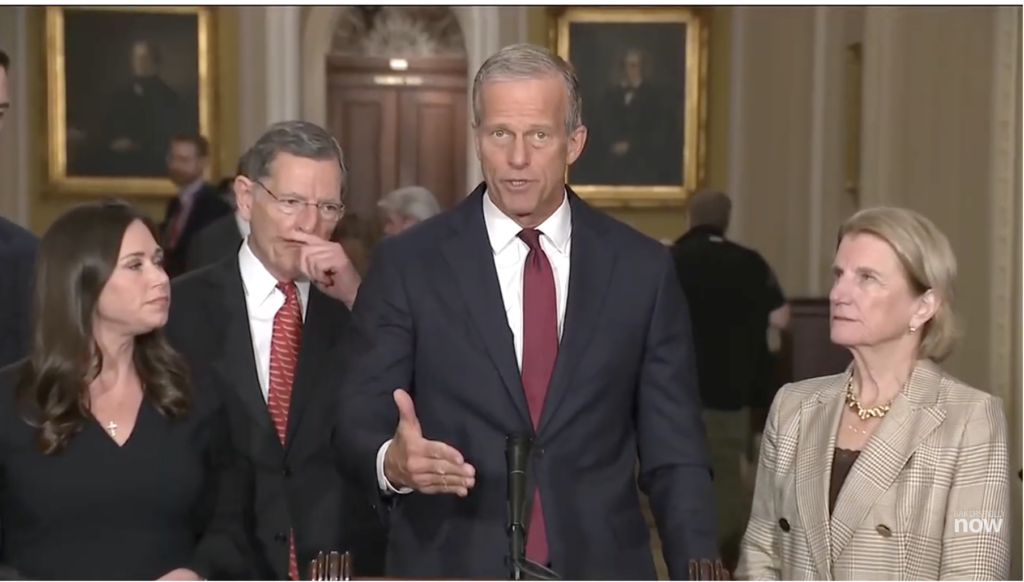
Senate Majority Leader John Thune has come under fire for his handling of the SAVE America Act, a bill aimed at tightening voter registration and identification requirements. Critics argue that Thune's reluctance to advance the legislation is jeopardizing essential election integrity reforms as the 2026 elections approach.
Explainer Election Integrity: Protecting Voter Rights in Modern America
The core tension lies in the Republican-controlled Senate's struggle to move the SAVE America Act forward, with some party members accusing Thune of stalling the process to protect certain colleagues from accountability. The bill, which requires documentary proof of U.S. citizenship to register to vote and photo identification to cast a ballot, passed the House nearly a month ago but has yet to receive a Senate vote.
Thune acknowledged the challenges of advancing the legislation, stating, "There are no easy ways to do this. Believe me, we’ve examined all the options." Despite this, he has faced criticism for not pushing harder to bring the bill to the Senate floor, especially in light of President Donald Trump's insistence on its importance.
Calls for Action
Trump has publicly urged Senate Republicans to prioritize the SAVE America Act, framing its passage as a matter of "national survival." The former president's comments come as he threatens not to sign any legislation that does not include the bill, putting additional pressure on Thune and his leadership team.
Supporters of the bill, including House Republicans and influential figures like Elon Musk, have encouraged Thune to consider alternative strategies, such as a "talking filibuster," which would require Democrats to engage in extended debate to delay a vote. This approach aims to draw public attention to the issue and potentially sway opinion in favor of the bill.
However, Thune dismissed the idea of a talking filibuster, stating, "Yeah, that’s not going to happen." He emphasized the difficulty of achieving a favorable outcome without the necessary votes to eliminate the legislative filibuster, which requires 60 votes to advance most legislation in the Senate.
Internal Party Dynamics
Critics within the party, including Sean Davis, CEO of The Federalist, have accused Thune of protecting Republican senators who may oppose the SAVE America Act. Davis claimed that Thune is attempting to avoid a public vote that could expose dissent within the party, stating, "Thune needs to kill the SAVE America Act, not expose any of his GOP colleagues as being against it."
This sentiment was echoed by Rep. Bryan Steil, R-Wis., who expressed frustration over the Senate's inaction. "We hear the parliamentary procedure arguments from the Senate time and again. I think that’s what frustrates a lot of us," he said, emphasizing the need for Republicans to capitalize on their control of Congress and the presidency to advance conservative priorities.
Future Prospects
As the Senate prepares to address the SAVE America Act, Thune's leadership will be tested. Reports suggest that he plans to bring the bill to a vote under the standard 60-vote threshold next week, where it is expected to fail due to unified Democratic opposition. This move has raised concerns among conservatives who fear that the Senate's inaction could hinder their chances in the upcoming elections.
Thune's approach has sparked debate within the party, with some arguing that the stakes are too high to allow the bill to languish. As the deadline for legislative action looms, the pressure on Thune and his colleagues to deliver on election integrity reforms intensifies, leaving many to wonder if they will rise to the occasion or continue to face internal divisions.
In the meantime, the fate of the SAVE America Act remains uncertain, with both supporters and critics closely watching how Senate leadership navigates this contentious issue.