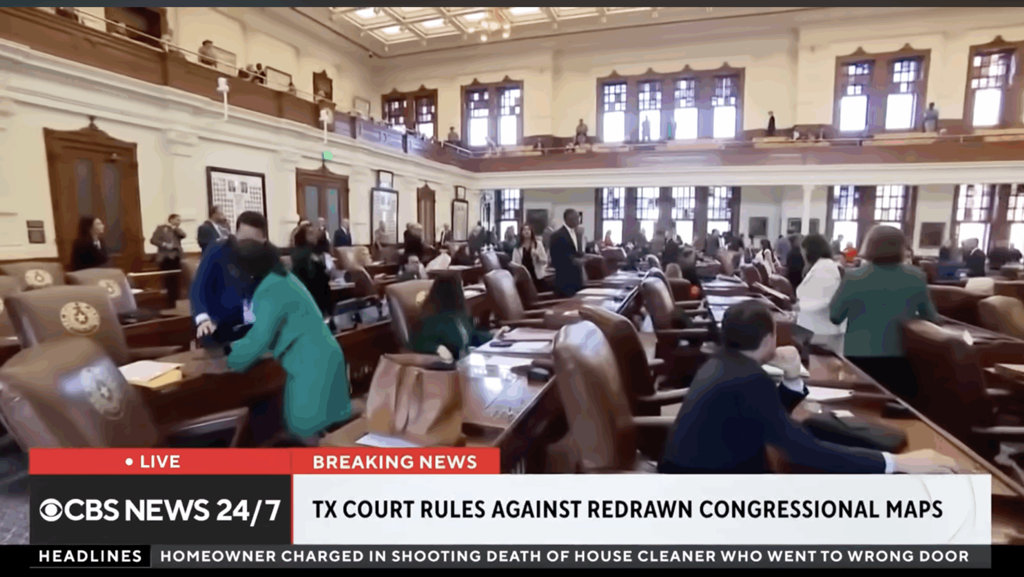
A panel of three judges has issued an injunction blocking Texas from implementing its newly drawn congressional map, a decision that could significantly affect the state's representation in the upcoming midterm elections. The ruling, delivered by U.S. District Judge Jeffrey V. Brown and Judge Davi Guaderrama, found that the map appears to be a race-based gerrymander, which is illegal under federal law.
Explainer Redistricting Unveiled: How It Shapes American Elections and Governance
The judges ruled 2-1 that the new map, which was expected to add five Republican-leaning seats, likely violates the Voting Rights Act. "The public perception of this case is that it’s about politics," the majority opinion stated. "But it was much more than just politics. Substantial evidence shows that Texas racially gerrymandered the 2025 map."
The court's decision follows a nine-day hearing in El Paso, where the legality of the map was debated. Texas Republicans argued that the map was drawn based on political preferences, not race. However, the court found this claim unconvincing, stating it is "extremely unlikely" that the map's racial outcomes were coincidental.
The U.S. Department of Justice (DOJ) had previously urged Texas to redraw its congressional map, citing concerns over race-based districts. In a letter sent in July, the DOJ identified specific districts as unconstitutional and encouraged the state to address these issues. Governor Greg Abbott referenced this letter when he called a special session to discuss redistricting.
Josh Findlay, Director of the Texas Public Policy Foundation, criticized the ruling, asserting, "What Texas did this cycle was done to reflect the will of Texas voters, not left-wing special interests." He warned that reliance on redistricting to maintain Republican control in the House could backfire if other red states do not take action.
The implications of the ruling extend beyond Texas. California is poised to gain five Democratic seats after voters approved Proposition 50, which allows for redistricting to counter potential Republican gains in Texas. The DOJ has also filed a lawsuit against California, similar to its actions in Texas, which could delay any changes until after the midterms.
In other states, Republican efforts to redraw congressional maps have faced challenges. In Utah, a district court judge ruled a Republican-proposed map unconstitutional, leading to the adoption of a plaintiff-drawn map that favors Democrats. In Kansas, top House Republicans have paused efforts to force a redraw of U.S. House districts, while Indiana lacks sufficient support for redistricting, according to local reports.
As the midterm elections approach, the outcome of the appeals process in Texas and the actions of other red states will be closely monitored. The current landscape suggests that Republicans may need to act swiftly to secure their positions in Congress, especially in light of potential shifts in representation due to judicial rulings and demographic changes.