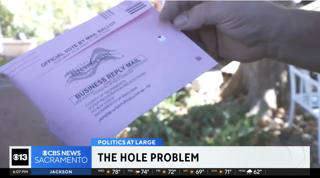
Californians have approved Proposition 50, a ballot initiative that allows Democrats to implement a new congressional map for the state, bypassing the independent redistricting committee. The measure is projected to have received support from two-thirds of voters, with nearly half of the votes counted.
Explainer Redistricting Unveiled: How It Shapes American Elections and Governance
Proposition 50 is designed to counteract potential Republican gains following Texas's recent congressional redistricting, which was mandated by a Department of Justice (DOJ) ruling. The DOJ found that four Texas districts were unlawfully gerrymandered on racial grounds, prompting Governor Greg Abbott to call a special legislative session for redistricting.
"The DOJ contended that Texas’ congressional maps violated the Voting Rights Act and the 14th Amendment," said a spokesperson for the DOJ. The ruling stemmed from the case Petteway v. Galveston County, which clarified that the Voting Rights Act does not require the creation of minority-coalition districts.
In August, the Texas Legislature passed a new congressional map, which is now facing legal challenges. Meanwhile, California Democrats, with backing from Governor Gavin Newsom, have moved forward with their own redistricting efforts despite previous voter rejection of similar measures to dismantle the independent redistricting commission.
Critics argue that this move represents a shift toward partisan gerrymandering. The California decision may prompt Republican-led states to reconsider their own redistricting strategies. Indiana's governor has indicated potential efforts to redraw congressional districts, while Kansas Republicans have paused their own redistricting initiatives for the time being.
The passage of Proposition 50 highlights the ongoing tensions surrounding redistricting in the United States, particularly as states navigate legal requirements and partisan interests. As the political landscape evolves, the implications of California's decision may resonate beyond its borders, influencing strategies in other states.
Key Facts:
- Proposition 50 passed with approximately two-thirds support from voters.
- The new congressional map will be in effect from 2026 to 2030.
- Texas's congressional map is currently under legal scrutiny following DOJ findings.