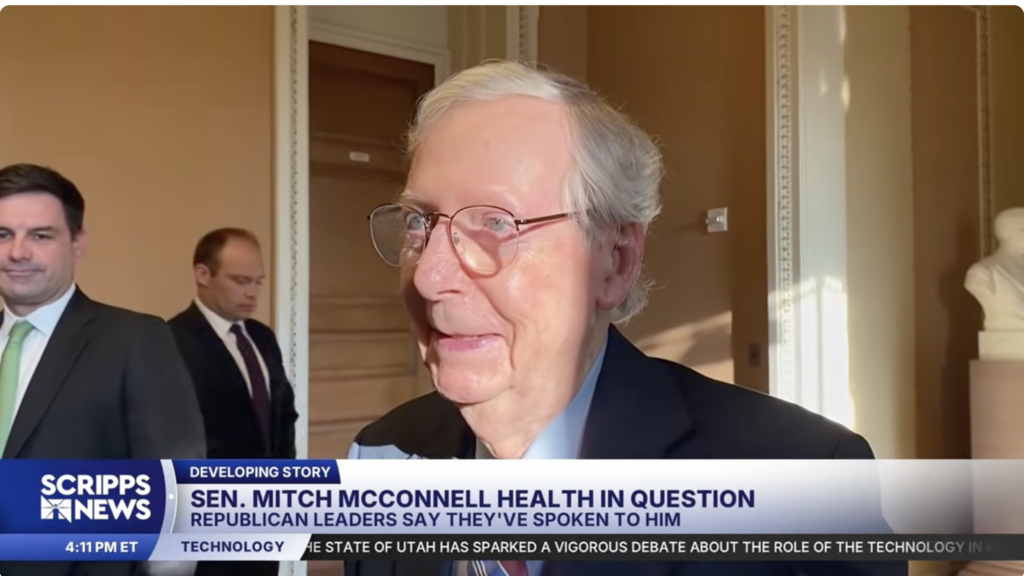
Senator Mitch McConnell's health has become a topic of intense speculation following his hospitalization for cardiac arrest on June 14. The 84-year-old Republican from Kentucky has not been seen publicly since then, leading to widespread concern among colleagues and constituents about his well-being and ability to fulfill his duties.
The stakes are high as McConnell's absence complicates Senate operations, particularly in light of critical legislation pending before Congress. His role as the longest-serving party leader in Senate history adds to the urgency of the situation, with many questioning whether he should continue in his position given his health issues.
McConnell's staff issued a statement on July 2, indicating that he was recovering and appreciated the support he was receiving. However, the lack of recent updates has fueled speculation, with some lawmakers openly questioning his status. Representative Marlin Stutzman, R-Ind., expressed concern, stating, "His constituents deserve answers where he is at."
Health Rumors and Clarifications
The uncertainty surrounding McConnell's health has led to a flurry of rumors, including unfounded claims about his condition. Some reports have suggested he is incapacitated, while others have confirmed he is alive but in rehabilitation. A source familiar with McConnell's situation told NewsNation that he is not brain dead and is mentally fine, but requires time to recover physically.
"He's alive. He's not brain dead. He's in rehab and the hospital. With his condition, he needs time to physically recover. But mentally he's fine. The doctors want to make sure he's okay."
— Jackie Koppell, political campaign reporter
Criticism of McConnell's Transparency
Despite these reassurances, the lack of transparency from McConnell's office has drawn criticism. Sean Davis, co-founder of The Federalist, highlighted the Senate's rules requiring senators to disclose reasons for extended absences. He argued that McConnell has an obligation to inform the Senate of his situation and request permission for his absence. Without such disclosure, Davis contended, McConnell should consider resigning.
The implications of McConnell's absence extend beyond personal health concerns. His leadership role on the Senate Appropriations Subcommittee on Defense is crucial, especially as the Senate grapples with budgetary issues. The absence of McConnell, who holds a pivotal position, has already led to the cancellation of a critical hearing on defense spending, raising alarms about the Senate's ability to pass necessary legislation.
As the Senate is currently on recess until Monday, the clock is ticking for McConnell to return before the traditional long summer break begins in the second week of August. The upcoming campaign season further complicates matters, as lawmakers face pressure to finalize budget bills before the recess.
While some Republican leaders, including Senate Majority Leader John Thune and Senate Majority Whip John Barrasso, have reportedly communicated with McConnell, the details of those conversations remain unclear. Their spokespeople have indicated that McConnell is engaged in discussions about Senate matters, but the lack of direct communication from McConnell himself has left many questions unanswered.
The situation has prompted calls for greater accountability and transparency from McConnell's office. Critics argue that constituents and fellow lawmakers deserve clarity regarding his health and the implications for Senate business. As the debate continues, the Senate's ability to function effectively hangs in the balance, with McConnell's absence serving as a critical focal point.
In summary, McConnell's health and absence from the Senate have raised significant concerns among lawmakers and constituents alike. The need for transparency and communication is paramount as the Senate navigates pressing legislative challenges in the coming weeks.