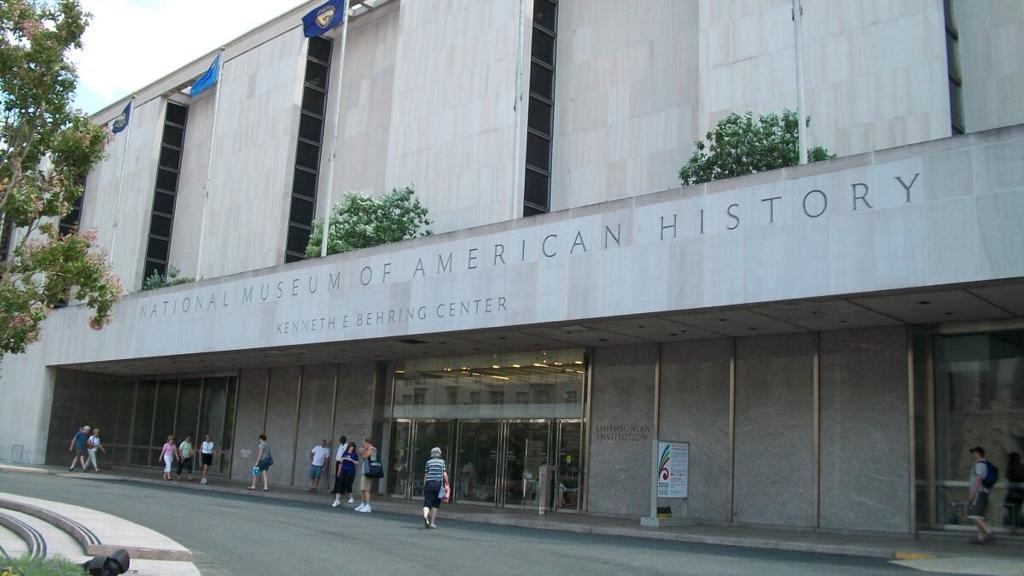
The Smithsonian Institution's National Museum of American History is facing significant criticism for its portrayal of American history, according to a report from the Domestic Policy Council. The report asserts that the museum has strayed from its core mission to foster respect for the American narrative, instead promoting a perspective that some argue vilifies the nation's founding principles.
Critics contend that the museum's exhibits largely ignore foundational events and figures in American history, such as the Pilgrims, the Revolutionary War, and key Founding Fathers like George Washington and Thomas Jefferson. The report highlights that the museum's leadership has expressed a desire to transform the national historical narrative, which has resulted in a lack of emphasis on traditional patriotic themes.
The museum, which boasts 200,000 square feet of exhibition space, has been accused of neglecting significant historical events and figures. For instance, the report notes that there are no planned displays dedicated to Washington or Jefferson for the upcoming 250th anniversary of the United States. Instead, the museum has reframed historical narratives, labeling the Pilgrims as colonizers and reframing Thanksgiving as a “National Day of Mourning.”
"The museum has shifted from its mission to tell the American story and is now forcing a national 'reckoning' down the throats of its visitors,"
— Krystina Skurk, research assistant at Hillsdale College.
Criticism of Religious Representation
The report also criticizes the museum for its portrayal of Christianity, suggesting it is depicted as a tool of oppression rather than a foundational element in the development of American values. Critics argue that the museum fails to acknowledge Christianity's role in the abolitionist and civil rights movements, instead framing it as a source of cultural erasure. The museum's materials reportedly claim that celebrating Christian holidays is an aspect of white culture that should be dismantled.
Race and Historical Narrative
Additionally, the museum has been accused of promoting critical race theory and diversity, equity, and inclusion (DEI) initiatives. The report indicates that museum leadership has prioritized race-based hiring and programming, aligning with organizations like the Southern Poverty Law Center (SPLC) to reshape educational content. Critics argue that this approach undermines the museum's educational integrity and promotes a narrative that America has always been fundamentally racist.
The museum's current interpretive plan reportedly requires all exhibits to connect to themes of identity politics, environmentalism, and economic inequality, which some see as a departure from a balanced historical narrative.
Western Civilization Under Fire
The report also points to an anti-Western civilization sentiment within the museum, claiming it portrays Western culture as rooted in white supremacy. Critics argue that this perspective dismisses the contributions of Western civilization to democracy, individual liberty, and scientific advancement. The museum's leadership has been quoted as questioning the logic of Western Civilization, which they argue prioritizes order and organization over diverse narratives.
250th Anniversary Exhibit Concerns
As the nation approaches its 250th anniversary, the museum's planned exhibits have drawn scrutiny. Instead of celebrating the Founding Fathers' achievements, one exhibit titled "Entertainment Nation" has been criticized for focusing on identity politics and cultural symbols rather than historical events. Critics note that the exhibit fails to adequately address the significance of the Declaration of Independence or the Revolutionary War, instead highlighting contemporary issues and figures.
The museum's leadership, under Director Anthea Hartig, has revised its mission statement, removing references to the "infinite richness" of American history. This change has been interpreted by some as indicative of a broader hostility toward traditional narratives.
The report concludes that restoring the museum's original mission will require a comprehensive overhaul of its leadership, staff, and exhibits. Advocates for a more traditional representation of American history argue that the museum should inspire patriotism and educate visitors about the responsibilities of citizenship.
While the museum has not publicly responded to the report's specific claims, supporters of its current direction argue that a more inclusive narrative is necessary to reflect the complexities of American history. The ongoing debate over the museum's direction highlights broader tensions in American society regarding historical interpretation and national identity.