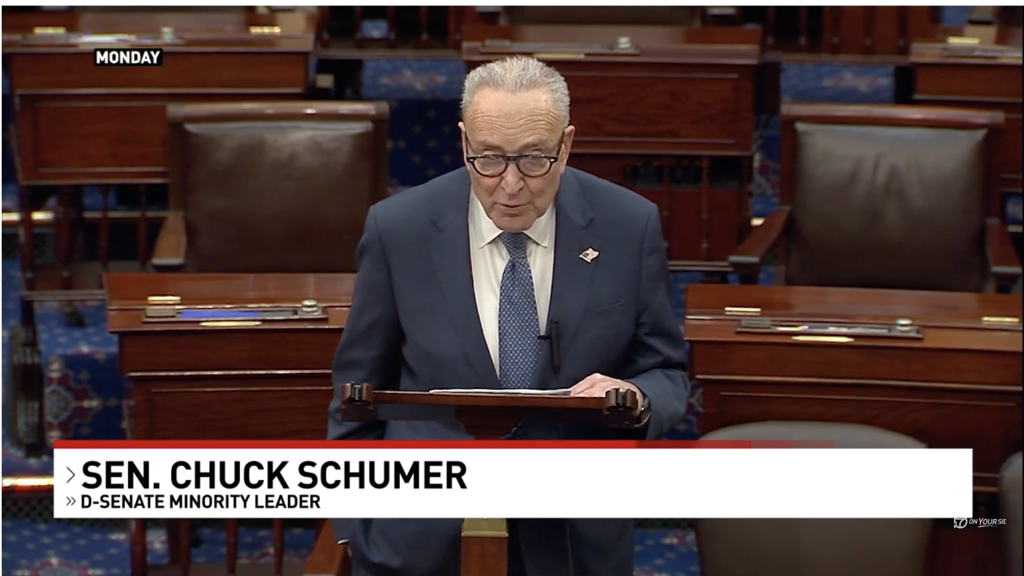
Senate Minority Leader Chuck Schumer faced backlash this week for comparing voter ID requirements to Jim Crow laws, igniting a debate over election integrity. Critics argue that Schumer's comments misrepresent the intentions behind the SAVE America Act, which seeks to require proof of citizenship for voter registration.
Explainer Election Integrity: Protecting Voter Rights in Modern America
The core tension centers on differing views regarding voter ID laws, with supporters claiming they enhance election security, while opponents argue they disproportionately affect marginalized communities. Polls indicate that a significant majority of Americans, including many Democrats, support voter ID measures, complicating the narrative surrounding Schumer's statements.
Schumer's remarks came as part of a broader critique of the SAVE America Act, which he and other Democrats labeled as a modern-day poll tax. "The people who have accused anyone who doesn’t agree with them of being a racist — or a Nazi — are comparing a bill that requires proof of U.S. citizenship to register to vote to a 'modern-day poll tax,'" Schumer stated. However, supporters of the bill argue that requiring identification is a common-sense measure to ensure the integrity of elections.
Criticism of Republican Senators
Senator Lisa Murkowski also drew criticism for her opposition to the SAVE America Act. Critics describe her stance as aligning with Democratic principles rather than Republican values. "Murkowski believes her own press releases, that she’s being a 'principled' member of the U.S. Senate," one commentator noted, suggesting that her position may not reflect the views of her constituents in Alaska.
Senate Minority Leader Mitch McConnell has similarly faced scrutiny for his approach to election security. Some commentators allege that his opposition to the bill is driven by personal animosity toward former President Donald Trump and a desire to maintain ties with the military-industrial complex. Federalist CEO Sean Davis remarked, "McConnell’s heel turn on election security is worse than spite. It’s about money and power."
Immigration Enforcement Controversies
In immigration discussions, Representative Eric Swalwell was criticized for his comments regarding ICE enforcement practices. During a recent committee meeting, Swalwell accused ICE of using a child as bait to arrest his father, a claim that Acting ICE Director Todd Lyons denied. "The men and women of ICE took care of him when his father abandoned him and ran from law enforcement," Lyons responded, highlighting the complexities of immigration enforcement.
Additionally, Representative Shri Thanedar threatened to prosecute Customs and Border Protection officials if Democrats regain power. Thanedar's comments reflect a broader concern among some lawmakers about the treatment of unauthorized immigrants. Critics argue that such threats could politicize law enforcement and undermine the rule of law.
Broader Political Climate
The political climate remains charged as figures like Governor Andy Beshear of Kentucky face scrutiny for their stances on social issues. Beshear vetoed a bill aimed at protecting women’s restrooms and restricting certain medical procedures for minors. His actions have drawn criticism from conservatives who argue that they undermine parental rights and child protection.
Meanwhile, Representative Alexandria Ocasio-Cortez attended a U.S.-European security conference, where she emphasized the need for a working-class perspective in foreign policy discussions. Critics noted that her comments often reflect a broader leftist agenda, which some argue detracts from serious policy discussions. Ocasio-Cortez's approach has sparked debate about the role of personal identity in political discourse, with some observers questioning the relevance of such discussions in the context of international security.
As political figures continue to navigate these contentious issues, the responses from both sides highlight the deep divisions within American politics. Supporters of voter ID laws and immigration enforcement argue for the necessity of these measures, while opponents raise concerns about their implications for civil rights and social justice. The ongoing debate underscores the complexities of governance in a polarized environment, where every statement and action is scrutinized and debated.