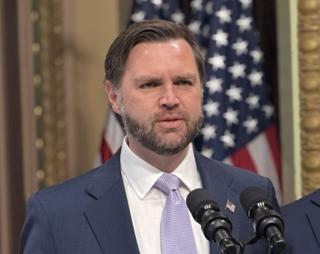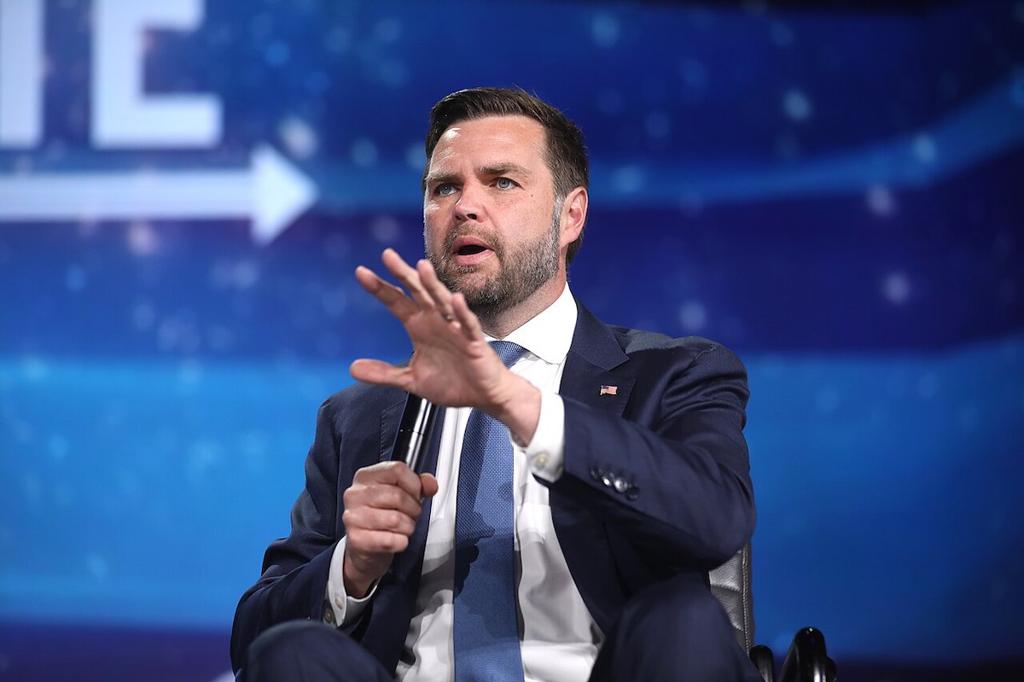
The ongoing tensions within the Republican Party are increasingly centered on Vice President J.D. Vance and his noninterventionist foreign policy stance. Critics argue that recent controversies surrounding figures like Tucker Carlson and Heritage Foundation President Kevin Roberts are being used as a means to undermine Vance's influence within the party.
John Daniel Davidson, a senior editor at The Federalist, asserts that the real target of the backlash is Vance, rather than Carlson or Roberts. He claims that the criticism is driven by a faction of the GOP that seeks to reclaim control of the party from the MAGA movement that emerged under former President Donald Trump. "The primary target here isn’t Carlson or Roberts, but Vice President J.D. Vance," Davidson wrote.
The debate has intensified following Carlson's interview with Nick Fuentes, a controversial figure known for his antisemitic views. Critics have expressed concern over Carlson's decision to platform Fuentes, but Davidson argues that the outrage is being manipulated to attack Vance's foreign policy views. He contends that the criticism aims to paint Vance as a dangerous figure who cannot be trusted in a future presidential role.
Davidson highlights that the criticism of Vance is part of a broader strategy by interventionist Republicans who oppose the America First approach. He notes that some prominent voices, including those from the Wall Street Journal, have accused Roberts of being an "apologist" for antisemitism, a claim Davidson describes as unfounded. Roberts himself stated, "Conservatives should feel no obligation to reflexively support any foreign government, no matter how loud the pressure becomes from the globalist class."
The internal GOP conflict reflects a larger ideological battle over foreign policy. Vance's critics are reportedly concerned that his views align with a growing segment of the party that favors reduced U.S. involvement in overseas conflicts. Davidson points out that this shift has been evident in Vance's responses to questions about U.S. support for Israel, which some critics have equated with antisemitism.
Erick Erickson, a conservative commentator, has also weighed in on the issue, expressing concern over what he describes as a "moral rot eating the American right." He criticized Vance for not disavowing figures like Fuentes, suggesting that Vance's reluctance to confront certain narratives could be seen as moral cowardice. However, Davidson argues that such accusations are attempts to stifle legitimate debate about U.S. foreign policy.
The conflict within the GOP is not merely about individual figures but represents a broader struggle for the party's future direction. Davidson asserts that the anti-Vance sentiment is fueled by those who wish to restore the interventionist policies that characterized the Republican establishment prior to Trump's presidency. He warns that the current outrage over antisemitism is being used as a political weapon against Vance and others who challenge the status quo.
As the GOP navigates these internal divisions, the outcome may significantly shape the party's platform and its approach to foreign policy in the years to come. Davidson concludes that the fight over Vance is emblematic of a larger battle for the soul of the Republican Party, with implications for its direction after Trump leaves the political stage.