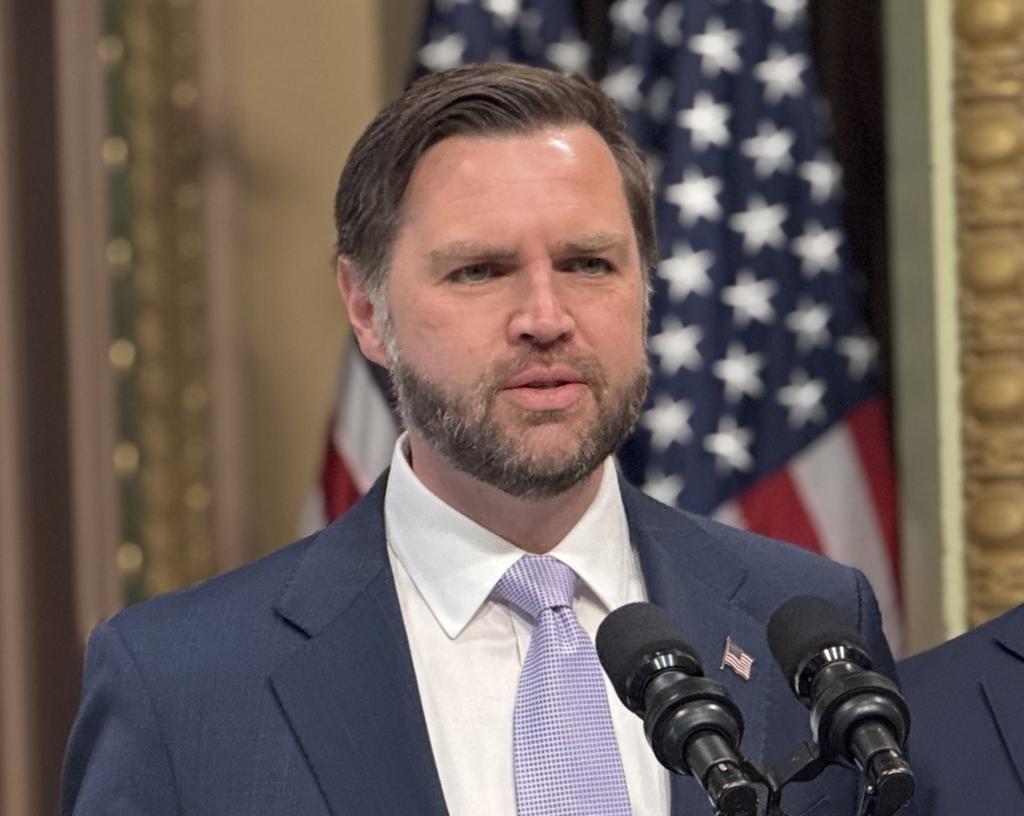
Vice President J.D. Vance has publicly criticized Israeli leaders for their vocal dissent regarding ongoing U.S.-Iran negotiations. He asserted that the United States remains Israel's only significant ally, a statement that underscores a growing concern over Israel's declining support in the U.S. and the potential implications for its foreign policy moving forward. Vance's remarks come at a time when the geopolitical landscape is shifting, and Israel must navigate these changes carefully.
During a White House press conference, Vance urged Israel's leadership to reconsider its current approach, particularly as support for Israel appears to be waning among American voters across party lines. He emphasized that under President Donald Trump, the U.S. is the only powerful ally Israel has left, urging Israeli officials to avoid antagonizing their most crucial partner. This call for a reevaluation of strategy is particularly pertinent given the evolving dynamics in U.S.-Israel relations.
Support for Israel has been decreasing in the U.S., with recent polls indicating a notable decline in favorable views, especially among younger demographics and across both major political parties. This shift poses significant challenges for Israel as it navigates complex geopolitical dynamics, particularly in light of ongoing negotiations with Iran that could reshape the region's power balance.
Tensions Over U.S.-Iran Negotiations
At the press conference, Vance responded to reports indicating that Israeli Prime Minister Benjamin Netanyahu was frustrated with a memorandum of understanding (MOU) between the U.S. and Iran aimed at de-escalating tensions in the region. Vance remarked, "If I was in the cabinet of the Israeli government, I might not be attacking the only powerful ally that I have anywhere left in the entire world." This statement reflects a broader concern that Israel's public criticisms could jeopardize its relationship with the U.S.
Israeli officials, including Minister of National Security Itamar Ben-Gvir and Finance Minister Bezalel Smotrich, have publicly criticized the U.S.-Iran deal. Ben-Gvir stated, "Trump’s agreement does not bind us. Israel is not subject to the United States, and we are an independent and sovereign nation!" Smotrich added that the deal is detrimental not only to Israel but also to the broader free world, asserting that Israel must continue its efforts to counter Iran's influence independently. This sentiment illustrates a growing assertiveness among Israeli leaders regarding their national security priorities.
Israel's Military Strategy and Regional Stability
The ongoing conflict with Hezbollah in Lebanon further complicates Israel's position in negotiations with Iran. Israeli military actions against Hezbollah have raised concerns about potential escalations, with Vance noting that these actions could jeopardize the fragile ceasefires in the region. He pointed out that Israeli attacks have led to tense exchanges between Trump and Netanyahu, with Trump reportedly expressing frustration over Netanyahu's judgment during negotiations. This tension highlights the delicate balance Israel must maintain in its military strategy while engaging in diplomatic discussions.
Despite the criticism from U.S. officials, Smotrich reaffirmed Israel's commitment to its military operations against Hezbollah, stating, "This is our war, our fighters, and the immediate security of our northern residents." He emphasized the need for Israel to maintain operational freedom to address threats from Hezbollah, regardless of U.S. preferences. This commitment to military action underscores the complexities of Israel's security situation and its implications for U.S.-Israel relations.
A Call for Realism
Vance's remarks echoed a previous critique he made regarding Ukraine's President Volodymyr Zelensky, where he questioned whether Zelensky had fully acknowledged U.S. support. He reminded Israeli leaders that a significant portion of their military resources comes from American support, stating, "Over the last three months, two-thirds of the defensive weapons that have protected your homeland have been built by American hands and paid for by American tax dollars." This statement serves as a reminder of the financial and military ties that bind the two nations.
While Vance's comments reflect a growing frustration with Israel's approach, it remains to be seen how Israeli officials will respond to these criticisms. Supporters of Netanyahu's government have not publicly addressed Vance's statements, leaving questions about the future of U.S.-Israel relations amid shifting political landscapes in both countries. As both nations navigate these challenges, the importance of maintaining a strong alliance will be crucial for regional stability and security.