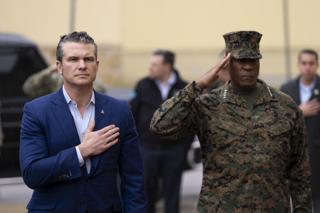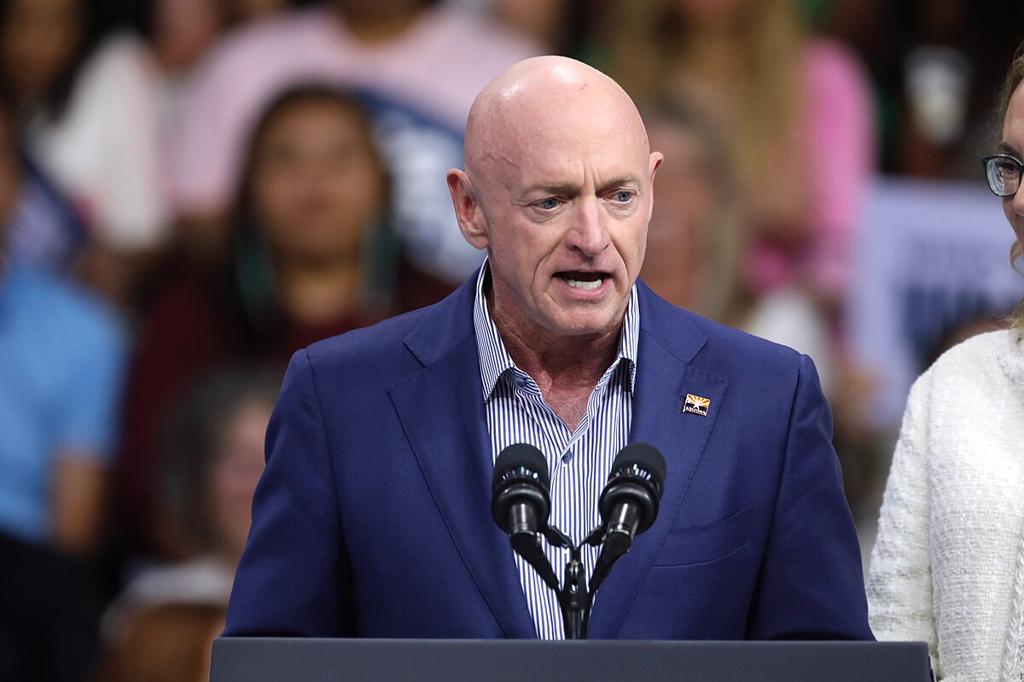
Sen. Mark Kelly, D-Ariz., is facing scrutiny after the Department of War announced that he could be recalled to active duty for court-martial proceedings due to his involvement in a controversial video dubbed the "Seditious Six." The video features Kelly and other Democratic lawmakers encouraging military personnel to disregard orders from President Donald Trump, their commander-in-chief. War Secretary Pete Hegseth stated that while five of the individuals in the video do not fall under the Department of War's jurisdiction, Kelly, as a retired Navy Commander, remains subject to the Uniform Code of Military Justice (UCMJ).
In the video, Kelly asserted, "Our laws are clear: You can refuse illegal orders," without specifying which orders he deemed illegal. This statement has raised concerns about its implications within the military, as it could be interpreted as a politically motivated influence operation.
Kelly's actions are not new; he has a history of decisions that critics argue undermine national security. Earlier this year, during a Senate confirmation hearing for Air Force nominee Dan Caine, Kelly defended former Joint Chiefs Chair Mark Milley, who is under investigation for allegedly reassuring Chinese officials about U.S. military intentions. Kelly's defense of Milley, rather than condemnation, has drawn criticism from various quarters.
Moreover, Kelly's ties to entities linked to the Chinese Communist Party have also come under scrutiny. Before his Senate career, he co-founded World View, a space tourism company that received investments from Tencent, a Chinese tech giant. While Kelly distanced himself from World View prior to his Senate run, concerns linger regarding the implications of such financial ties.
In 2020, reports surfaced that Kelly was an adviser to a Colorado company that partnered with a Chinese state-financed tech giant to develop aerospace technology. His attendance at several all-expenses-paid retreats in China, hosted by an organization connected to the Chinese government, has also raised eyebrows. Kelly described these experiences as among the highlights of his life.
Critics argue that Kelly's actions and associations reflect a broader pattern of behavior that could compromise U.S. national security. The recent video incident has reignited discussions about the responsibilities of military personnel and the potential consequences of political rhetoric.
As the situation unfolds, it remains to be seen how the Department of War will proceed with the potential recall of Kelly and what implications this may have for his political future. The intersection of military duty and political expression continues to be a contentious issue, particularly in an era marked by heightened geopolitical tensions and domestic divisions.