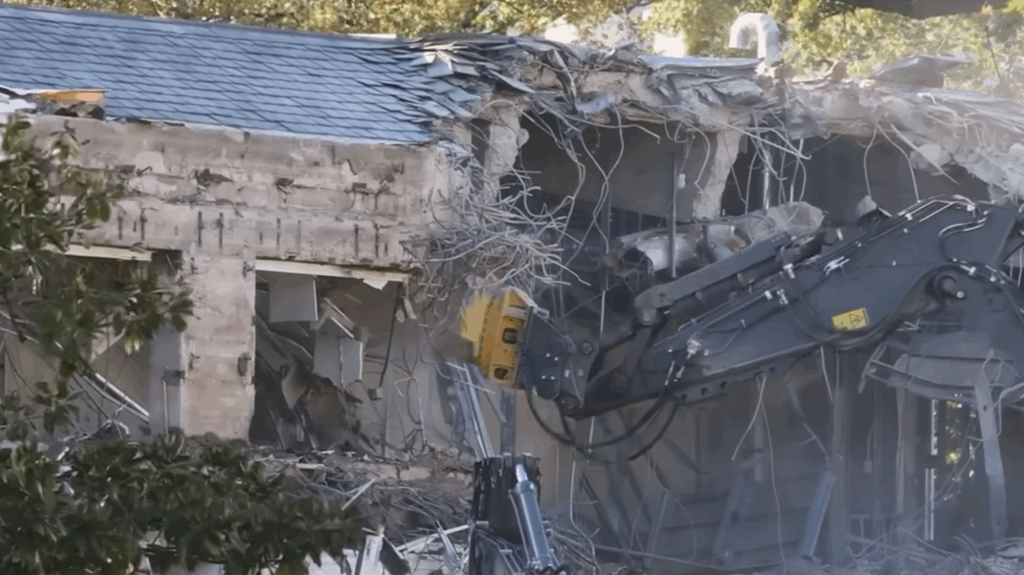
The White House's announcement of a privately funded ballroom construction has drawn sharp criticism from Democrats and media outlets. The ballroom, designed to accommodate 650 guests, is intended to enhance the historic residence, but opponents claim it threatens the integrity of the White House's legacy.
Construction began in mid-October, leading to a backlash as images of the early stages circulated. Critics argue that the project represents a significant alteration to the East Wing, with some likening it to historical destruction. Political scientist Martha Joynt Kumar stated, "They’re wrecking it. And these are changes that can’t be undone. They’re destroying that history forever."
The White House has defended the project, emphasizing that it is part of a long tradition of presidential renovations. Previous presidents, including Theodore Roosevelt and Franklin D. Roosevelt, have made significant modifications to the White House. The administration described the ballroom as a "much-needed and exquisite" addition that will cost taxpayers nothing.
Despite this, prominent figures have voiced their concerns. David Axelrod, a former advisor to President Obama, referred to the ballroom as a "gaudy monument to vanity, corruption, and excess." The Washington Post echoed this sentiment, suggesting that the construction is a form of historical vandalism.
Democratic lawmakers have also weighed in. Representative Jamie Raskin of Maryland compared the construction to the War of 1812, when British troops set the White House ablaze. Raskin remarked, "Now, Trump, who fashions himself a king, is doing the dirty work himself, tearing apart the people’s house to build a gaudy Marie Antoinette ballroom for the billionaires and CEOs to party while Americans are crushed by inflation and tariffs."
Senator Elizabeth Warren and former presidential candidate Hillary Clinton have similarly criticized the project, with Clinton accusing Trump of "destroying" the People’s House. These comments reflect a broader concern among some Democrats that the ballroom symbolizes Trump's disregard for historical preservation.
Supporters of the project argue that the backlash is less about the ballroom itself and more about opposition to Trump. Mark Hemingway of The Federalist noted that the angst surrounding the construction appears to stem from a desire to reject Trump’s legacy. "It’s so much that anyone really objects to constructing a WH ballroom; it seems people are just agitated they will have to deal with a permanent reminder that Trump was ever president," Hemingway stated.
The ballroom construction has sparked a national conversation about the preservation of historical sites and the role of modern additions. As the project progresses, it remains to be seen how it will impact the White House's historical narrative and the ongoing political discourse surrounding Trump's presidency.