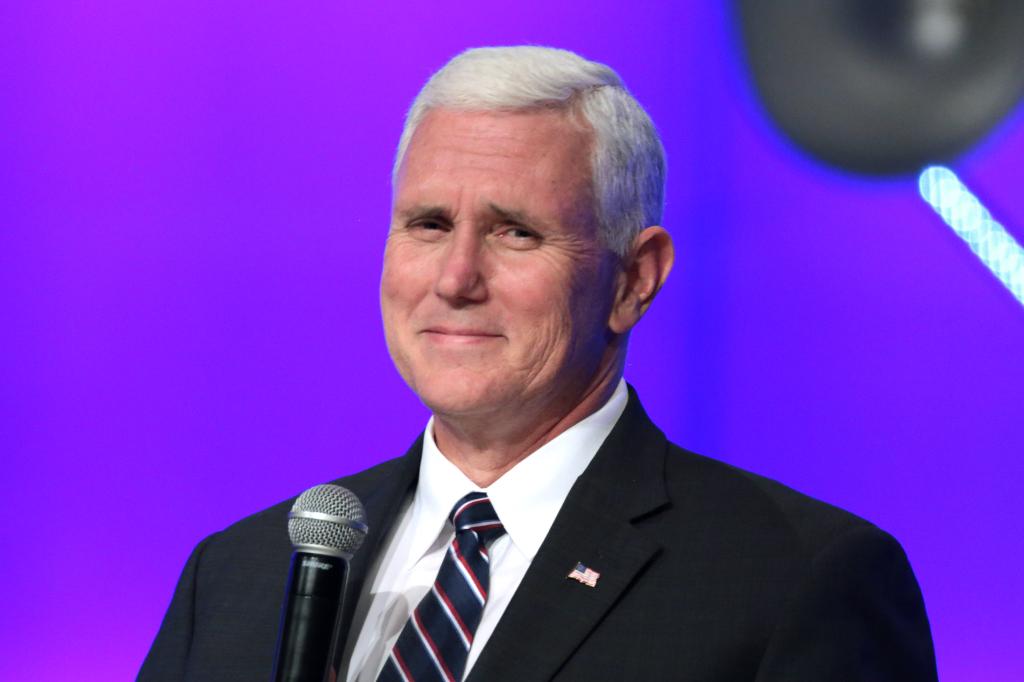
Former Vice President Mike Pence has publicly opposed the SAVE Act, a proposed bill aimed at requiring documentary proof of citizenship for voter registration in U.S. elections. His stance has reignited discussions about the balance of federal and state authority in election reform.
Explainer Election Integrity: Protecting Voter Rights in Modern America
The core tension lies in the debate over whether Congress should play a role in regulating voter registration, with Pence arguing that such reforms should be managed at the state level. Critics, however, contend that the SAVE Act addresses a significant issue regarding election integrity and noncitizen voting.
The SAVE Act seeks to amend the National Voter Registration Act of 1993, which currently does not require proof of citizenship for voter registration. Supporters of the bill assert that it is a necessary measure to ensure that only eligible voters participate in elections. In a statement posted on social media, Pence emphasized, "Election reform is a national imperative, but under our Constitution, election reform must be undertaken at the state level."
Pence's comments have drawn criticism from some lawmakers, including Senator Mike Lee, who argued that the SAVE Act is essential to address a problem created by existing federal law. Lee stated, "The NVRA—which SCOTUS has (wrongly) interpreted to prohibit states from seeking proof of citizenship when registering voters under the NVRA—makes the SAVE Act necessary."
Historical Context of Election Reform
Pence's position is notable given his previous support for federal election reforms. While serving in the House of Representatives, he voted for the Help America Vote Act in 2001, which established new standards for election administration and increased federal oversight. Additionally, he supported the reauthorization of the Voting Rights Act in 2006, which required certain jurisdictions to obtain federal approval before changing voting procedures.
These past actions raise questions about the consistency of Pence's current stance on federal involvement in elections. Critics suggest that his opposition to the SAVE Act may be politically motivated, as it aligns with a broader narrative against federal intervention in state matters.
Reactions from Supporters and Critics
Pence's organization, Advancing American Freedom, attempted to clarify his position by stating, "Federalizing elections is a bad idea. The federal government must be a willing partner when states seek to secure their own elections." This statement has been interpreted by some as contradictory, given the organization's support for the SAVE Act, which would increase federal requirements for voter registration.
Despite the backlash, Pence's supporters argue that his commitment to state authority in election matters reflects a principled conservative stance. They contend that the federal government should not impose regulations that could undermine the integrity of state-run elections.
While Pence has faced criticism for his remarks, he has not directly addressed the specific concerns raised by supporters of the SAVE Act. This silence has left some questioning whether his opposition is rooted in constitutional principles or political strategy.
The Broader Implications
The ongoing debate over the SAVE Act and Pence's opposition highlights the complexities of election reform in the United States. As states grapple with issues of voter registration and election integrity, the role of federal legislation remains a contentious topic.
Supporters of the SAVE Act argue that it is a necessary step to prevent voter fraud and ensure that elections are conducted fairly. Conversely, opponents warn that increased federal oversight could lead to unintended consequences and undermine the autonomy of state governments.
As discussions continue, the implications of Pence's position may influence the future of election reform efforts and the balance of power between state and federal authorities. The outcome of this debate could shape the landscape of American elections for years to come.