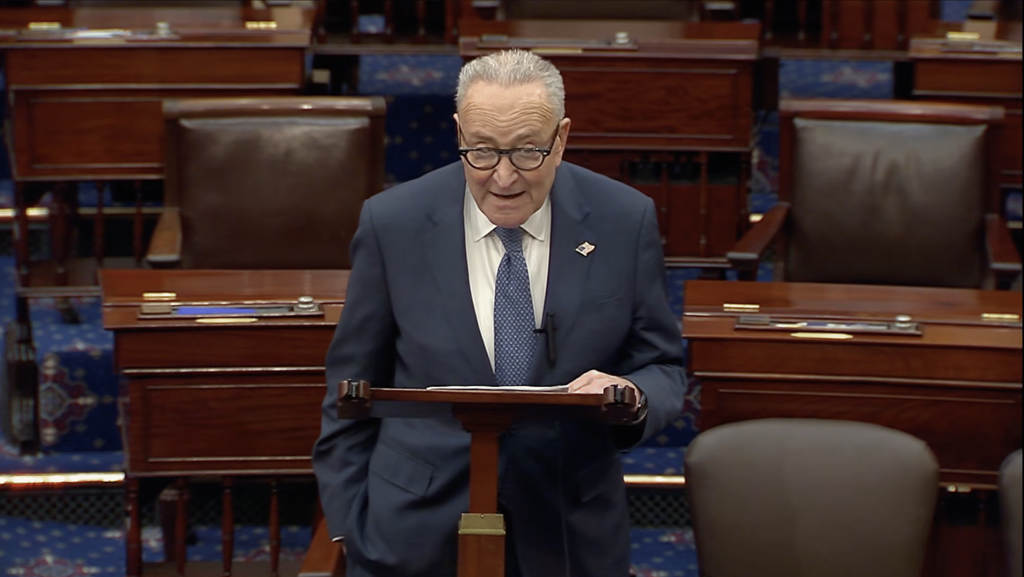
Senate Minority Leader Chuck Schumer (D-NY) issued a strong warning on Monday, threatening to initiate a government shutdown unless Republicans halt their efforts to advance the Safeguarding American Voter Eligibility (SAVE) Act. This proposed legislation aims to tighten voter registration requirements significantly. Schumer characterized the SAVE Act as a discriminatory measure, asserting, "The SAVE Act is nothing more than Jim Crow 2.0. It would disenfranchise millions of Americans. Every single Senate Democrat will vote against any bill that contains it." His comments reflect a broader concern among Democrats regarding the potential impact of the legislation on voter access.
The core tension in this debate revolves around the balance between ensuring election integrity and maintaining access to voting for eligible citizens. Schumer contends that the SAVE Act would harm eligible voters, while supporters of the legislation argue that it is necessary to prevent unauthorized individuals from participating in elections. Specifically, the SAVE Act seeks to amend the 1993 National Voter Registration Act to mandate documentary proof of citizenship for federal voter registration, a move that proponents believe will secure the electoral process.
The House of Representatives had previously passed the SAVE Act, managing to garner support from four Democrats. However, the bill has since stalled in the Senate, where it faces significant opposition. As Congress approaches a critical deadline for a new spending bill, Senate Majority Leader John Thune has indicated that there may be attempts to bring the SAVE Act to a vote as a standalone measure, which could further escalate tensions between the two parties.
Noncitizen Voting Concerns
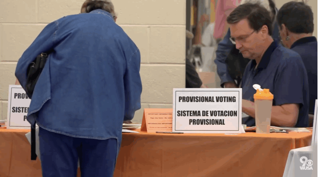
While voting by noncitizens is illegal under current laws, critics of existing regulations point to a lack of enforcement as a significant issue contributing to the problem. Under federal law, prospective voters can attest to their citizenship simply by checking a box on a registration form. This process has been criticized as insufficiently secure, leading to concerns that it has allowed thousands of unauthorized individuals to register or vote in elections.
Recent cases have highlighted the potential for noncitizen voting to undermine election integrity. For example, Melanie Pickett, a resident of Clayton County, Georgia, admitted to voting multiple times despite being a noncitizen. A state audit revealed that 20 noncitizens were registered to vote in Georgia, with nearly half of them having cast ballots in previous elections. Similarly, Pennsylvania identified over 11,000 noncitizens registered to vote, raising alarms about the integrity of the electoral process and the need for stricter measures.
Legislative Implications
Supporters of the SAVE Act argue that ensuring only citizens can vote is crucial, particularly in elections decided by narrow margins. For instance, Rep. Mariannette Miller-Meeks won her 2020 election by just six votes, underscoring the importance of every legitimate vote in maintaining the integrity of the electoral system. Advocates contend that every vote must be legitimate to uphold public confidence in election outcomes.
However, critics, including Schumer, argue that the proposed changes would disproportionately affect eligible voters and could lead to widespread disenfranchisement. They assert that the legislation is unnecessary, given that noncitizen voting is already illegal and that existing laws should be enforced more rigorously rather than introducing new barriers that could hinder eligible voters from participating in elections.
Despite the heated debate surrounding the SAVE Act, officials from the Republican side have not publicly responded to Schumer's comments regarding the potential government shutdown. The outcome of this legislative battle could have significant implications for future elections and voter access across the country. As the deadline for a government funding bill approaches, the fate of the SAVE Act remains uncertain, with both sides preparing for a contentious standoff. The implications of this legislation could resonate beyond the current political landscape, influencing voter registration practices and discussions about election integrity for years to come.