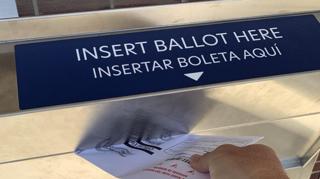
Former President Donald Trump is being urged to appoint Republican members to the U.S. Postal Service (USPS) Board of Governors, which currently has a Democratic majority. Critics argue that the board's composition could impact election integrity, particularly as mail-in voting remains a contentious issue following the 2020 presidential election.
Explainer Election Integrity: Protecting Voter Rights in Modern America
The USPS played a crucial role in the 2020 election, processing 135 million ballots, including both blank and completed ballots. This significant involvement has raised concerns about the oversight and security of mail-in voting, with critics asserting that the current board lacks sufficient Republican representation to ensure balanced decision-making.
Amber F. McReynolds, a proponent of mail-in voting and founder of the National Vote at Home Institute, was appointed to the board by President Joe Biden and serves as its chair. Critics, including Ned Jones, deputy director of the Election Integrity Network, argue that McReynolds' background and affiliations raise questions about the board's commitment to election integrity. "With mail-in voting, there’s no way to know who filled out the ballot," Jones said, emphasizing the potential for fraud.
Board Composition and Vacancies
The USPS Board of Governors consists of 11 members, including the postmaster general and the deputy postmaster. Currently, five seats are expected to be vacant at the start of 2026, with a majority of the board appointed by Democrats. Trump's last appointee, Roman Martinez IV, saw his term end on December 8, leaving the board without Republican representation.
Trump has nominated Anthony Lomangino to the board, but his nomination is pending Senate confirmation. In June, Trump withdrew the nomination of another candidate, John LaValle. Without additional Republican appointments, the board's decisions could be influenced by a predominantly Democratic agenda, particularly as the midterm elections approach.
Concerns Over Mail-in Voting
The National Vote at Home Institute, which McReynolds founded, has been a key player in promoting mail-in voting policies. Critics point to the institute's funding and lobbying efforts as evidence of a bias toward expanding mail-in voting without adequate safeguards. In 2020, the institute's gross receipts reached $8 million, and it spent nearly half a million dollars on lobbying efforts.
Jones highlighted the vulnerabilities associated with mail-in voting, stating, "The election officials deliver blank ballots to the post office, and there’s no system that tells us exactly how many are delivered, and how many are not delivered." He noted that the lack of a chain of custody for ballots raises significant concerns about election integrity.
Call for Action
As the USPS prepares for future elections, the need for balanced representation on the board has become increasingly urgent. Critics argue that without Republican appointments, the USPS could continue to operate under policies that favor mail-in voting without sufficient oversight.
Trump's potential nominees could play a pivotal role in shaping the board's approach to election-related issues. Jones expressed interest in being considered for a nomination, citing his experience investigating USPS's role in elections since 2020.
While the USPS has been a focal point for concerns about election integrity, supporters of mail-in voting argue that it increases voter turnout and reduces administrative costs. However, the ongoing debate highlights the need for a balanced approach to ensure that all voices are heard in the decision-making process regarding mail-in voting policies.