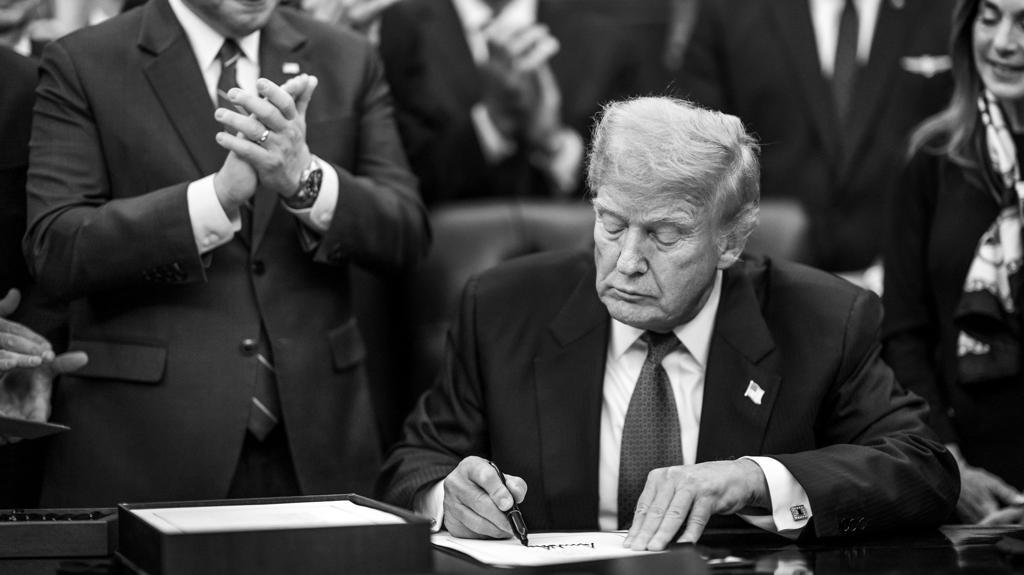
Recent media reports have suggested that the 'full, complete' presidential pardons issued by former President Donald Trump related to the 2020 election cannot shield individuals from state charges. Critics argue that the U.S. Constitution's pardon clause only applies to federal offenses. However, proponents of Trump's pardons contend that this interpretation is incorrect.
Explainer Election Integrity: Protecting Voter Rights in Modern America
The pardon clause, as outlined in the Constitution, grants the president the power to issue pardons for offenses against the United States, with the exception of impeachment cases. Legal experts note that attempts to limit the scope of this clause have consistently failed in court.
The concept of dual sovereignty in the U.S. legal system, which recognizes both federal and state jurisdictions, is said to be subject to the supremacy clause. This means that state laws cannot restrict the president's pardon powers. Advocates for Trump's pardons argue that the 77 individuals recently pardoned—including alternate electors, federal officials, and activists—were acting in defense of election integrity, thus justifying their pardons under the president's authority.
Critics maintain that the term 'United States' in the pardon clause refers solely to federal crimes. They argue that if this were not the case, the Supreme Court would not have upheld President Millard Fillmore's commutation of a death penalty sentence in a District of Columbia court, which involved a non-federal crime.
Historical examples are cited to support the argument for broad pardon powers. For instance, President Ulysses S. Grant pardoned state officials who had violated state law by allowing Susan B. Anthony to vote illegally in 1872. More recently, Trump pardoned Anthony herself in 2020.
In a related legal context, an all-Democrat panel of the Second Circuit recently ruled in favor of Trump's argument that charges against him in a hush money case should be heard in federal court. This ruling suggests that if a case can be adjudicated federally, it may also be subject to presidential pardon.
The tradition of presidential pardons, which dates back to George Washington, has historically included protections against state prosecutions for actions that have been pardoned. For example, after Trump pardoned Paul Manafort, New York courts declined to pursue state charges against him, citing double jeopardy principles.
The Supreme Court has historically affirmed the expansive nature of the presidential pardon power, stating that it extends to all offenses known to law, barring impeachment cases. This broad interpretation has been supported by legal scholars and historical precedent.
Critics of the narrow interpretation of the pardon power argue that it reflects a modern distortion by political elites. They assert that the media's focus on federal jurisdiction undermines the broader implications of the pardon clause, which they believe should encompass state-level offenses as well.
In conclusion, the debate over the scope of presidential pardons continues, with significant implications for the legal landscape surrounding election-related charges. Proponents of Trump's pardons assert that they are valid and comprehensive, while critics maintain that they do not extend to state prosecutions.