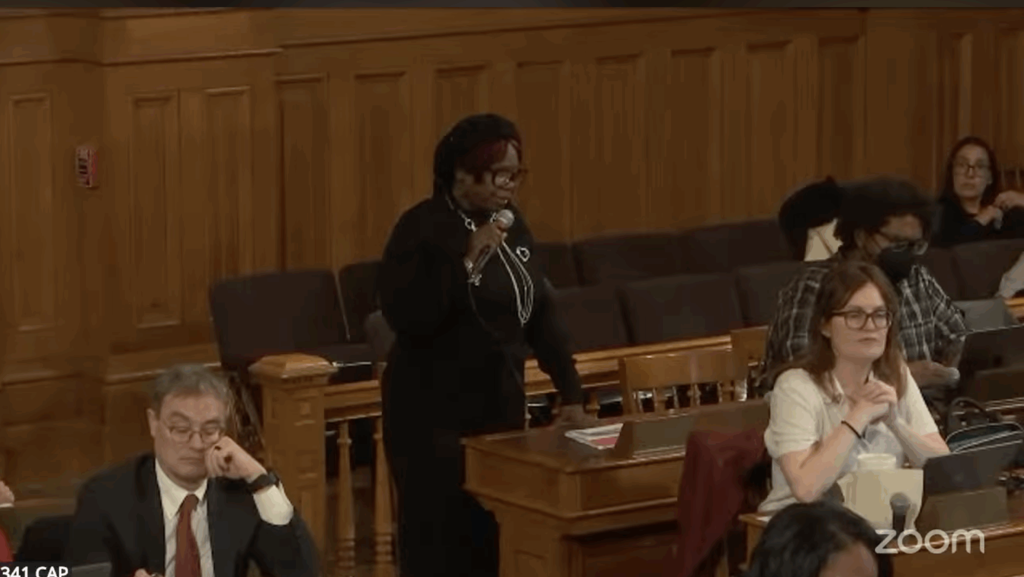
A woman who moved to Georgia from the Bahamas has admitted during a State Election Board (SEB) hearing that she has voted multiple times despite being ineligible due to her noncitizen status. Melanie Pickett, a resident of Clayton County, stated that she was unaware of the legal restrictions on her voting rights and believed she could participate in elections because her family members did.
Explainer Election Integrity: Protecting Voter Rights in Modern America
Noncitizen Admits to Voting Multiple Times in Georgia Elections
This case highlights ongoing concerns about election integrity and the potential for unauthorized voting in the United States. Critics of the current system argue that federal laws inadequately prevent noncitizens from voting, while supporters of stricter regulations contend that such measures are necessary to maintain the integrity of the electoral process. The issue of noncitizen voting has become a focal point in discussions about election security and voter eligibility.
Background and Reactions
Pickett, who has lived in Georgia for approximately 30 years, testified on December 9 that she had voted “maybe” three times. She explained her confusion by saying, "I got a driver’s license … and then I started getting voting-related information in the mail, and I said, ‘Oh, OK.’" However, she acknowledged that she was informed of her ineligibility when she attempted to vote this year, which raised further questions about her understanding of the voting process and eligibility requirements.
During the hearing, SEB member Janelle King asked Pickett if she typically votes, to which she replied, "I take my husband, and if he vote, I vote." This admission raises questions about the understanding of voting eligibility among some residents, particularly those who may not fully grasp the legal requirements for voting in the state.
An audit conducted by Georgia Secretary of State Brad Raffensperger in 2024 revealed that 20 noncitizens were registered to vote, all of whom had declared their noncitizen status when summoned for jury duty. Pickett confirmed that she accurately noted her citizenship status on a jury summons form, indicating her awareness of the law in that context, which complicates her claims of confusion regarding her voting eligibility.
Despite her assertions of misunderstanding, SEB member Dr. Janice Johnston cited voting records showing that Pickett had voted 23 times between November 2000 and December 2022. Johnston pressed Pickett on whether she understood the requirements when registering to vote, asking, "When you sign the oath, when you register, when you enter the polling place to vote, and it states that you meet the requirements to vote and you’re a U.S. citizen, do you sign that?" Pickett responded that she provided her driver’s license but did not read the forms thoroughly, saying, "I just go straight through it." This response raises further concerns about the level of diligence exercised by voters when completing registration and voting forms.
The SEB ultimately voted to refer the case to the district attorney, state attorney general, and the Department of Justice for further investigation. While noncitizen voting is illegal, the current federal law allows individuals to attest to their citizenship status by simply checking a box on a voter registration form. Critics argue that this method is insufficient to prevent unauthorized voting and that more stringent measures are necessary to ensure the integrity of elections.
In response to concerns about election security, Republicans in the House have passed the Safeguarding American Voter Eligibility (SAVE) Act. This legislation aims to amend the 1993 National Voter Registration Act to require documentary proof of citizenship for voter registration in federal elections. However, the bill has stalled in the Senate, leaving the issue of noncitizen voting unresolved at the federal level and continuing to fuel the debate over election integrity.
Supporters of the SAVE Act argue that it is essential to ensure that only eligible voters participate in elections, while opponents contend that such measures could disenfranchise legitimate voters. As the investigation into Pickett's voting history unfolds, the debate over election integrity and voter eligibility continues to be a contentious issue in Georgia and across the nation, reflecting broader concerns about the electoral process and the need for clear guidelines regarding voter registration and eligibility.