The FBI recently executed a search warrant for 2020 election materials in Fulton County, Georgia, prompting renewed calls for accountability from election integrity advocates. This development raises critical questions about whether any lawbreaking will be addressed, particularly if federal intervention is necessary.
Explainer Election Integrity: Protecting Voter Rights in Modern America
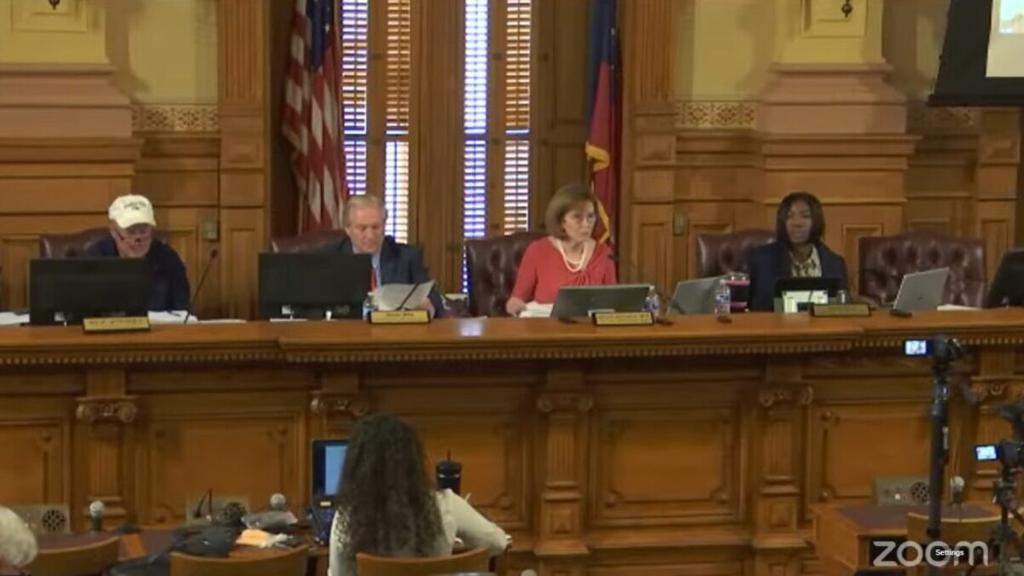
The core issue revolves around a significant backlog of election cases in Georgia, with critics questioning the effectiveness of the State Election Board and the Secretary of State's office in handling these matters. In December, the Georgia State Election Board convened to address a backlog of 315 cases, a situation exacerbated by Secretary of State Brad Raffensperger's criticisms of the board's efficiency.
Backlog and Accountability
James Mills, Executive Director of the State Election Board, indicated that approximately 270 of the cases awaiting adjudication were received in December alone. Critics have labeled Board Chairman John Fervier as an “obstructionist,” particularly after he missed a crucial meeting where board members managed to resolve about 160 cases.
Raffensperger has been accused of contributing to the backlog, as some cases from the 2020 and 2022 elections have yet to be delivered to the board for review. A notable incident during the December meeting involved case #2022-015, which revealed that over 130 tabulator tapes, representing around 315,000 votes, were not signed by poll managers as required. While Raffensperger dismissed this as a “clerical error,” the revelation sparked significant public concern.
Structural Issues in Oversight
The State Election Board, established in 1964, gained partial independence from the Secretary of State's office in 2021, with further changes in 2024 removing the Secretary entirely from board operations. Raffensperger expressed dissatisfaction with these changes, and critics argue that his office has sought to undermine the board's authority.
The board has had to rely on investigators from the Secretary of State's office, creating a conflict of interest as the office responsible for managing elections also investigates its own failures. In a controversial move, Raffensperger withdrew his investigators from board meetings in late 2025, further complicating the investigation process.
Kara Murray, communications director for Attorney General Chris Carr, stated that her office has jurisdiction over certain election crimes but lacks investigative authority. She noted, "No criminal matters have been referred to our office by the State Election Board or the Secretary of State’s Office," a claim that Mills disputes, asserting that serious criminal violations have indeed been referred to the attorney general.
Political Dynamics and Future Reforms
The ongoing dysfunction among the Secretary of State, the Attorney General, and local district attorneys has led to a lack of enforcement of election laws, which some argue undermines public confidence in the electoral process. Raffensperger has started to bypass both the board and the attorney general by referring cases directly to local district attorneys, a move that raises concerns about the capacity and willingness of these officials to prosecute election-related offenses.
State Senator Brian Strickland, a candidate for attorney general, expressed support for clarifying the attorney general's jurisdiction over election crimes, emphasizing the need for a more robust enforcement mechanism.
Without significant reforms, including funding for an independent State Election Board and clearer jurisdiction for the attorney general, critics warn that Georgia's election laws may become ineffective. Mark Davis, President of Data Productions, Inc., highlighted the necessity for both political will and structural changes to restore integrity to Georgia's electoral system.
As the 2026 Republican primary approaches, the stakes are high for both Raffensperger and Carr, who are competing for the governor's seat. Their handling of election integrity issues could significantly influence their campaigns and the perception of their commitment to addressing election-related concerns.