Florida Governor Ron DeSantis signed legislation on Monday that redistricts the state’s congressional map, a move that could significantly increase Republican representation in the U.S. House of Representatives. The new map, which takes effect immediately, has the potential to allow Republicans to gain an additional four seats in the upcoming 2026 midterm elections, thereby consolidating their power in the state’s congressional delegation.
Explainer Redistricting Unveiled: How It Shapes American Elections and Governance
The core tension surrounding this redistricting effort lies in its implications for party representation in Florida, where Republicans currently hold 20 of the 28 congressional seats. Critics of the new map argue that it undermines fair representation for voters, while supporters contend that it aligns with recent legal rulings regarding redistricting practices, suggesting that the changes are necessary to comply with evolving legal standards.
Under the previous congressional map, Democrats held eight seats. However, the newly drawn districts are expected to favor Republican candidates, particularly affecting four Democratic incumbents: U.S. Representatives Kathy Castor, Jared Moskowitz, Darren Soto, and Debbie Wasserman Schultz. According to Florida Politics, these districts now lean Republican based on the results of the last presidential election, indicating a strategic advantage for GOP candidates as they prepare for the midterms.
Legislative Process
The Florida House and Senate passed the new congressional map with significant majorities, with votes of 83-28 in the House and 21-17 in the Senate. DeSantis first announced plans for a special legislative session in January, aiming to address mid-decade redistricting. He stated that the goal was to ensure Florida’s congressional maps accurately reflect the state's population and comply with an upcoming U.S. Supreme Court ruling.
The ruling in question, Louisiana v. Callais, was issued last week and restricts states' ability to use race as a factor in redistricting. Justice Samuel Alito, in a 6-3 decision, emphasized that the Voting Rights Act should not compel states to engage in race-based discrimination. Alito wrote, "Section 2 of the Voting Rights Act of 1965 … was designed to enforce the Constitution — not collide with it."
In response to the ruling, DeSantis tweeted on April 29 that the decision impacted a district in Florida, asserting that the legal issues had been corrected in the newly drawn map. He claimed, "We said it was not constitutional under the upcoming Callais decision and now we’ve been vindicated with the publication of the Supreme Court’s opinion."
Implications for Future Elections
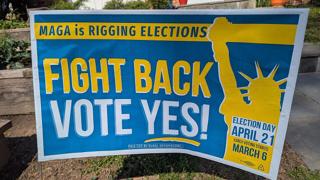
The new map is seen as a strategic move to counter potential Democratic gains in other states, particularly Virginia, where voters recently approved an amendment allowing the Democrat-controlled General Assembly to redraw congressional districts. If upheld by the Virginia Supreme Court, this could shift the state's congressional representation significantly in favor of Democrats, which would be a notable development in the broader political landscape.
Other states, including California, Missouri, North Carolina, and Texas, have also altered their congressional maps in anticipation of the 2026 midterms. Meanwhile, states such as Alabama, Louisiana, Mississippi, South Carolina, and Tennessee are considering similar changes in light of the Supreme Court's ruling, indicating a nationwide trend in redistricting efforts.
While critics of the new Florida map argue that it perpetuates partisan gerrymandering, supporters maintain that it is a necessary adjustment to comply with legal standards. The debate over redistricting practices continues to be a contentious issue as states prepare for the upcoming elections, with both sides presenting their arguments regarding the fairness and legality of the new maps.
As the political landscape evolves, the impact of these changes on voter representation and party dynamics remains to be seen. DeSantis's administration has not publicly addressed specific criticisms regarding the fairness of the new map, leaving some questions unanswered as the state moves forward with its redistricting efforts. The outcome of the 2026 midterm elections will likely provide further insight into how these changes will affect Florida's political representation and the balance of power in Congress.