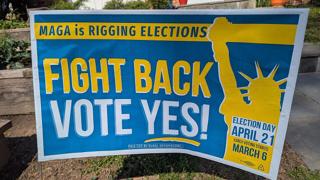
The Virginia Supreme Court has authorized a Democratic-led referendum that could significantly alter the state’s congressional districts. This decision has the potential to shift representation from the current configuration of five Republicans and six Democrats to a new arrangement of one Republican and ten Democrats. The ruling comes as Democrats aim to implement the new map ahead of a special election scheduled for April 21, allowing the changes to take effect before the general election in November.
Explainer Navigating Virginia's Electoral Landscape: Key Issues and Reforms
Virginia Supreme Court Allows Redistricting Referendum Amid Controversy
The core issue at hand revolves around the legality and fairness of the proposed redistricting. Critics argue that the plan amounts to gerrymandering, which would disenfranchise voters across the state. On the other hand, supporters of the referendum contend that it is a necessary step to ensure fair representation in a state that has increasingly leaned Democratic in recent years.
Background and Reactions
The proposed referendum would grant the Virginia legislature the authority to redraw congressional maps, effectively replacing the current nonpartisan commission that was established by a 2020 referendum. This commission has only been utilized once and failed to reach an agreement on new maps, which ultimately led to the intervention of the state Supreme Court. Critics, including former Virginia Attorney General Jason Miyares and former U.S. House Majority Leader Eric Cantor, have labeled the Democrats' plan a mid-decade power grab that undermines the electoral process.
"Though we firmly believe this referendum is illegal, the court has allowed it to move forward before final judgment. There will be further legal action on this matter," Miyares stated. He and Cantor co-chair a group called Virginians for Fair Maps, which aims to halt the redistricting process and ensure that the electoral integrity is maintained.
The Virginia House of Delegates has already passed the proposed 10-1 Democratic congressional map, which is now set to move to the Senate for approval. If the referendum is successful, it could lead to a significant shift in the balance of power in Congress, with potential implications for national politics and policy-making.
State House Minority Leader Terry Kilgore, R-Va., expressed concerns about the fairness of the process, stating, "We’re going to make our case to Virginians that this is unfair. This is unprecedented. And, quite frankly, it’s against the law we believe." Similarly, State Senate Minority Leader Ryan McDougle, R-Va., criticized the Democrats' actions, asserting, "Last October, Democrats took an unprecedented step to illegally pass a constitutional amendment at the 11th hour. The judiciary agreed, and the Supreme Court has taken up and fast-tracked the case. Make no mistake, the rule of law will prevail."
Despite the ongoing legal challenges, the Virginia Supreme Court has set itself to hear the case after the special election. This creates a scenario where the outcome could vary based on the referendum's approval. If the referendum passes and the court sides with Democrats, the gerrymandered map would be upheld. Conversely, if the court agrees with Republicans, it could nullify the vote, a scenario that many observers consider unlikely.
As the situation unfolds, both the state and national Republican parties, along with various organizations, are mobilizing efforts to increase voter turnout in Virginia. The outcome of the referendum could have lasting effects on the political landscape, making it a focal point for both parties as they prepare for the upcoming elections.
The Virginia Supreme Court's ruling has sparked a heated debate about the integrity of the electoral process and the role of partisan interests in shaping congressional representation. While Democrats argue that the changes are necessary for fair representation, Republicans and critics maintain that the move is a blatant attempt to manipulate electoral outcomes for political gain. The coming weeks will be crucial as voters prepare for the referendum and as legal challenges continue to mount, shaping the future of Virginia's political landscape.