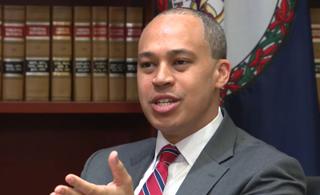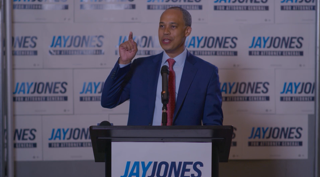
Virginia Attorney General Jay Jones has appealed to the U.S. Supreme Court, arguing that federal law mandates a single Election Day for congressional elections, challenging the state's current practice of an extended voting period. This appeal comes after the Virginia Supreme Court struck down a recent referendum aimed at changing the state's congressional representation, citing procedural issues related to the early voting period.
Explainer Navigating Virginia's Electoral Landscape: Key Issues and Reforms
The core tension lies in the conflict between Virginia's established early voting practices and the interpretation of federal law that Jones argues supports a singular Election Day. Critics of the extended voting period contend that it undermines the integrity of elections, while supporters argue that it increases voter access and participation.
In a recent decision, the Virginia Supreme Court invalidated a referendum that would have altered the state's congressional representation from a 6-5 Democratic-Republican split to a 10-1 advantage for Democrats. The court ruled that the referendum was improperly passed during an active early voting period, which violates the Virginia Constitution's requirement for a constitutional referendum to be voted on twice with an election in between.
Key Details
Jones's appeal to the Supreme Court asserts that federal law, specifically 2 U.S.C. § 7, establishes that elections for congressional representatives must occur on the Tuesday following the first Monday in November. He argues that this statute clearly indicates that the general election takes place on a single day in November, not over an extended period that includes early voting.
Background and Reactions
"The Virginia Constitution unmistakably indicates that, as a matter of ordinary English usage, the 'general election' takes place in 'November,' not over a three-month period beginning in September," Jones stated in his appeal. This position aligns with concerns raised by election integrity advocates who argue that the current practice of early and mail-in voting dilutes the significance of Election Day.
Jones's argument has drawn attention not only for its implications for Virginia's voting laws but also for its potential impact on broader national discussions about election integrity. Some legal experts caution that his appeal could inadvertently challenge the extended voting practices favored by many Democrats. Even Vox, which is not typically aligned with conservative viewpoints, noted that Jones's request could be detrimental to Democratic interests.
The appeal also mirrors arguments made by the Republican National Committee (RNC) in a separate case currently before the Supreme Court, Watson v. RNC, which addresses the counting of mail ballots received after Election Day. In that case, the RNC contends that accepting late ballots violates the principle of a single Election Day. Paul Clement, representing the RNC, emphasized that the integrity of Election Day is compromised when voting extends beyond that designated date.
During oral arguments in the Watson case, several justices expressed skepticism about the extended voting period. Justice Samuel Alito remarked, "We don’t have Election Day anymore. We have election month or we have election months," highlighting concerns that early voting practices could conflict with the intent of federal law. Justice Amy Coney Barrett added that historical practices suggest elections were meant to be conducted in person on a single day.
Jones's appeal raises questions about the future of early voting in Virginia, especially as the state prepares for its 2025 elections. Critics argue that the current system allows for a fluid electorate, which can lead to situations where voters cast ballots without full knowledge of candidates' actions or statements made close to Election Day. For instance, when news broke about Jones's controversial remarks regarding a Republican colleague, many voters had already submitted their ballots.
In his appeal, Jones insists that extending the voting period beyond a single day is a "novel and manifestly atextual interpretation" of both federal and state law. Chief Justice Cleo Powell of the Virginia Supreme Court echoed this sentiment in her dissent, stating that allowing elections to extend beyond a single day would conflict with federal mandates.
As the Supreme Court considers Jones's appeal, the implications could extend beyond Virginia, potentially reshaping how elections are conducted across the country. If the court agrees with Jones's interpretation, it could lead to significant changes in early voting practices, a development that many conservatives would welcome. However, supporters of early voting have yet to respond to these criticisms, leaving the debate open for further discussion.