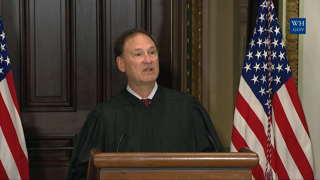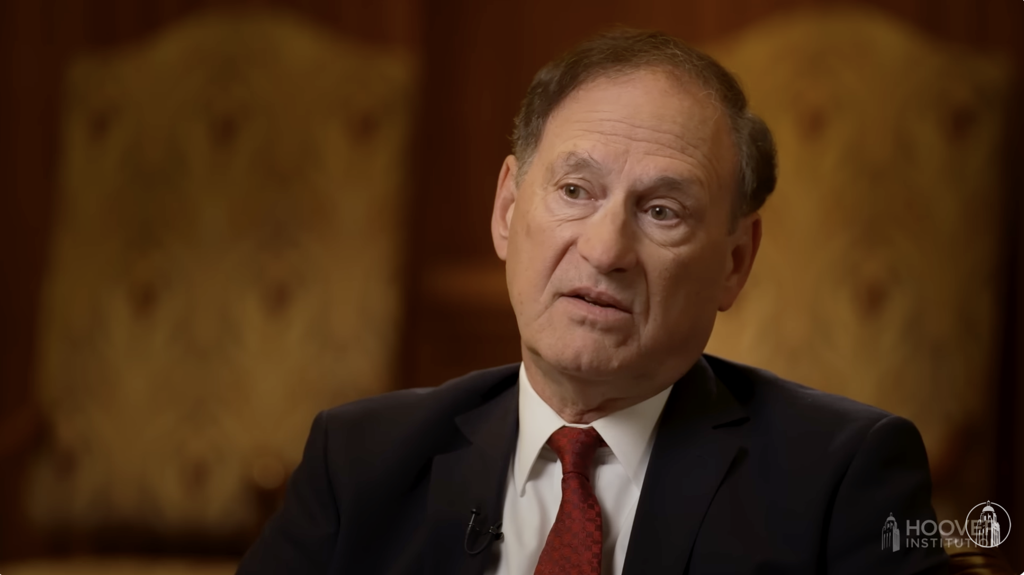
Justice Samuel Alito commemorates his 20th anniversary on the U.S. Supreme Court this month, coinciding with the release of a new book detailing his judicial philosophy and contributions. The book, titled Alito: The Justice Who Reshaped the Supreme Court and Restored the Constitution, emphasizes Alito's commitment to constitutional principles amid increasing scrutiny of the court's conservative justices.
The core tension surrounding Alito's tenure lies in the contrasting perceptions of judicial activism versus traditional jurisprudence, with critics arguing that the court has strayed from its foundational role. Alito's supporters contend that he represents a steadfast commitment to constitutional liberty during a time of significant societal change.
Alito's journey to the Supreme Court began with a reputation for intellect and hard work, distinguishing him from many in political circles. He has faced challenges as a conservative justice, particularly following the attempted assassination of Justice Brett Kavanaugh in 2022, which has heightened concerns about the safety of justices. Alito's approach is characterized by humility and a focus on legal scholarship rather than public acclaim.
A Different Kind of Justice
Colleagues describe Alito as "courageous," with one noting his brilliance as "off the charts." His demeanor contrasts sharply with the often high-profile nature of Washington, D.C. politics. Alito is known for his quiet presence at events, where he engages in meaningful conversations rather than seeking the spotlight. An eyewitness recounted a moment when Alito and his wife were turned away from a busy restaurant, describing it as a "very graceful moment" that exemplified his character.
Despite his low-key approach, Alito's influence is significant. He has been a vocal advocate for a moral code that he believes has been eroded in contemporary America. He often reflects on the struggles of middle- and lower-class Americans, lamenting that wealthy elites remain disconnected from the realities faced by many citizens.
Challenges and Criticism
Alito's tenure has not been without criticism. Some observers argue that his perspective may be overly nostalgic, focusing on a version of America that many believe is no longer attainable. Critics assert that his views may not adequately address the complexities of modern society. However, supporters argue that Alito's steadfastness in his beliefs is a necessary counterbalance to what they see as judicial overreach by more liberal justices.
Alito's emotional investment in his work is evident, as clerks can often gauge his feelings based on his expressions during court conferences. His colleagues have humorously noted his inability to hide his emotions, with one clerk joking that he would beam when dealt a good hand in a mock poker game during a clerks' variety show.
Personal Touch and Legacy
Alito's relationships with his clerks are marked by mutual respect and affection. He is known for his accommodating nature, even wearing a bracelet made by a young clerk's daughter during a visit to his chambers. This personal touch has endeared him to many who work with him, highlighting a side of the justice that contrasts with his public persona.
As he reflects on his career, Alito acknowledges the limitations of the judiciary in preserving constitutional freedoms. He cites the famous quote by Learned Hand, emphasizing that true liberty resides in the hearts of individuals. "A lot of good work has been done to protect freedom of speech, religious liberty, and the structures of government created by the Constitution," Alito stated. "But in the end, there is only so much that the judiciary can do to preserve our Constitution and the liberty it was adopted to protect."
Alito's legacy is still unfolding as he continues to serve on the Supreme Court, navigating the complexities of a changing legal landscape while remaining committed to his principles. His tenure serves as a reminder of the ongoing debates surrounding the role of the judiciary in American society and the importance of constitutional fidelity in an era of rapid change.