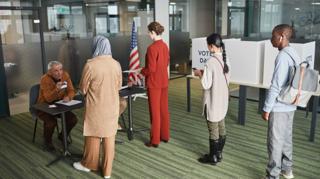
An unknown number of noncitizens may be registered to vote in this year's elections, raising concerns among election law experts and prompting renewed scrutiny of state voter registration systems. J. Christian Adams, president of the Public Interest Legal Foundation and a longtime election law specialist, has pointed to what he describes as systemic failures in state registration processes and inconsistent enforcement of existing laws as key factors contributing to the problem.
Explainer Election Integrity in America: Safeguarding Voter Trust and Ballot Security
The possibility that even a small number of unauthorized registrations could influence the outcome of close races has intensified debate over the integrity of voter rolls and the adequacy of current safeguards. While the scale of the issue remains unclear, the potential impact on competitive elections has drawn attention from policymakers and advocacy groups across the political spectrum.
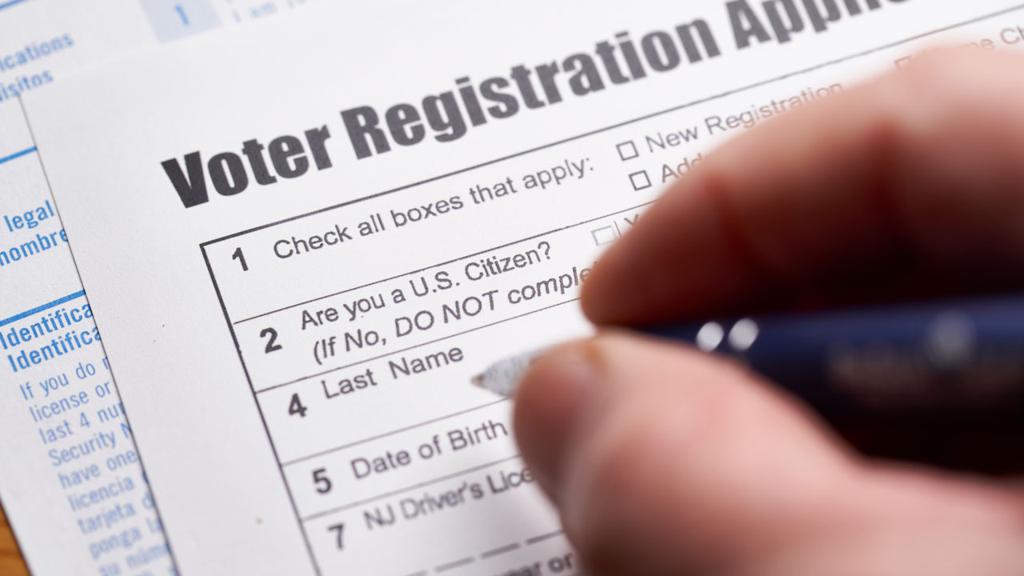
The issue has been highlighted in states such as California and Hawaii. According to Adams, records obtained by his organization show that individuals have registered to vote through the Department of Motor Vehicles (DMV) in these states despite indicating on forms that they were not U.S. citizens. Adams cited litigation in Oakland, California, where his group secured documents revealing that people who marked "no" to the citizenship question were still added to voter rolls.
"If the aliens are telling the election officials that they’re aliens and they’re still getting registered, we have a complete breakdown."
— J. Christian Adams, president, Public Interest Legal Foundation
Adams said the problem is not limited to California. He noted that similar vulnerabilities exist in other states, including New York, New Mexico, and Hawaii. He described Hawaii as "completely lawless" regarding compliance with federal election law and referenced ongoing litigation by his organization in the state to address these concerns.
Uncertainty Over Scale and Impact
The true number of noncitizens currently on voter rolls nationwide is unknown. Adams emphasized that available estimates are unreliable, stating, "If I had to guess how many noncitizens are on the rolls, it’s going to be between, I don’t know, 4,000 and 75,000. We just don’t know because the data are so fluid, the data are so unreliable."
Adams made a distinction between being registered to vote and actually casting a ballot. However, he argued that even a small number of illegal votes could be decisive in close contests, especially in local or state-level races where margins can be slim. To support his concerns, Adams referenced The Heritage Foundation’s voter-fraud database, as well as his organization's own database of close elections, which track instances where election outcomes could have been affected by a handful of votes.
He also noted that some noncitizens may be registered inadvertently, sometimes as a result of poor advice from officials or administrative errors during the registration process. In other cases, he said, individuals may intentionally violate the law by registering or voting despite not being eligible. Adams credited the Justice Department for recent prosecutions of noncitizens who illegally registered and voted, suggesting that enforcement is possible when violations are discovered.
State and Federal Responses
Efforts to address concerns over noncitizen registration have taken place at both the state and federal levels. Federal legislation such as the SAVE America Act, which would require proof of citizenship to register and photo identification to vote, passed the House of Representatives but stalled in the Senate amid opposition from Democratic lawmakers. Adams argued that states do not need to wait for federal action to improve their systems. He pointed to the Department of Homeland Security's Systematic Alien Verification for Entitlements (SAVE) database as a tool states can use to check citizenship status of registrants.
Florida was cited as an example of a state that has used the SAVE database to help verify the eligibility of voters. Adams acknowledged that the database is not perfect and has limitations, but said, "Maybe it’s not perfect, but it’s the best we’ve got."
Supporters of stricter registration requirements argue that such measures would reduce the risk of fraud and help restore public confidence in the electoral process. Critics, including some Democratic lawmakers, have opposed these proposals, arguing that they could disenfranchise eligible voters or create unnecessary barriers to participation. Requests for comment from critics were not answered in the source material.
California’s Voter ID Proposal
In California, the debate over election security has taken on new urgency as voters prepare to decide on Proposition 39, a ballot measure that would require government-issued identification at polling places. Adams said that voter ID laws have broad support among the public, stating, "Most Americans, by sizable numbers, support basic, simple voter ID." He argued that identification requirements would strengthen safeguards for both in-person and absentee voting, and noted that the proposal has received increased attention following a viral advertisement related to the measure.
Adams also contended that fixing registration systems would benefit both political parties and protect noncitizens from legal consequences, including deportation or arrest, if they are improperly registered. "Maybe they should fix the broken system because noncitizens get deported and arrested because they end up on the rolls, sometimes through no fault of their own," he said.
As states consider further reforms, the debate over noncitizen voting and election security is expected to remain a contentious issue. Lawmakers, election officials, and advocacy groups continue to weigh the balance between ensuring access to the ballot and protecting the integrity of the electoral process, with the outcome likely to shape future policy decisions.