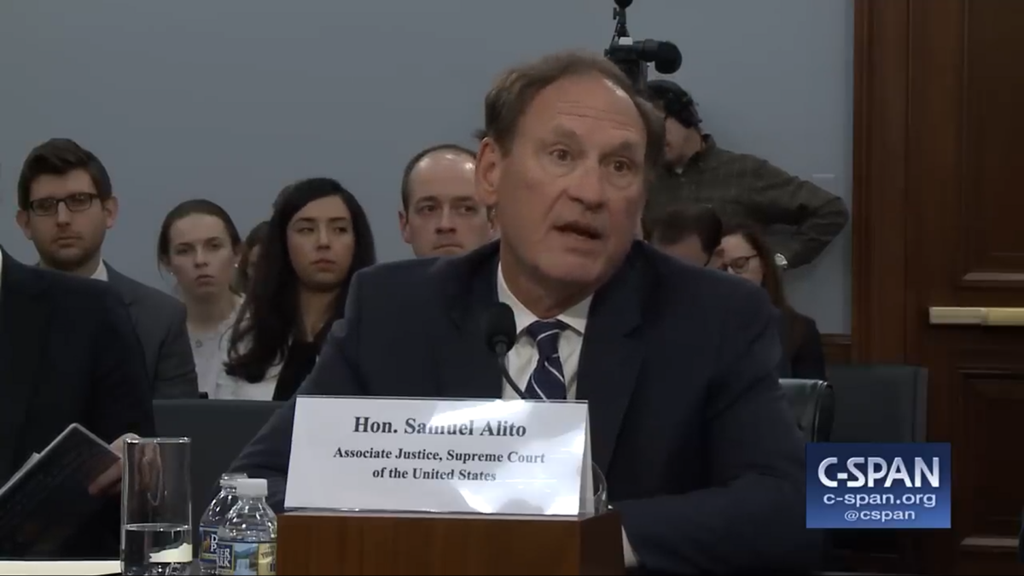
Justice Samuel Alito has emerged as a central figure in the Supreme Court's recent term, authoring key opinions that have shaped significant legal precedents. His decisions, particularly in cases related to immigration and voting rights, underscore his commitment to originalist interpretations of the Constitution, which some observers argue have far-reaching implications for American law.
Explainer Understanding the Supreme Court’s Impact on Law and Liberty
Alito's majority opinion in Louisiana v. Callais marked a notable stance against race-based redistricting, asserting that the Voting Rights Act should not compel states to engage in practices that conflict with a colorblind Constitution. He stated, "Section 2 of the Voting Rights Act of 1965 ... was designed to enforce the Constitution — not collide with it."
This decision reflects a broader trend in Alito's jurisprudence, where he consistently emphasizes constitutional fidelity over contemporary political pressures. His rulings have sparked debate over the balance between civil rights protections and constitutional principles, highlighting the tension between progressive and conservative interpretations of the law.
Immigration and Asylum Policies
In addition to his work on voting rights, Alito has also played a significant role in immigration-related cases. He authored the majority opinion in Mullin v. Al Otro Lado, clarifying that asylum seekers do not legally "arrive" in the United States while still in Mexico. This ruling has implications for how asylum claims are processed and could affect thousands of individuals seeking refuge.
Moreover, Alito supported the Trump administration's decisions regarding Temporary Protected Status (TPS) for foreign nationals, reinforcing the administration's authority to revoke such protections. His opinions in Mullin v. Doe and Trump v. Miot reflect a judicial philosophy that prioritizes executive power in immigration enforcement, a stance that has drawn both praise and criticism.
Second Amendment Rights
Alito's influence extends to Second Amendment issues as well. In Wolford v. Lopez, he authored a majority opinion that struck down Hawaii's concealed carry restrictions, arguing that they infringe upon Americans' rights to self-defense. He articulated that the state's regulations "hobbles what the Second Amendment protects: the right of Americans to carry arms for self-defense as they go about their daily lives."
This decision aligns with a broader conservative interpretation of the Second Amendment, emphasizing individual rights over state regulations. Critics of the ruling argue that it undermines public safety measures, while supporters contend it upholds fundamental constitutional rights.
Dissenting Opinions and Broader Impact
Even in dissent, Alito's opinions reflect his commitment to originalism. In Trump v. Barbara, he criticized the majority for introducing a controversial interpretation of "birthplace citizenship" into the 14th Amendment, warning of the potential consequences of such a ruling. He described the majority's reasoning as a "serious mistake" that could lead to "grotesque results" in constitutional interpretation.
Alito also dissented in Watson v. RNC, where he argued against the legality of states accepting mail-in ballots after Election Day, emphasizing the need for adherence to federal election laws. His dissent highlighted concerns about election integrity and public confidence in the electoral process, a topic of significant national debate.
As Alito's opinions continue to shape the legal landscape, his influence is increasingly recognized, with some commentators suggesting that his judicial philosophy is reshaping the Supreme Court's identity. Mollie Hemingway's forthcoming book, Alito: The Justice Who Reshaped the Supreme Court and Restored the Constitution, aims to further illuminate his role in these pivotal decisions.
With the Supreme Court's term concluding, observers are keenly watching how Alito's interpretations will influence future cases and the broader trajectory of American law. His commitment to originalism and constitutional fidelity positions him as a key figure in ongoing legal debates, particularly as the court navigates contentious issues surrounding civil rights, immigration, and gun rights.