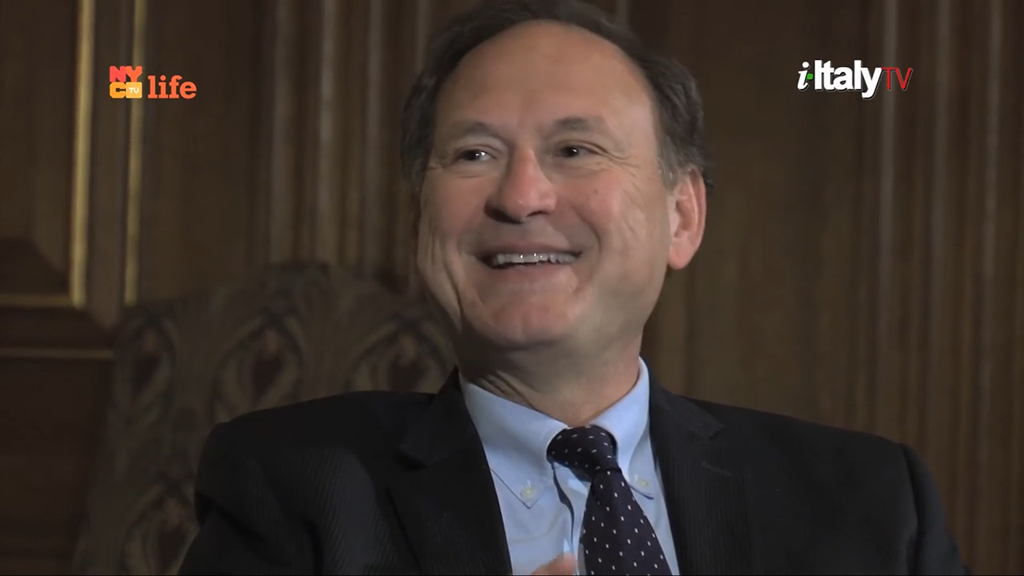
The U.S. Supreme Court ruled on Tuesday that Hawaii's law restricting concealed-carry permit holders from carrying handguns on private property open to the public is unconstitutional. The decision, authored by Justice Samuel Alito, was part of a 6-3 majority in the case Wolford v. Lopez, which reinforces Second Amendment protections across the country.
Explainer Understanding the Supreme Court’s Impact on Law and Liberty
This ruling highlights the ongoing debate over gun rights and regulations, particularly as states grapple with how to balance public safety and individual freedoms. The court's decision underscores a significant shift in the legal landscape regarding gun ownership and public carry laws.
Hawaii's law required permit holders to obtain permission from property owners before carrying firearms onto their premises, a requirement that Alito described as a "new burden" on gun owners. He noted that this rule could discourage property owners from allowing permit holders to enter, as they might fear alienating other customers. "This arrangement imposes a new burden on permit holders who will have to somehow obtain permission to carry a firearm on the property before stepping foot on it," Alito wrote.
Constitutional Consistency
In his opinion, Alito emphasized that the Second Amendment's protections apply uniformly across all states, regardless of local attitudes toward gun ownership. He stated, "The Second Amendment has the same meaning in all parts of the United States. … It cannot give way to 'the spirit of Aloha' in Hawaii … any more than it can yield to the spirit of the Big Apple or the Windy City."
Alito's ruling also pointed out that carrying firearms in public is a longstanding American tradition, noting that Hawaii's restrictions are an outlier compared to other states. He argued that the evidence overwhelmingly supports the right to public carry, stating, "A]s we have explained, 'overwhelming evidence' shows an 'enduring American tradition permitting public carry.'"
Historical Context
The court's opinion further dismantled Hawaii's defense of its law, which relied on historical analogues from the founding era. Alito argued that these analogues primarily targeted unauthorized hunting and did not apply to the public carry of firearms in retail or urban settings. He stated, "They had little if any impact on the Second Amendment's central objective: protecting the fundamental right to self-defense."
Additionally, Alito criticized Hawaii for invoking a Civil War-era law, known as a "Black Code," which aimed to restrict the Second Amendment rights of freed black Americans. He emphasized the importance of the right to bear arms for vulnerable populations during that time, arguing that Hawaii's reliance on such a law was misguided. "Unless we put history entirely out of our minds, Hawaii's claim that this tainted artifact illuminates the original understanding of the right to keep and bear arms cannot be taken seriously," he wrote.
Reactions and Implications
The ruling has drawn mixed reactions from lawmakers and advocacy groups. Gun rights advocates hailed the decision as a victory for individual freedoms and Second Amendment rights. However, some public safety advocates expressed concern that the ruling could lead to increased gun violence and undermine local efforts to regulate firearms.
Supporters of Hawaii's law have not publicly responded to the ruling, and it remains unclear how state officials will adjust their regulations in light of the Supreme Court's decision. Legal experts suggest that this ruling may set a precedent for similar cases across the country, potentially leading to challenges against restrictive gun laws in other states.
As the debate over gun control continues, the implications of this ruling could resonate far beyond Hawaii, influencing how states craft their firearm regulations in the future. The Supreme Court's decision reinforces the notion that the Second Amendment rights are fundamental and must be protected uniformly across the nation.