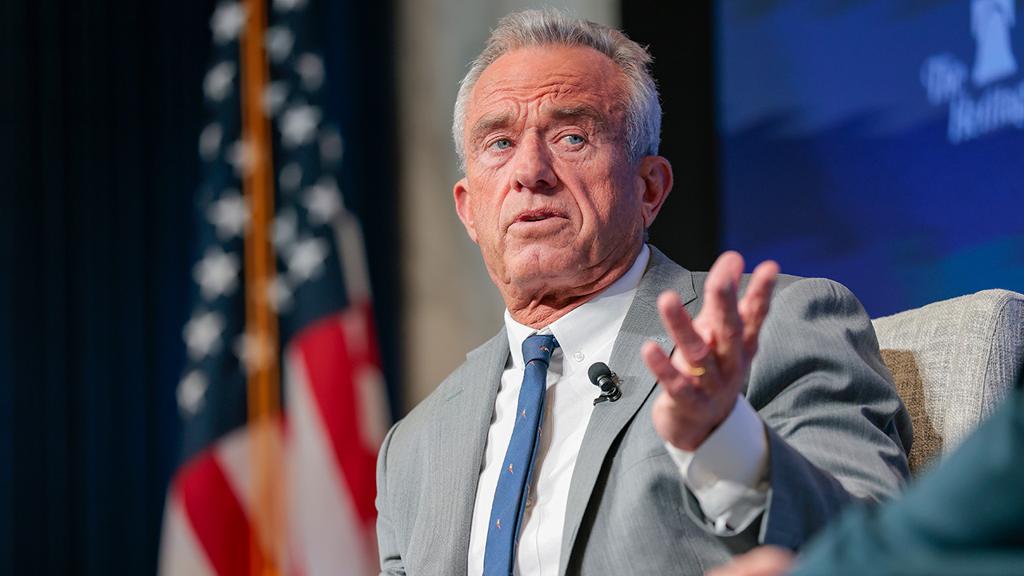
Health and Human Services Secretary Robert F. Kennedy Jr. said the Make America Healthy Again (MAHA) movement will be a key factor in the upcoming November midterm elections, citing growing enthusiasm and recent primary victories by MAHA-backed candidates.
Kennedy’s comments highlight the movement’s rising influence as Republicans aim to consolidate support among voters focused on health policy and regulatory reform. The MAHA movement, which promotes health-focused policy changes under President Donald Trump’s administration, has seen its endorsed candidates win several high-profile primaries in recent months, signaling its growing reach within the Republican Party.
The movement’s central message has resonated with voters concerned about public health, regulatory oversight, and the role of government in shaping health policy. MAHA’s priorities include changes to vaccine schedules, increased scrutiny of pharmaceutical and pesticide companies, and a broader push for transparency in health-related decision-making.
In Louisiana, MAHA PAC-backed Rep. Julia Letlow defeated incumbent Sen. Bill Cassidy, who chairs the Senate Health, Education, Labor and Pensions Committee, in the Republican Senate primary. Letlow’s victory was widely seen as a significant win for MAHA supporters, as Cassidy had been a prominent figure in shaping national health policy. In Iowa, Zach Lahn, also endorsed by MAHA PAC, prevailed over Trump-endorsed Rep. Randy Feenstra in the gubernatorial primary. Lahn’s campaign focused on opposition to liability shields for pesticide companies and efforts to reduce nitrate levels in water supplies, issues that have become central to the MAHA platform.
Kennedy’s National Tour
Kennedy has traveled extensively in recent weeks to promote the administration’s MAHA agenda, making stops in Danville, Virginia; Goldsboro, North Carolina; Nashville, Tennessee; Lexington, Kentucky; and Atlanta, Georgia. At each stop, Kennedy has emphasized the administration’s commitment to health reform and regulatory changes. He told the Daily Signal, “Everywhere we go, we’re seeing incredible enthusiasm from the MAHA movement for this administration, so I think it’s going to be an important factor.”
The MAHA PAC launched a $100 million fundraising campaign in March to support Trump-endorsed candidates aligned with the movement’s priorities, according to the Daily Signal. The fundraising effort is aimed at bolstering candidates who support MAHA’s agenda, including reforms to vaccine policy, pesticide regulation, and broader health system changes. The campaign has drawn support from grassroots donors as well as prominent figures within the movement, reflecting the broad base of support MAHA has built ahead of the midterms.
Vaccine Policy Disputes
Some MAHA supporters have called for Kennedy to pursue more aggressive changes to the childhood vaccine program. The Wall Street Journal reported that President Trump has expressed frustration that Kennedy has not done more to investigate alleged links between vaccines and autism, an issue that has divided both the medical community and the Republican base.
A new childhood vaccine schedule issued by Kennedy’s agency, which recommended fewer vaccines and more parental flexibility, was blocked by a federal court. The administration is appealing the preliminary injunction. Kennedy said he is confident the administration will prevail and that changes to the schedule should ultimately be made by the Advisory Committee on Immunization Practices (ACIP).
“I think that ultimately the changes [to the childhood vaccine schedule] have to be made by the ACIP panel, and we’re confident that we’re going to win this lawsuit and be able to get those changes, be able to make sure that we have high quality science, not only on efficacy but on vaccine safety as well, which has been lacking in the past.”
— Robert F. Kennedy Jr., Health and Human Services Secretary
The debate over vaccine policy has become a flashpoint within the MAHA movement, with some supporters pushing for immediate action and others urging a more cautious, evidence-based approach. Kennedy has sought to balance these competing demands, emphasizing the need for scientific rigor while acknowledging the concerns of parents and activists who have questioned the safety and necessity of certain vaccines.
Pesticide Policy and MAHA Voters
The administration has also faced criticism from some MAHA voters for prioritizing pesticide production. President Trump signed an executive order to boost production of glyphosate, citing national security and food supply concerns. The move was intended to ensure a stable food supply and protect American agriculture, but it has drawn pushback from MAHA supporters who are concerned about the health and environmental impacts of increased pesticide use.
Mark Gorton, co-president of the MAHA Institute, acknowledged these concerns but said most MAHA voters recognize the complexity of policy change and will continue to support Republicans because of Kennedy’s record. Gorton described MAHA voters as “perhaps one of the largest groups of potential swing voters in the country,” adding, “I know a lot of people for whom this is their number one issue, and this is what they’re choosing to vote on. I really see this as a meaningful force in the American political landscape.”
Despite internal disagreements, Gorton said MAHA voters are expected to turn out for Republicans in November. Neither Kennedy nor administration officials addressed specific criticisms regarding the pesticide executive order, but the issue remains a point of contention within the movement.
As the midterm elections approach, the MAHA movement’s influence is expected to shape both the Republican primary landscape and the general election. With its focus on health policy, regulatory reform, and grassroots mobilization, MAHA is poised to play a significant role in determining the outcome of key races across the country.