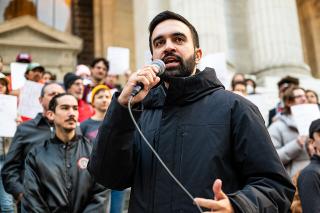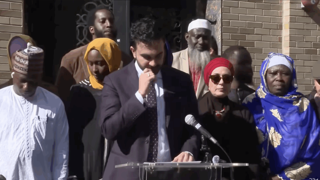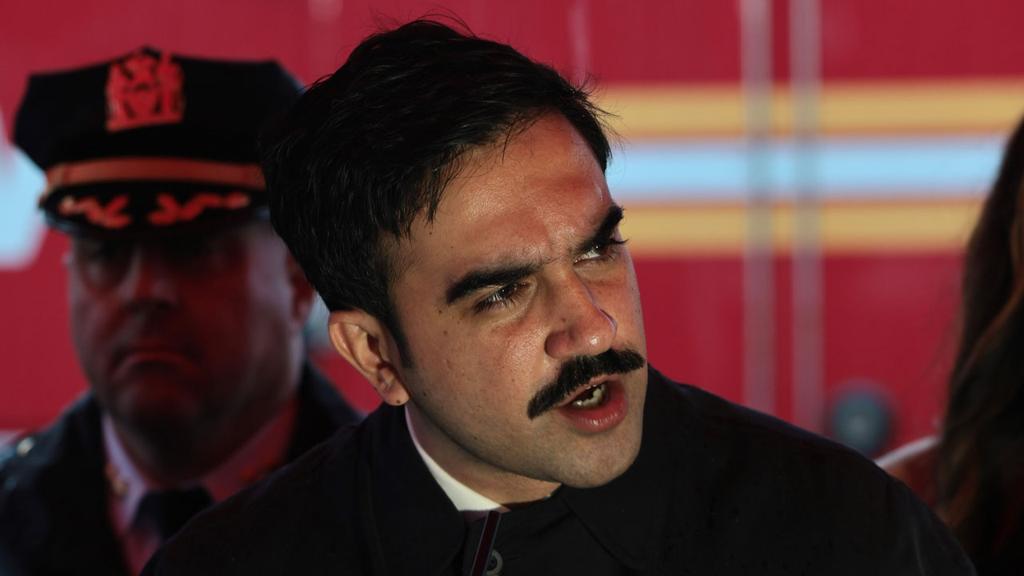
New York City Mayor Zohran Mamdani announced Monday his intention to disband the NYPD’s Strategic Response Group (SRG), a specialized police unit established to address riots, terrorism, and major public safety incidents. The announcement marks a significant shift in the city’s approach to protest management and emergency response, and has sparked a citywide debate over the potential consequences for public safety and civil liberties.
Explainer Zohran Mamdani’s Mayoral Victory: Shaping New York City's Progressive Future
The SRG was created under former NYPD Commissioner Bill Bratton as a citywide force designed to respond rapidly to major incidents, support large-scale events, and manage demonstrations that could escalate into serious disorder. According to Bratton, as reported in the New York Post and corroborated by City Journal, the SRG was intended to fill a gap in the city’s readiness for emergencies that could overwhelm regular patrol officers. Bratton has warned that eliminating this capability could endanger lives, particularly in scenarios such as active-shooter attacks or large-scale riots.
Details of the NYPD Restructuring
Under Mamdani’s plan, the SRG would be replaced by a new "Community Dialogue and De-escalation Division." This new division would be staffed by unarmed civilians who do not have arrest powers. The stated goal is to prioritize communication and de-escalation in situations involving protests and public demonstrations. In addition, the city will establish a First Amendment Support Team within the NYPD’s Community Affairs Bureau. This team will be tasked with liaising with protesters and focusing on de-escalation—a function that, according to City Journal, is already performed by existing Community Affairs officers.
The restructuring also includes several new restrictions on police tactics. The use of tear gas, "kettling" (a crowd-control technique that involves enclosing protesters), and the deployment of long guns or pepper spray for general crowd management will be banned. These measures largely reflect current NYPD practices or terms agreed upon in a 2023 settlement with the New York Civil Liberties Union, as reported by City Journal.
A new Patrol Support Division will also be created. This unit will assist with searches for missing persons, provide support at major events, and, in rare cases, conduct arrests at protests. The responsibilities of this new division closely mirror those of the disbanded SRG, leading some observers to question whether the reorganization will result in substantial changes to the city’s operational capabilities.
Supporters and Critics Respond
Supporters of Mamdani’s plan, including City Council Member Chi Ossé and U.S. representative-elect Darializa Avila Chevalier—both affiliated with the Democratic Socialists of America—have praised the move as a victory for protest rights and civil liberties. Chevalier described the plan as “a major win for every New Yorker who has exercised their First Amendment right to protest,” and called on the City Council to support the policy to prevent specialized police units from “terrorizing our communities.”
Former New York City Mayor Eric Adams, who previously oversaw the SRG, highlighted the unit’s role in preventing violence from escalating during demonstrations. “We had the NYPD’s Strategic Response Group (SRG), a specialized unit of highly trained officers prepared to confront violence before it spiraled out of control,” Adams said.
Critics of the plan, including Bratton and Adams, argue that the SRG provided essential readiness for emergencies and helped prevent violent riots seen in other global cities. Bratton emphasized that the SRG’s active-shooter training and specialized equipment were only used in exceptional circumstances, not for routine protest management. He warned that eliminating the SRG could leave the city less prepared for rare but dangerous incidents.
Recent Incidents and Broader Context
The debate over the SRG’s future comes amid ongoing tensions between advocates for police reform and those warning of increased vulnerability to disorder and terrorism. Hours after Mamdani’s announcement, two peace officers were shot during a wellness check at a Bronx apartment, resulting in a standoff with the NYPD’s Emergency Service Unit, according to the New York Post. Public safety experts, such as Rafael Mangual of the Manhattan Institute, cited the incident as evidence of the risks posed by relying on unarmed civilian responders in dangerous situations.
The city’s approach to protest management and emergency response remains a contentious issue. Supporters of the restructuring argue that it will protect civil liberties and reduce the risk of excessive force during demonstrations. Critics, however, contend that the changes may leave gaps in the city’s ability to respond to violent incidents or large-scale unrest. Both sides claim to prioritize public safety, but differ sharply on the best means to achieve it.
As of now, Mamdani’s office has not addressed specific concerns that the new structure may leave the city less able to respond to emergencies. The City Council is expected to debate the proposal in the coming weeks, with the outcome likely to shape the future of protest management and public safety in New York City.
For further statements from Council Member Chi Ossé, see: https://council.nyc.gov/chi-osse/2026/04/22/statement-from-the-office-of-council-member-chi-osse-on-his-arrest