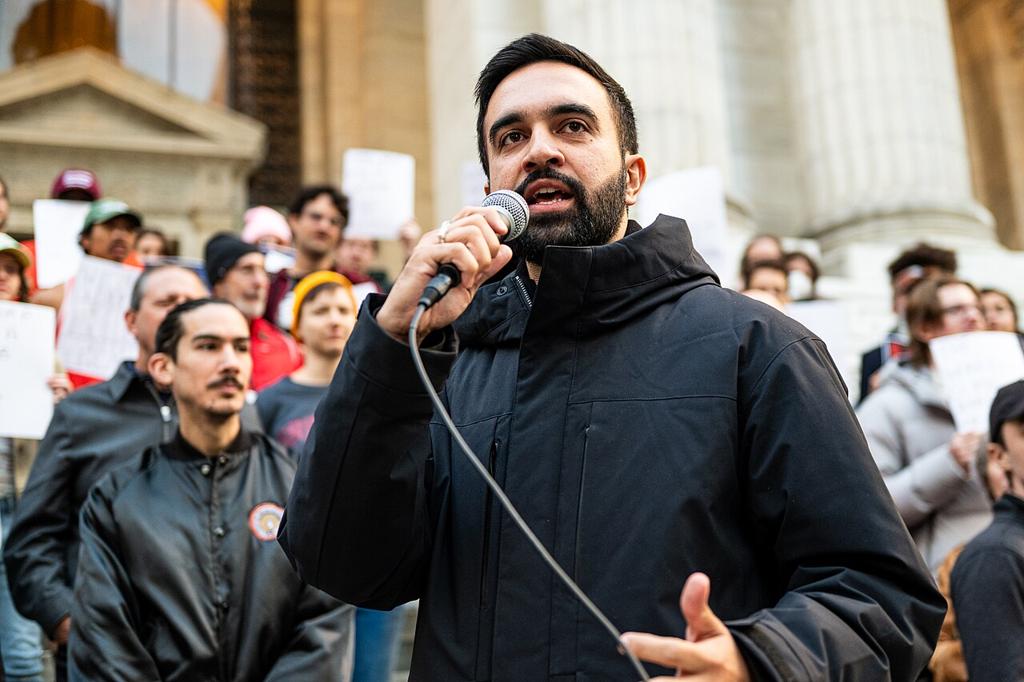
New York City Mayor Zohran Mamdani has proposed a nearly 10 percent increase in property taxes, a move that has ignited a significant debate over the implications for middle-class families. Critics argue that this proposal contradicts longstanding Democratic assertions that government benefits can be funded without burdening the middle class with higher taxes. This proposed tax hike has raised concerns among residents who are already grappling with rising living costs, including housing, food, and healthcare expenses.
The core tension lies in the potential financial impact on households that are already struggling to make ends meet. Mamdani's admission that his agenda may require tax increases that extend beyond just the wealthy challenges a narrative that has been prevalent among Democrats for decades. Traditionally, the party has maintained that only affluent individuals should shoulder the tax burden, thereby sparing the middle class from additional financial strain.
Historically, Democratic leaders have avoided discussing tax hikes on the middle class, fearing political backlash and voter discontent. For instance, during her 2020 presidential campaign, Senator Elizabeth Warren proposed expansive federal spending initiatives without explicitly calling for contributions from middle-class taxpayers. Similarly, Senator Bernie Sanders acknowledged in 2019 that his healthcare plan would necessitate broad-based tax increases but claimed that most Americans would ultimately pay less for healthcare overall due to the savings generated by the plan.
Mamdani's proposal marks a significant shift in this narrative. He stated that families may need to pay "a little bit more" to support government programs, a statement that has drawn sharp criticism from conservatives and some constituents. Critics argue that this reflects a broader trend of Democrats failing to keep their promises regarding tax increases, thus raising questions about the party's commitment to its core principles.
Historical Context of Tax Promises
The history of tax promises among Democratic leaders is fraught with examples of broken commitments. Former President Barack Obama famously assured families earning below $250,000 that their taxes would not increase, only to later sign legislation that raised taxes on certain products, including cigarettes. This pattern has led many to question the reliability of political pledges regarding taxation and fiscal responsibility.
Mamdani's proposal has faced immediate backlash, with many residents expressing concern over the financial strain it could impose on their already tight budgets. The mayor's office has not yet responded to these criticisms, leaving some to wonder about the administration's commitment to transparency regarding tax policy and its potential impacts on everyday New Yorkers.
Broader Fiscal Implications
The proposed tax increase comes at a time when the Congressional Budget Office has warned that federal debt is projected to reach unprecedented levels as a share of the gross domestic product. The surge in federal spending during the COVID-19 pandemic has led to rising interest costs, which are expected to exceed $1 trillion this year alone. This financial landscape raises critical questions about the sustainability of government spending and the potential need for broader fiscal reforms to address the growing debt crisis.
Mamdani's approach has prompted discussions about the necessity of spending restraint and entitlement reform at the federal level. Chris Jacobs, founder and CEO of Juniper Research Group, noted that Mamdani's proposal underscores the challenges of funding government services without imposing additional burdens on families. He stated, "Mamdani made as great a case as any for greater spending restraint," emphasizing the need for a balanced approach to fiscal policy.
Political Reactions and Future Considerations
The political ramifications of Mamdani's proposal are still unfolding. While conservatives have welcomed the debate on fiscal responsibility and the implications of increased taxation, supporters of the tax increase argue that it is essential for maintaining public services and infrastructure. They contend that the benefits of government programs ultimately outweigh the costs associated with increased taxation, particularly in a city as large and complex as New York.
As the city grapples with the implications of this proposal, the response from the mayor's office and other Democratic leaders will be crucial in shaping public perception. The ongoing discourse around taxation and government spending is likely to influence future policy decisions and electoral outcomes in New York City and beyond. The outcome of this debate could set a precedent for how similar fiscal issues are addressed in other urban areas across the country.