The Federal Reserve's renovation project has escalated in cost to $2.5 billion, prompting significant criticism over both the budget and the design aesthetics of the buildings involved. Initially, the project was estimated at $1.9 billion, but rising costs have led to accusations of poor taste and mismanagement under Fed Chair Jerome Powell. Critics argue that such an increase in budget reflects a lack of accountability and oversight in the management of public funds.
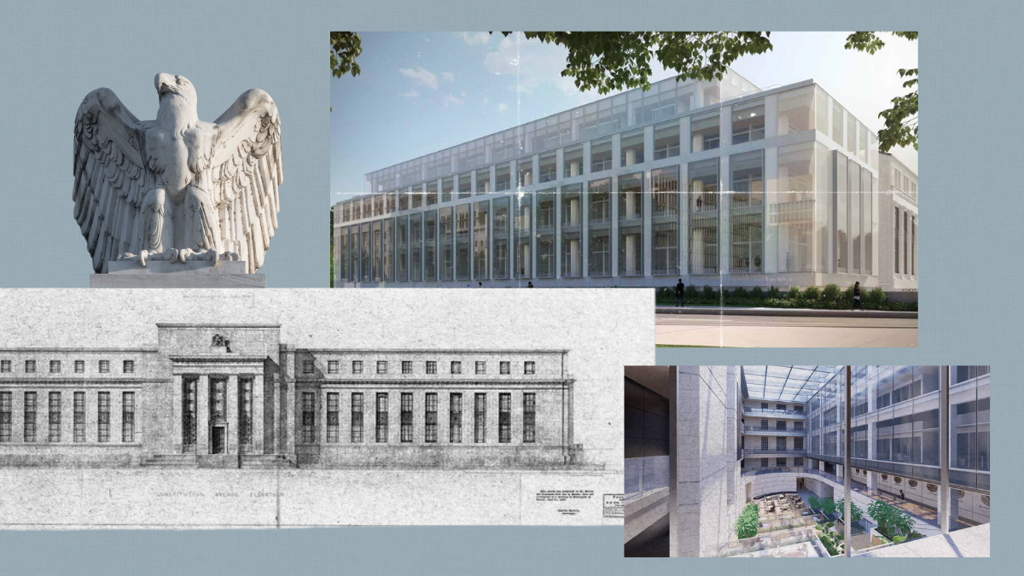
The renovation encompasses the Eccles Building, which was completed in 1937, and a neighboring structure known as the East Building. Both buildings were designed in a neoclassical style, which is characterized by its grandeur and adherence to classical architectural principles. The current project aims to modernize these historic buildings while still respecting their original architectural integrity. However, the proposed changes have drawn ire from various quarters, including former President Donald Trump, who has publicly labeled Powell as either "incompetent or crooked" due to the rising costs associated with the renovation.
Design Concerns
Critics have expressed disappointment with the planned design changes, arguing that they deviate significantly from the architectural legacy of the original structures. An artist's rendering of the renovation shows the Eccles Building fitted with modern windows that some believe are more suited for a high-rise office than a federal building. The East Building is set to undergo more drastic changes, including the demolition of its central wing to make way for a large glass addition, which many believe will clash with the existing architectural style.
Duncan Stroik, a commissioner with the U.S. Commission of Fine Arts, voiced concerns during a 2020 meeting, stating that the additions “would look like an eyesore.” He suggested an alternative design in white Georgia marble to better match the existing buildings, but this proposal was ultimately voted down. The National Capital Planning Commission has stated that the renovation will incorporate contemporary materials while still responding to the historic architecture, a balancing act that has proven contentious among stakeholders.
Public Sentiment
Public opinion appears to align with the critics, as a recent poll indicated that 72 percent of Americans prefer traditional architecture for federal buildings over modern designs. This sentiment is echoed by an executive order signed in August, which declared classical and traditional architecture as the preferred style for federal structures. Such preferences highlight a broader cultural appreciation for historical aesthetics in public architecture.
Supporters of the renovation argue that modernization is necessary for functionality and efficiency, particularly in accommodating contemporary needs and technologies. However, the aesthetic considerations remain a significant point of contention. Proponents of classical design argue that beautiful federal buildings contribute to a sense of national identity and respect for cultural heritage, which they believe should be preserved in any renovation efforts.
Broader Implications
The debate over the Federal Reserve's renovation reflects broader concerns about government spending and the importance of architectural integrity in public buildings. Critics assert that the current design choices undermine the historical significance of the structures and fail to honor the legacy of their original architects, such as Paul Philippe Cret, who was known for blending classical styles with modern needs. Cret's work is often celebrated for its ability to harmonize traditional aesthetics with the functional requirements of contemporary society.
As the renovation progresses, the Federal Reserve has not publicly addressed the specific criticisms regarding design and budget management. The ongoing discussions highlight the tension between modernization and the preservation of historical aesthetics in federal architecture. This situation raises important questions about the priorities of government agencies in their stewardship of public resources and the extent to which they should prioritize modern functionality over historical integrity. The outcome of this renovation could set a precedent for future federal projects, influencing how public buildings are designed and funded in the years to come.