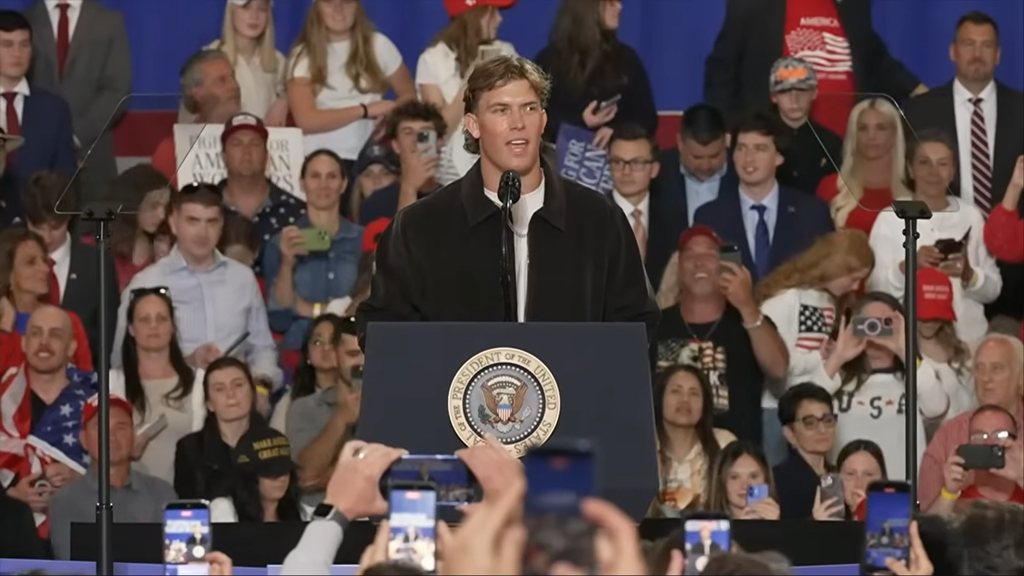
New York Giants quarterback Jaxson Dart has come under scrutiny after introducing President Donald Trump at a rally in New York. Dart, who did not make any political remarks during the event, expressed his honor in welcoming the president to the stage. This incident has sparked a significant debate about political expression among athletes, with some arguing that Dart's actions reflect a broader intolerance for differing political views in the sports world. Critics of Dart's appearance have voiced their disapproval, suggesting that his association with Trump could have negative implications for both the team and the league as a whole.
Explainer Christianity and Sports: Navigating Faith in Public Life
Dart stated, "What an honor; what a privilege it is to be here," before welcoming Trump, but his brief introduction has ignited a firestorm of criticism from various media outlets and commentators. Some have accused Dart of aligning himself with a controversial figure, while others argue that he was simply exercising his right to free speech, a fundamental principle in a democratic society.
Teammate's Reaction
One of Dart's teammates, linebacker Abdul Carter, publicly criticized him on social media, suggesting that Dart's actions were inappropriate. Carter later attempted to downplay his comments, stating that he did not intend to contribute to the backlash against Dart. This public criticism from a teammate adds another layer of complexity to the situation, as it highlights the potential for division within the team.
The situation escalated as media outlets began to scrutinize Dart's social media history, looking for any signs of political bias or previous statements that could be interpreted as politically charged. This has led to discussions about the extent to which athletes should be held accountable for their personal beliefs and associations, especially when those beliefs become public through their actions.
Team Dynamics
The Giants organization has reportedly held meetings to address the fallout from Dart's introduction of Trump. According to the New York Post, team members sought to “squash any bad blood that might have existed” and aimed to move forward from the incident. However, some observers question what exactly needs to be resolved, given that Dart's actions were not overtly political in nature. The team's response suggests a desire to maintain unity and focus on their performance, rather than allowing external controversies to disrupt their season.
Critics argue that the backlash against Dart exemplifies a double standard in sports, where athletes who express conservative views face harsher scrutiny than those who align with more liberal perspectives. For instance, there was little backlash when NBA players like Steph Curry and LeBron James publicly supported Democratic figures. This discrepancy raises important questions about fairness and the treatment of athletes based on their political affiliations.
Broader Implications
The controversy surrounding Dart raises questions about the culture of political expression in professional sports. Supporters of Dart argue that athletes should be free to express their opinions without fear of retribution, while detractors maintain that such expressions can have consequences for team dynamics and public perception. The incident serves as a reminder of the complex relationship between sports and politics, particularly in an era where public figures are increasingly scrutinized for their associations and beliefs.
As the debate continues, it remains unclear how the Giants organization will navigate the situation moving forward. Dart has not publicly commented further on the backlash, and it is uncertain whether he will face any repercussions from the team or the league. The outcome of this incident could set a precedent for how similar situations are handled in the future, impacting not only Dart's career but also the broader landscape of athlete activism and political expression in sports.