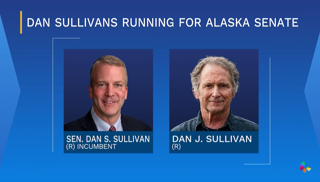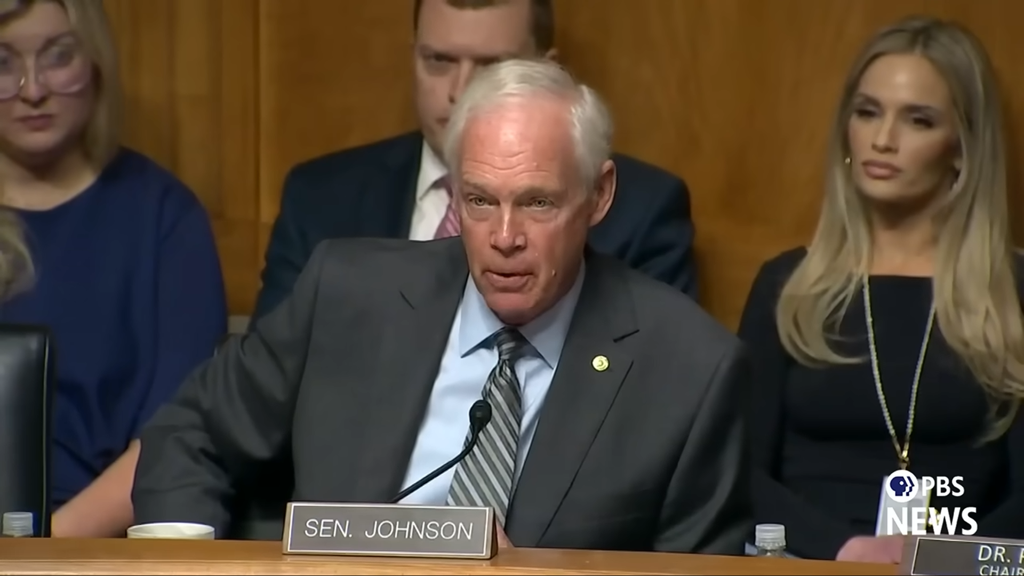
Sen. Ron Johnson, chair of the Senate Permanent Subcommittee on Investigations, has launched a formal probe into allegations that Democratic operatives orchestrated a scheme to mislead voters in Alaska’s 2026 Senate race. The allegations focus on the recruitment of a candidate with the same name as incumbent Republican Sen. Dan S. Sullivan, raising concerns about election integrity and the possibility of criminal conduct.
Explainer Election Integrity in America: Safeguarding Voter Trust and Ballot Security
The controversy began after a report by The New York Times described how aides for Democratic candidate Mary Peltola and other Democratic-aligned figures allegedly recruited Daniel J. Sullivan Jr.—nicknamed “Decoy Dan”—to run against Sen. Sullivan. According to the report, which cited interviews, text messages, and documents prepared for potential litigation, this recruitment was part of a broader effort to dilute the incumbent’s support by encouraging spoiler candidates to enter the race. The report also suggested that Democratic operatives sought to recruit additional candidates to further fragment the vote.
Johnson’s Records Requests
On Thursday, Sen. Johnson sent records preservation requests to several individuals reportedly involved in the alleged scheme. The recipients include Elisa Rios, former campaign manager for Peltola; Anton McParland, Peltola’s former chief of staff; and Jerid Kurtz, described as a “specialist in secret ballot maneuvers.”
Johnson’s letters demand that these individuals preserve all communications dating back to January 1, 2025, related to efforts to recruit candidates for Alaska’s Senate race. The requests also extend to communications with Jacquelyn Lopez of Elias Law Group and Shelbi Dantic of the Democratic Senatorial Campaign Committee (DSCC). Johnson set a deadline of November 12 for the requested materials to be provided to the subcommittee, which is reviewing alleged misconduct in the 2026 Alaska Senate election under Senate Resolution 94.
In a statement, Johnson emphasized the importance of election integrity, saying, “Every American should want to restore confidence and integrity to our election system.”
Alleged Scheme and Ballot Access
The New York Times report indicated that Peltola’s campaign has denied any involvement in the recruitment of Daniel J. Sullivan Jr. However, the outlet reported evidence suggesting the campaign worked with others to recruit him and sought additional spoiler candidates. The Alaska Division of Elections disclosed in June that “Decoy Dan” requested to appear on the ballot as “Dan Sullivan,” despite being registered as “Daniel J. Sullivan Jr.” and having no prior affiliation with the Republican Party in Alaska.
Initially, the Division of Elections declared his candidacy invalid for the primary, citing attempts to mislead voters. However, the Alaska Supreme Court later overturned that decision, allowing him to advance to the general election. According to reports, the candidate’s campaign website closely mirrored the incumbent’s in both format and color scheme, potentially increasing the likelihood of voter confusion.
Broader Investigations and Political Context
The Wall Street Journal reported that the U.S. Justice Department has expanded its criminal investigation into the Alaska Senate race, issuing dozens of new grand jury subpoenas. Prosecutors are reportedly considering charges related to conspiracy to violate voters’ rights. In addition to the federal probe, Alaska Governor Mike Dunleavy, a Republican, has ordered a state-level inquiry into the matter.
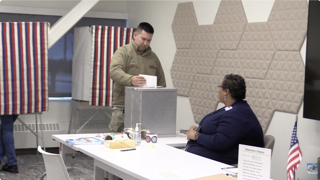
The appearance of “Decoy Dan” on the ballot was made possible by Alaska’s top-four ranked-choice voting (RCV) system, which was adopted in 2020. Under this system, the four candidates with the most votes in the primary advance to the general election, regardless of party affiliation. The RCV system has previously played a significant role in Alaska’s elections, including helping Sen. Lisa Murkowski, a Republican, survive a primary challenge in 2022. The system is set to be reconsidered by voters, as a measure to repeal RCV will appear on Alaska’s 2026 ballot. Opposition to the repeal is reportedly funded by out-of-state groups linked to Democratic donors, highlighting the broader national interest in Alaska’s election laws.
Peltola and her campaign have continued to deny any wrongdoing, and as of Thursday, no charges have been filed in connection with the alleged scheme. The Democratic Senatorial Campaign Committee and Elias Law Group have not publicly responded to the allegations. The ongoing investigations at both the federal and state levels underscore the heightened scrutiny surrounding Alaska’s 2026 Senate race and the broader debate over election integrity and the use of ranked-choice voting.
As the November deadline for records approaches, the outcome of Sen. Johnson’s probe—and the parallel criminal investigations—could have significant implications for the Senate race and for future election practices in Alaska and beyond.