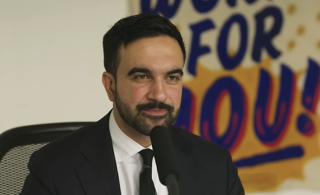
New York City is preparing for a mayoral election that could see the rise of Zohran Mamdani, a candidate associated with socialist ideals. Critics, including E.J. Dionne of The New York Times, suggest that Mamdani's approach, termed "sewer socialism," focuses on practical governance rather than radical transformation. Dionne argues that Mamdani aims to revive a tradition of socialist mayors who prioritized urban amenities and effective governance.
However, skepticism remains about the feasibility of Mamdani's vision. Nathanael Blake, a senior contributor to The Federalist, contends that the contemporary socialist agenda diverges significantly from its early 20th-century roots. He asserts that today’s socialism is intertwined with various ideological movements, including woke ideology, which may detract from addressing basic urban issues.
Blake highlights that Mamdani's policies could inadvertently harm the very communities he intends to support. For instance, he criticizes Mamdani's proposal to eliminate gifted programs in public schools, arguing that this would disadvantage bright students from low-income families who cannot afford private education.
Furthermore, Mamdani's stance on law enforcement raises concerns about public safety. Critics argue that his antipathy toward police could undermine initiatives like free public transportation, which he advocates. Blake notes that without a safe environment, potential users may avoid these services, leading to financial burdens on taxpayers.
"A revival of 'sewer socialism' would require Leftists to change their entire worldview," Blake states, emphasizing the need for a focus on public safety and efficient city services. He argues that such a shift appears unlikely given the current ideological landscape.
Additionally, Blake points out that the political infrastructure supporting Mamdani may not align with the interests of working-class citizens. He claims that the demographic most enthusiastic about Mamdani's candidacy consists of white, college-educated professionals, rather than the blue-collar workers he claims to champion.
The challenges facing Mamdani's vision for New York City extend beyond ideological differences. Critics argue that the Left's reliance on social and educational programs as avenues for activism complicates efforts for effective governance. Blake warns that without accountability, government-funded initiatives may suffer from waste and fraud.
In conclusion, while Mamdani's supporters may hope for a return to effective governance through socialist principles, critics argue that the current ideological framework and political dynamics make such outcomes improbable. As the election approaches, the debate over the viability of Mamdani's "sewer socialism" continues to unfold.