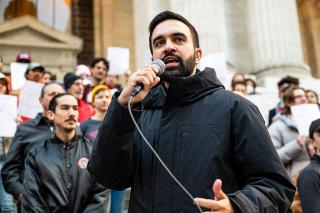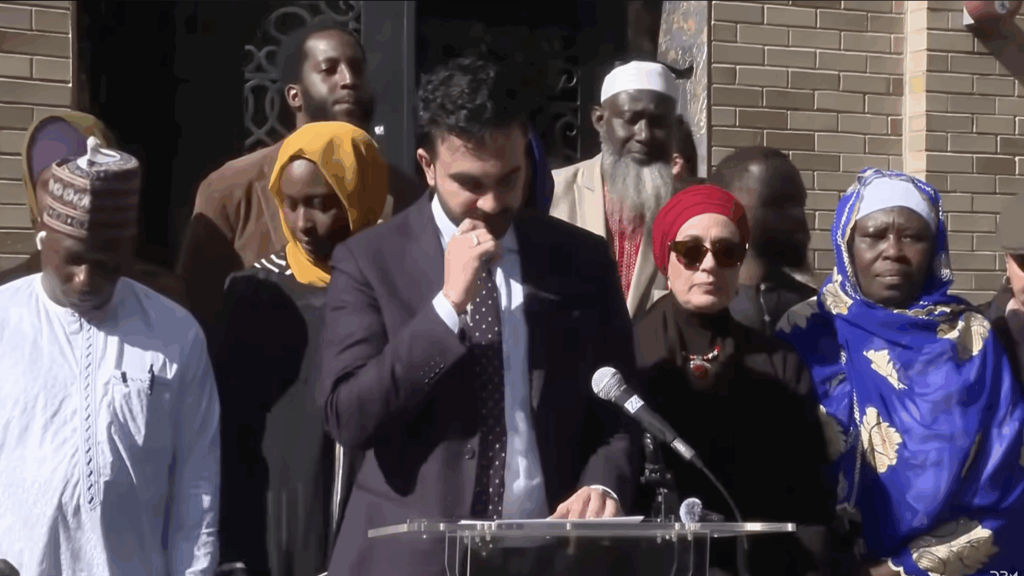
Zohran Mamdani, a Ugandan-born socialist candidate for New York City mayor, stated on Friday that his Muslim aunt was the real victim of the September 11, 2001 terrorist attacks. Speaking outside the Islamic Cultural Center of the Bronx, Mamdani expressed that the aspiration of Muslims is to be treated equally in New York City. He remarked, "The dream of every Muslim is simply to be treated as any other New Yorker, and yet for too long we have been told to ask for less than that and to be satisfied with whatever little we receive."
Mamdani began to speak about his aunt, who he claimed stopped using the subway after the attacks due to safety concerns related to her hijab. He paused during his speech, appearing emotionally affected. However, critics noted that he did not acknowledge the nearly 3,000 victims who lost their lives in the attacks, focusing instead on the discomfort experienced by some Muslims in the aftermath.
The candidate has faced scrutiny for his associations, including a photo with Siraj Wahhaj, who was linked to the 1993 World Trade Center bombing but was never charged. Additionally, Mamdani has been criticized for his connections to Hasan Piker, who has made controversial statements regarding the attacks.
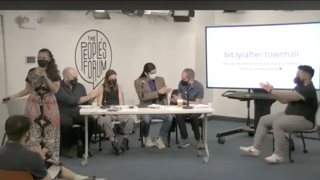
This is not the first instance where Mamdani has positioned himself as a victim. A resurfaced video from his 2020 state assembly campaign shows him recounting an experience where a teacher warned him about potential bullying following 9/11. He reflected on his identity, saying, "In Uganda, I was Indian. In India, I was Muslim, and then, when we moved to New York, I was all of those things."
Mamdani's comments come as the nation approaches the 25th anniversary of the 9/11 attacks, which resulted in the deaths of office workers, firefighters, and police officers. Critics argue that his focus on the Muslim experience overlooks the broader tragedy of that day.
Brianna Lyman, an elections correspondent at The Federalist, reported on Mamdani's remarks and the reactions they have elicited. Lyman has a background in International Political Economy from Fordham University and has contributed to various media outlets.
As the political landscape in New York City evolves, Mamdani's statements may influence voter perceptions and the ongoing dialogue about identity and victimhood in the context of 9/11.