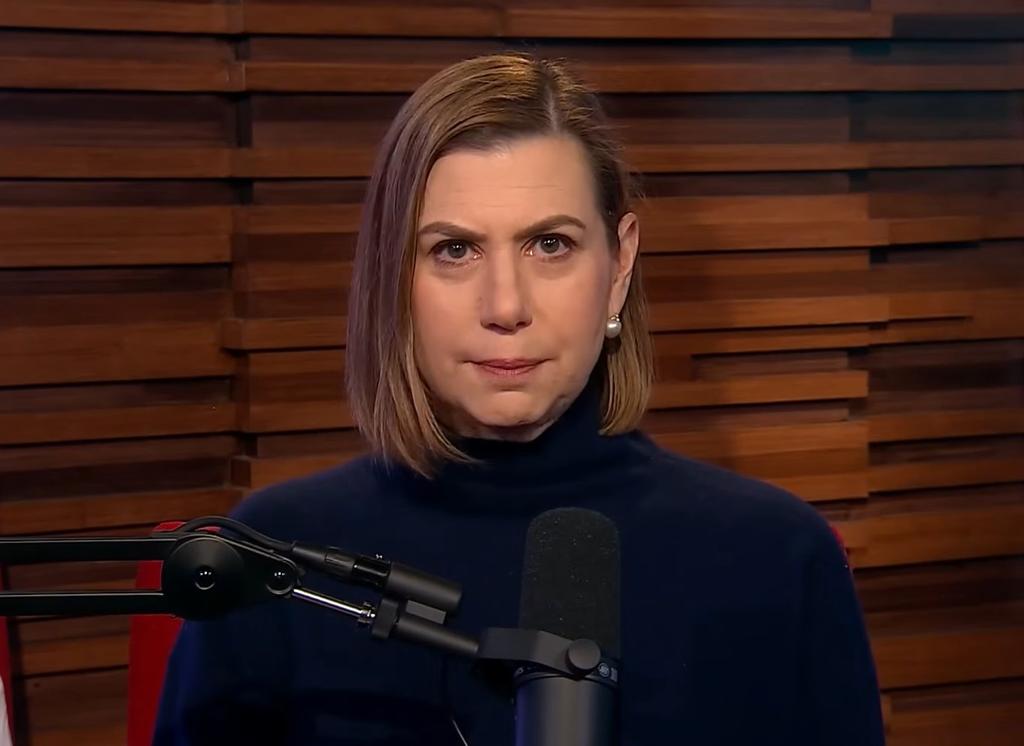
Sen. Elissa Slotkin, D-Mich., a former CIA officer, has called for Democrats to take steps to prevent future presidents from exerting broad control over the federal bureaucracy, arguing for what she described as efforts to "Trump-proof" the government.
Slotkin’s remarks highlight a growing divide over the extent of presidential authority and the role of career officials in shaping federal policy.
The debate comes amid longstanding tensions over the influence of unelected bureaucrats, with critics pointing to incidents during President Trump’s previous term when career staff reportedly resisted White House directives across multiple agencies.
Slotkin’s Comments on Bureaucratic Reform
Slotkin recently stated that Democrats should focus on ensuring that "a very un-sexy group of people are thinking very hard about how to Trump-proof the government going forward so that no leader can do this again." She further argued for a fundamental rethinking of federal operations, saying, "We’re going to need people thinking critically about what the federal government should look like after Trump, and that, to me, is where the next generation has a massive role to play."
Her comments reflect a broader push within the Democratic Party to limit the ability of elected leaders to unilaterally direct the actions of federal agencies, especially following efforts by President Trump to assert greater control over the bureaucracy.
Examples of Bureaucratic Resistance
Reports from the America First Policy Institute (AFPI), an organization founded by former Trump administration officials, detail several instances where career federal employees allegedly worked to undermine or delay the implementation of President Trump’s policies. According to AFPI, Department of Education staff produced drafts on Title IX reform that were legally unusable or diverged from administration goals, while Department of Justice career prosecutors refused to pursue certain cases that conflicted with their political views.
At the Department of Health and Human Services, career staff reportedly circumvented a hiring freeze by retroactively adjusting start dates for new hires to the day before President Trump took office. Additionally, about 1,000 State Department employees signed a dissent cable opposing President Trump’s executive order on travel restrictions, as reported by the Boston Globe.
"I found there [were] … hundreds of lawyers who were actively in resistance mode. There were memos out there by former government lawyers telling current government lawyers in my department how to resist if you’re given a direct order, ask for clarification, send 20 emails, question it slow down your response time, say it can’t be done."
— Harmeet Dhillon, former Assistant Attorney General for Civil Rights
Historical and Legal Context
The tension between elected leadership and career officials has deep roots in American governance. Scholars such as Dr. R.J. Pestritto of the Claremont Institute have argued that the rise of the administrative state has shifted power away from elected officials toward unelected experts, citing past Supreme Court decisions that favored agency expertise over presidential mandates. The America First Policy Institute report and Pestritto’s analysis both point to a longstanding pattern in which career staff can slow or block policy changes, regardless of election outcomes.
The Boston Globe reported that the State Department dissent cable against President Trump’s travel ban was one of the largest such protests by U.S. officials in recent years, with diplomats asserting that policy dissent is embedded in their professional culture.
Congressional Oversight and Partisan Tensions
Beyond the executive branch, Democrats are also signaling a willingness to use congressional oversight powers more aggressively. Incoming House Oversight Committee Chairman Robert Garcia, D-Calif., has warned Republicans to "LAWYER UP," suggesting a confrontational approach to investigations. White House Counsel Will Scharf responded by cautioning that using congressional committees to target the executive branch could be unconstitutional, stating, "Congressional investigations must further a legitimate legislative task. Congress cannot employ them to exercise powers of criminal prosecution assigned to the Executive and the Judiciary."
While Slotkin and other Democrats argue that insulating the bureaucracy from presidential control is necessary to protect democratic norms, critics contend that such measures could further entrench unelected officials and diminish the impact of elections. Supporters of the current system note that most career federal employees implement policies as directed, and that mechanisms for dissent are intended to safeguard against unlawful or harmful directives.
The debate over the balance of power between elected officials and career bureaucrats is expected to intensify as both parties prepare for future shifts in political control.