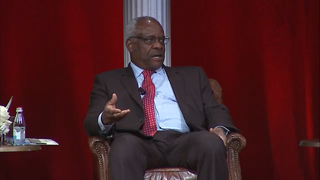
Justice Clarence Thomas has officially become the second-longest serving justice in U.S. Supreme Court history, surpassing Justice Stephen J. Field on Thursday. At 77 years old, Thomas has served for over 34 years since his appointment on October 23, 1991, and could become the longest-serving justice if he remains on the bench until May 2028.
This milestone underscores the ongoing debate about the influence of long-serving justices on the Supreme Court and their impact on American law and society. Thomas's tenure has been marked by a commitment to originalism, a judicial philosophy that interprets the Constitution as it was understood at the time of its ratification.
Born into poverty in Pin Point, Georgia, during the era of segregation, Thomas's early life was shaped by significant challenges. After his mother sent him and his brother to live with their grandparents in Savannah, he faced the realities of racial discrimination and economic hardship. His journey included a departure from his Catholic upbringing and a period of radical leftist ideology during his college years, which he later renounced after a transformative experience at Harvard.
Career Path to the Supreme Court
Thomas's professional trajectory included roles as an assistant secretary for Civil Rights at the Department of Education and chair of the Equal Employment Opportunity Commission. He was appointed to the D.C. Circuit Court of Appeals by President George H.W. Bush before his nomination to the Supreme Court in 1991. His confirmation process was contentious, marked by allegations and intense scrutiny, yet he emerged as a prominent figure advocating for an originalist interpretation of the Constitution.
Since joining the Supreme Court, Thomas has authored significant opinions that reflect his judicial philosophy. His concurrence in Printz v. United States (1997) laid the groundwork for future rulings on Second Amendment rights, culminating in the landmark 2008 decision in D.C. v. Heller. In that case, the Court recognized an individual's right to possess firearms for self-defense, a principle Thomas reinforced in his majority opinion in NYSRPA v. Bruen (2022).
“The constitutional right to bear arms in public for self-defense is not ‘a second-class right,’” Thomas wrote, emphasizing the need for equal treatment of constitutional rights.
Notable Opinions and Legacy
Thomas has also played a crucial role in recent high-profile cases, including the 2023 SFFA v. Harvard decision, which deemed affirmative action policies unconstitutional, and the 2022 Dobbs v. Jackson Women’s Health Organization ruling that overturned Roe v. Wade. His decisions have drawn both praise and criticism, reflecting the polarized nature of contemporary judicial debates.
Supporters of Thomas argue that his commitment to originalism provides a necessary counterbalance to judicial activism. Critics, however, contend that his rulings often disregard contemporary societal needs and values. While some legal scholars have lauded his intellectual rigor, others have raised concerns about the implications of his judicial philosophy on civil rights and social justice.
In addition to his legal contributions, Thomas is known for his personal warmth and kindness. Justice Sonia Sotomayor has praised him for his ability to connect with staff, noting that he remembers their names and personal histories. This aspect of his character has endeared him to many, even among those who may disagree with his judicial decisions.
Courage and Principles
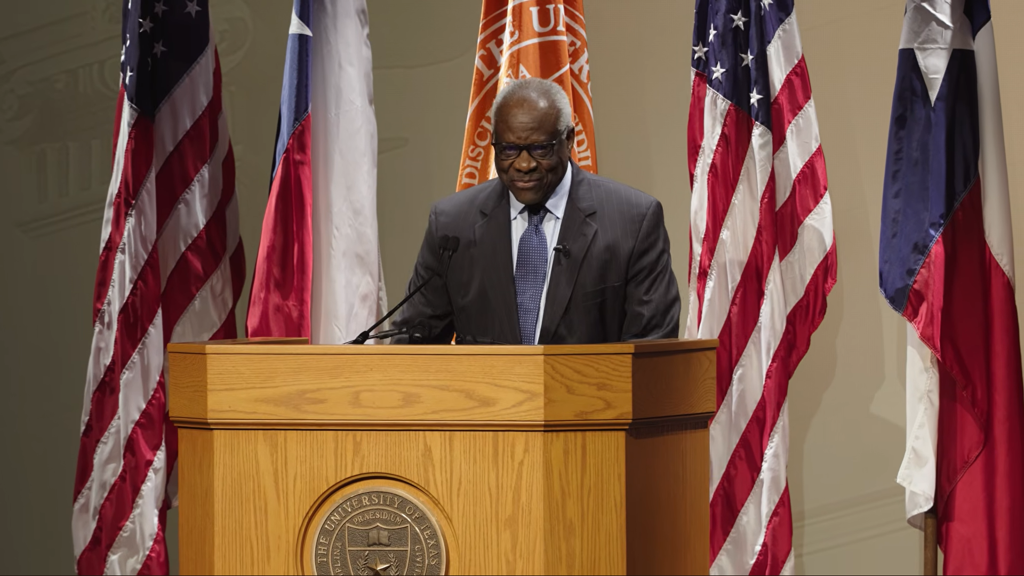
Thomas's resilience in the face of personal and professional challenges has been a defining characteristic of his career. During a recent speech at the University of Texas, he urged attendees to embody courage and integrity, stating, "Channel the courage of the men who faced down a king and signed [the Declaration]." He encouraged individuals to stand firm in their convictions, even when faced with adversity.
As Thomas reflects on his journey, he embodies the principles of honor and decency, advocating for a return to foundational values in American society. His life story and judicial philosophy continue to inspire discussions about the role of the Supreme Court in shaping the nation’s legal landscape.
Justice Thomas’s record-setting tenure serves as a reminder of the lasting impact that individual justices can have on the interpretation of the Constitution and the broader legal framework of the United States. As he approaches the possibility of becoming the longest-serving justice, the implications of his judicial philosophy will remain a focal point of debate in American legal discourse.