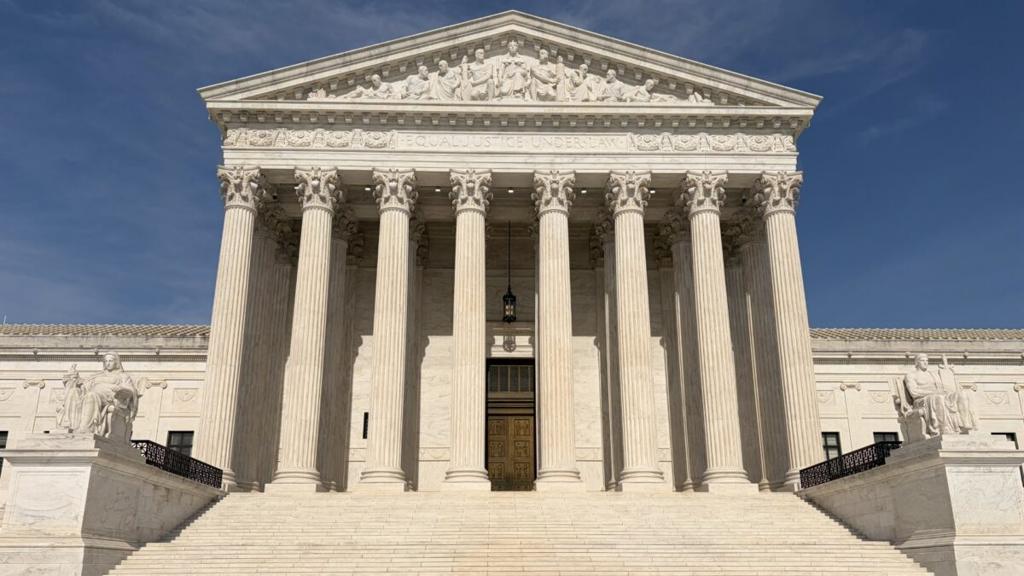
The U.S. Supreme Court has agreed to hear two significant cases challenging state and local bans on so-called assault weapons, marking a pivotal moment for Second Amendment rights. The cases, Grant v. Higgins and Viramontes v. Cook County, will be heard during the Court's October 2026 term and question the legality of prohibiting certain semi-automatic rifles under the Second and 14th Amendments.
Explainer Understanding the Supreme Court’s Impact on Law and Liberty
The core issue at stake is whether states can impose broad restrictions on firearms that many Americans consider common and lawful. The plaintiffs argue that these bans infringe upon their constitutional rights, while state officials maintain that such laws are necessary for public safety.
The cases arise from laws in Illinois and Connecticut, both of which classify certain firearms, including the AR-15 platform, as assault weapons. Grant v. Higgins challenges Connecticut's ban on the sale, transfer, or possession of these firearms, which the state defines as any selective-fire firearm capable of fully automatic, semi-automatic, or burst fire. The plaintiffs in this case are not contesting the ban on fully automatic weapons but argue that the prohibition on semi-automatic firearms is unconstitutional.
Key Details
Similarly, Viramontes v. Cook County contests a ban in Illinois that restricts over 100 specific rifles, including the AR-15, and any semi-automatic rifle with a magazine capacity exceeding ten rounds. Both laws were upheld in lower courts, prompting the plaintiffs to escalate their appeals to the Supreme Court, framing the issue as a critical matter of Second Amendment rights.
Background and Reactions
In their appeal, the plaintiffs contend that the term "assault weapon" is a politically charged label lacking a clear legal definition. They argue that this vagueness leads to restrictions on firearms that are functionally similar to other semi-automatic weapons that are widely accepted. “The very term ‘assault weapon’ is a political slogan masquerading as a meaningful designation,” they stated in their appeal.
The plaintiffs further assert that Supreme Court precedent indicates that firearms cannot be banned if they are in common use for lawful purposes. They cite a Washington Post/Ipsos survey indicating that Americans own over 32 million AR-15 platform firearms, primarily for self-defense, recreation, and hunting. “If the most popular rifle in the country is not in common use, it is hard to see what that phrase could possibly mean,” they argue.
In response, Connecticut officials maintain that the state has a longstanding tradition of regulating weapons that are particularly suited for criminal violence. They argue that there is no historical precedent for the current societal concerns regarding mass shootings. “The United States has a longstanding tradition of restricting novel weapons that are particularly suited for criminal violence,” the state’s response brief states.
The Supreme Court's decision to hear these cases comes after it previously declined to review similar challenges to assault weapons bans in Maryland and Rhode Island. Only three justices—Clarence Thomas, Samuel Alito, and Neil Gorsuch—indicated a willingness to hear those cases. The Court operates under the “rule of four,” meaning at least four justices must agree to hear a case for it to proceed.
The upcoming hearings could provide clarity on the legal definition of assault weapons and the extent to which states can regulate firearms. Legal experts suggest that the Court's ruling may set a significant precedent for future gun control legislation and Second Amendment interpretations.
As the cases unfold, the debate over gun control and Second Amendment rights continues to intensify, with advocates on both sides closely monitoring the Supreme Court's actions. While gun rights supporters express optimism about the potential for a favorable ruling, proponents of stricter gun laws emphasize the need for regulations to address rising gun violence.
The Supreme Court's decision to take on these cases underscores the ongoing national conversation about gun rights and public safety, with implications that could resonate across the country for years to come.