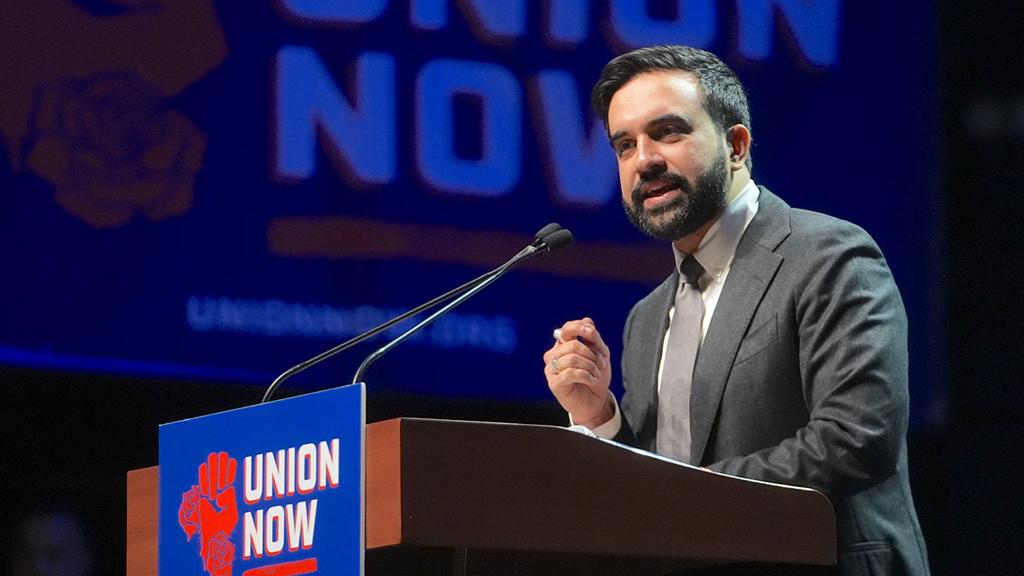
The Democratic Socialists of America (DSA) is quietly advancing a plan to embed activists in major labor unions, seeking to steer union priorities and the broader Democratic Party further left. The initiative, led by the Young Democratic Socialists of America (YDSA), encourages members to pursue jobs in strategic sectors and join or unionize workplaces to influence union agendas from within.
The effort highlights a growing tension over the direction of organized labor and its role in shaping Democratic Party policy, as DSA seeks to leverage union power for broader left-wing causes.
Labor unions have long played a central role in Democratic politics, providing funding, organizing muscle, and policy advocacy. The DSA's strategy, known as the "rank-and-file" approach, was adopted as a national priority by YDSA from 2018 to 2021. The group urged young socialists to "enter the labor movement on the shop floor as rank and file members of labor unions," aiming to reconnect labor with socialist activism and increase militancy among workers.
DSA’s Rank-and-File Strategy
According to the YDSA, the goal is to "turn the unions we join into strong, militant, democratic organizations that can win major gains for workers, by workers." The group’s website states that unions should serve as a bridge to other left-wing movements, including climate justice, racial justice, and LGBTQ+ rights, and play a role in opposing both the Republican Party and what it calls "corporate-friendly 'progressivism'" within the Democratic Party.
"We want to forge real alliances between unions and other social movements, like the climate justice movement, the racial justice movement, the movement for Palestine, and the movement for LGBTQ+ rights."
— YDSA rank-and-file project website
The YDSA has focused on placing members in industries such as logistics, education, and health care. In one example, the DSA published a pamphlet titled Why Socialists Should Become Teachers, urging activists to join the teaching profession not only to expand unionization but to influence union demands. The pamphlet cited a West Virginia teachers’ group that pushed for union demands to include higher taxes on corporations and fossil fuel companies, not just higher wages for teachers.
Union Political Spending and Influence
America’s largest unions have historically supported Democratic candidates and causes. The American Federation of Labor-Congress of Industrial Organizations (AFL-CIO) spent about $5.5 million supporting Democrats and $1.15 million opposing Republicans in the 2020 cycle. The Service Employees International Union (SEIU) spent $13.4 million supporting Democrats and $2.54 million opposing Republicans. The American Federation of State, County, and Municipal Employees (AFSCME) spent $15.5 million opposing Republicans and $4.7 million supporting Democrats.
Teachers’ unions have shown similar patterns. The National Education Association gave $2.44 million to Democrats and $64,830 to Republicans in 2020, while the American Federation of Teachers gave $2.54 million to Democrats and $7,002 to Republicans. These unions also contribute to left-leaning nonprofits and advocacy groups.
The DSA’s strategy aims to harness this organizing infrastructure, which includes permanent membership rolls, stable funding, and political influence, to further left-wing priorities both within and beyond the Democratic Party.
Case Studies and Political Endorsements
The rank-and-file strategy’s website features case studies, such as the Teamsters for a Democratic Union, illustrating how small groups of activists have historically shifted union politics. These internal union battles are seen as training grounds for socialists preparing to enter mainstream politics.
DSA-backed candidates have already received union support. In August 2025, Zohran Mamdani, a DSA member, was endorsed by DC 37, New York City’s largest public-sector union and an AFSCME affiliate representing 150,000 workers. Socialists described the endorsement as a victory for "rank-and-file organizing," though it was reportedly separate from the formal rank-and-file project.
While critics argue that the DSA’s approach seeks to politicize unions for broader ideological goals, supporters within the organization say their aim is to strengthen unions and build alliances across social movements. Major unions and Democratic Party officials have not publicly responded to the DSA’s strategy as outlined by the group.