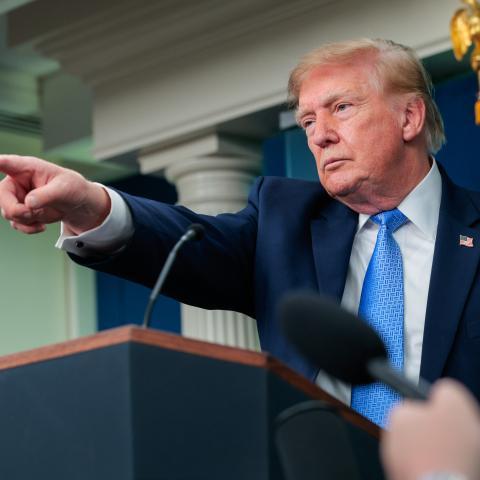
President Donald Trump on Thursday called on Republican lawmakers to move quickly to pass a new farm bill during the current lame-duck session of Congress, before Democrats assume control of both the House and Senate. Trump’s appeal comes as Congress faces a looming deadline to renew the broad legislation that shapes U.S. agriculture policy, land management, and the Supplemental Nutrition Assistance Program (SNAP), which provides food assistance to millions of Americans.
The farm bill, last enacted in 2018 during Trump’s previous term, is considered a cornerstone measure for farmers, ranchers, and those who rely on food assistance. Trump emphasized the urgency of passing the bill without delay, warning that further inaction could disrupt planning for the 2027 planting season and create uncertainty for the agricultural sector.
Trump’s Call for Action
In a post on Truth Social, Trump wrote, "There has been no greater President that stands with American Farmers and Ranchers than President Donald J. Trump! As I've stated before, I was the last President to get a Farm Bill done in 2018. IT IS TIME TO DO IT AGAIN, and FAST. Our Great Farmers and Ranchers NEED and DESERVE certainty ahead of the 2027 planting season because FOOD SECURITY IS NATIONAL SECURITY!"
He continued, "Congressional Republican Majorities, YOU MUST PASS A NEW FARM BILL DURING THE REMAINING DAYS OF CONGRESS. FARMERS AND RANCHERS ARE NOT INTERESTED IN FURTHER DELAYS."
Trump’s message underscored his administration’s support for the agricultural sector and framed the farm bill as not only an economic necessity but also a matter of national security. By highlighting his record on agriculture, Trump sought to remind lawmakers and the public of his administration’s previous success in passing the 2018 farm bill and to urge similar action before the current Congress ends.
Stakes for Farmers and Ranchers
The farm bill is a sweeping piece of legislation that covers a wide range of agricultural and nutrition policies. In addition to SNAP, it addresses crop insurance, conservation programs, commodity subsidies, and rural development initiatives. For farmers and ranchers, the bill provides critical support and stability, allowing them to make long-term plans for planting, harvesting, and investment.
Trump argued that passing the bill now would give producers the certainty they need to prepare for future seasons, particularly as they look ahead to the 2027 planting cycle. He warned that further delays could undermine food security, disrupt the agricultural economy, and create challenges for those who depend on federal nutrition assistance.
The president’s comments reflect ongoing concerns within the agricultural community about the potential consequences of legislative inaction. Many farm groups have urged Congress to avoid a lapse in the farm bill, noting that uncertainty over federal policy can affect everything from commodity prices to access to credit and risk management tools.
Political Context and Next Steps
Currently, Republicans hold majorities in both the House and Senate, but Democrats are poised to take control when the new Congress convenes. Trump’s call places added pressure on GOP lawmakers to act swiftly, aiming to secure the legislation under Republican leadership before the balance of power shifts.
The farm bill has traditionally been a bipartisan effort, but negotiations can be complex, involving debates over funding levels, eligibility requirements for nutrition programs, and the scope of agricultural subsidies. With the deadline approaching, lawmakers face the challenge of reaching consensus on key provisions while balancing the interests of rural and urban constituencies.
Democratic leaders have not yet publicly responded to Trump’s demand for immediate passage of the farm bill. The outcome of the legislative process will determine the policy framework for U.S. agriculture and food assistance programs for the next several years, affecting farmers, ranchers, and millions of Americans who rely on SNAP and other provisions.
As the lame-duck session continues, the focus remains on whether Congress can reach agreement and pass the farm bill before the new majority takes office. The decision will have lasting implications for the agricultural sector, food security, and the broader economy.