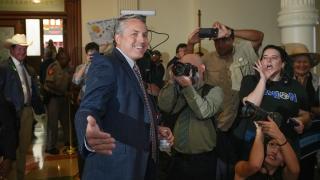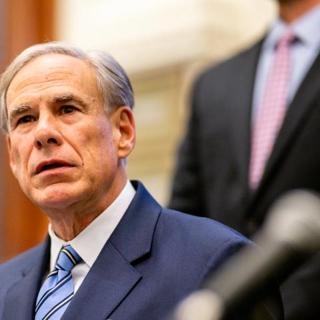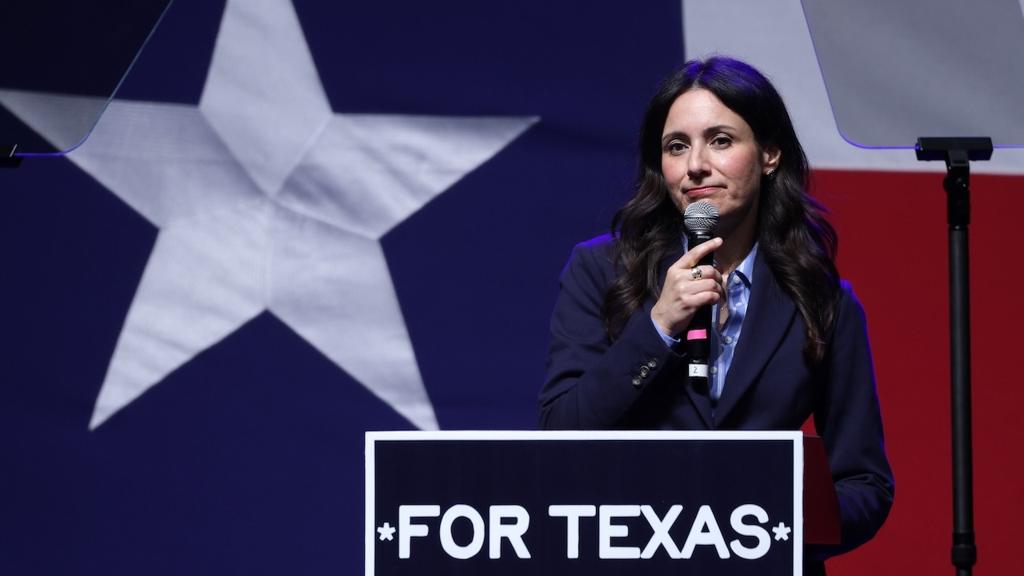
Incoming Texas Gov.-elect Gina Hinojosa, who recently became the first Democrat to win the state’s top office in decades, has announced her intention to remove Texas’s terror designation of the Council on American-Islamic Relations (CAIR). The move would reverse a policy enacted by outgoing Republican Gov. Greg Abbott, who had designated both CAIR and the Muslim Brotherhood as foreign terrorist and transnational criminal organizations. Abbott cited alleged connections between these groups and past terror financing cases as the basis for his decision.
Explainer Legal Battles Over Gender Identity Policies and School Bathroom Laws Explained
Hinojosa’s announcement places Texas at the center of a national debate over how to handle organizations accused of ties to extremist groups. The issue has gained additional attention as President Donald Trump considers expanding federal terror designations to include the Muslim Brotherhood and CAIR. Such a move at the federal level could influence how states approach similar policies in the future.
CAIR’s History and Legal Scrutiny
Founded in 1994, CAIR describes itself as a nonprofit civil rights group focused on promoting religious freedom and combating discrimination against Muslims in the United States. Despite its stated mission, CAIR has faced longstanding scrutiny over the backgrounds of some of its leaders and its alleged connections to groups involved in terror financing.
In 2007, CAIR was named an unindicted co-conspirator in the Holy Land Foundation terrorism-financing trial, one of the largest cases of its kind in U.S. history. The Holy Land Foundation, once the largest Muslim charity in the country, was based in Richardson, Texas. Its leaders were convicted of funneling millions of dollars to Hamas, a U.S.-designated terrorist organization, and of supporting the families of suicide bombers.
Evidence presented during the trial revealed that in 1993, Holy Land Foundation officials and Hamas sympathizers met in Philadelphia to discuss strategies to obscure the foundation’s ties to terrorism. Among the participants at the meeting were CAIR founder Omar Ahmad and Director Nihad Awad, both of whom were affiliated with the Islamic Association for Palestine. That organization was later shut down for backing terrorism, according to congressional testimony. (Source)
A founding board member of CAIR-Texas, Ghassan Elashi, also served as the treasurer of the Holy Land Foundation. Elashi was sentenced to 65 years in prison for financing terrorism. Separately, CAIR Communications Specialist Randall Todd Royer was sentenced to 20 years in prison for recruiting jihadis in Pakistan after the September 11 attacks, according to a Justice Department release. (Source)
FBI and International Actions
The scrutiny of CAIR extended beyond the courtroom. In 2008, the FBI suspended formal contacts with CAIR, citing evidence from the Holy Land Foundation trial. The agency said it would not engage with CAIR until it could resolve "whether there continues to be a connection between CAIR or its executives and Hamas."
Internationally, the United Arab Emirates designated CAIR as a terrorist group in 2014, further complicating the organization’s reputation. During the 1993 Philadelphia meeting, a participant suggested creating an “alternative” organization with a less conspicuous Islamic identity to avoid attracting scrutiny. This point was highlighted in both court documents and a report from George Washington University on Hamas networks. (Source)
During the Holy Land Foundation trial, a prosecutor asked FBI Special Agent Lara Burns if any groups formed after the 1993 meeting fit the description of an organization designed to obscure ties to Hamas. "CAIR," Burns replied, according to reporting by The Dallas Morning News.
Recent Statements and Reactions
CAIR’s executive director, Nihad Awad, has also drawn attention for his recent remarks regarding Hamas’ October 7, 2023, attack against Israel. Awad said, “I was happy to see people breaking the siege and throwing down the shackles of their own land.” He later clarified that he was referring to Palestinian civilians rather than Hamas militants. The attack resulted in the deaths of approximately 1,200 people, including 46 Americans, according to a State Department release. (Source)
"I was happy to see people breaking the siege and throwing down the shackles of their own land."
— Nihad Awad, CAIR executive director
Supporters of Hinojosa’s decision argue that the terror designation was politically motivated and undermines civil rights advocacy for Muslim Americans. Activists have praised her announcement as a step toward protecting religious freedom and civil liberties in Texas. Critics, however, warn that removing the designation could ignore CAIR’s controversial history and alleged connections to extremist groups.
CAIR and its Texas chapter have not yet issued a formal response to Hinojosa’s plan. The debate over the organization’s status is likely to continue as state and federal officials weigh the implications of terror designations and their impact on civil society organizations.
President Trump’s reported consideration of expanding federal terror designations for CAIR and the Muslim Brotherhood underscores the ongoing national conversation about how best to address organizations accused of extremist ties. Texas’s actions under Hinojosa could serve as a bellwether for other states facing similar questions in the future.