Newly released records from Collin County Precinct Chair Rachel Elliott have brought increased scrutiny to several McKinney city officials, highlighting their connections to the McKinney Islamic Association (MIA) ahead of a recent City Council vote approving the association’s mosque site plan. The records detail campaign contributions, political endorsements, and participation in events hosted by the MIA, raising questions about the nature and timing of these relationships and whether they may have influenced the council’s decision.
Explainer Redistricting Battles: How Maps Shape American Political Power
The McKinney City Council voted unanimously, 7-0, to approve the MIA’s proposed mosque facility on Virginia Parkway. The decision followed hours of public testimony and weeks of debate over the association’s involvement in local politics. According to city records, the mosque project met all zoning and development requirements, a point emphasized by supporters of the council’s decision.
Campaign Contributions and Endorsements
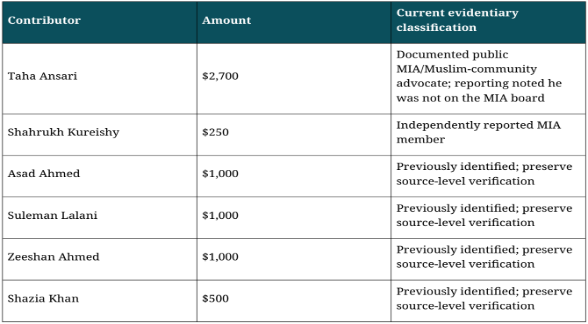
Campaign finance records reviewed by Elliott show that Mayor Bill Cox received $6,450 in donations from MIA members prior to the August 4 council vote. The records list individual contributors, with donation amounts ranging from $250 to $2,700. In addition to the financial support, Cox issued a Ramadan proclamation recognizing the Muslim Prophet Mohammed and attended an iftar dinner at the mosque before the vote. Elliott has argued that the timing of these contributions and events merits further examination. Mayor Cox did not respond to requests for comment on the matter.
Council member Geré Feltus was endorsed during her 2025 re-election campaign by the Good Citizens PAC of DFW, an advocacy group focused on empowering American Muslims in the Dallas-Fort Worth area. The PAC’s 2025 voting guide identified Feltus as a candidate aligned with its agenda. Elliott questioned whether any commitments were made in exchange for the endorsement. Feltus rejected the allegations, calling them "absurd," and stated she had not been approached by any Muslim group to advance their agenda.
"But bigotry is pushing your entire agenda and you’ll manipulate any piece of information you can get your hands on and create lies to further that agenda. I upheld the Constitution. I stand firmly behind every decision I’ve made and I will make no apologies for them."
— Geré Feltus, McKinney City Council member
Attendance at Religious Events
Councilman Justin Beller, who made the motion to approve the mosque relocation, stated during the council meeting that he had visited the MIA campus and had friends who attend regularly. Councilman Patrick Cloutier said at a March 17 meeting that he, Beller, Councilman Ernest Lynch, City Manager Paul Grimes, and Mayor Cox all attended an MIA iftar dinner. Cloutier later acknowledged on Facebook that he had attended multiple iftar dinners hosted by the association, as well as events at other religious institutions, including Baptist and Episcopal churches and menorah lightings.
Cloutier explained that these events are part of his broader engagement with faith communities as a council member. "I’ve learned a lot about Islam and met a bunch of them in my 5 years on council. Both of these mosques typically invite us to one Iftar per year. I’m a Christian. There are an assortment of Christians at the ones I’ve been to. Mainly political, law enforcement and faith leaders," Cloutier wrote.
Former Mayor’s Longstanding Ties
Records provided by Elliott also indicate that former Mayor George Fuller maintained a civic relationship with the MIA throughout his tenure. Fuller’s interactions with the association date back to at least 2018, when he invited the MIA imam to participate in city events. These longstanding ties have drawn renewed attention amid the current debate over the mosque project.
Supporters of the council’s decision emphasize that city records found the mosque proposal complied with all zoning and development requirements. Several officials have stated that their attendance at religious events is part of their broader engagement with diverse community groups and is not unique to the MIA. Mayor Cox did not respond to requests for comment regarding the donations or his involvement with the association.
The disclosures have prompted ongoing discussion in McKinney about the appropriate boundaries between elected officials and community organizations, as well as the transparency of political contributions and endorsements. The council’s unanimous vote and the city’s confirmation of the project’s compliance with regulations remain central to the debate as questions continue about the influence of civic relationships on local government decisions.