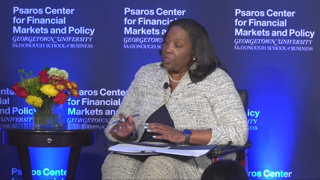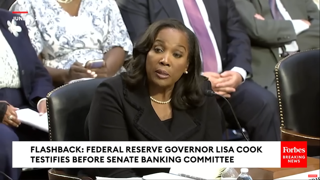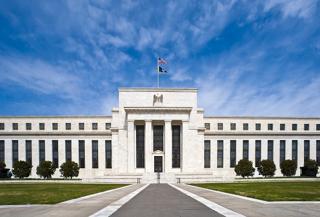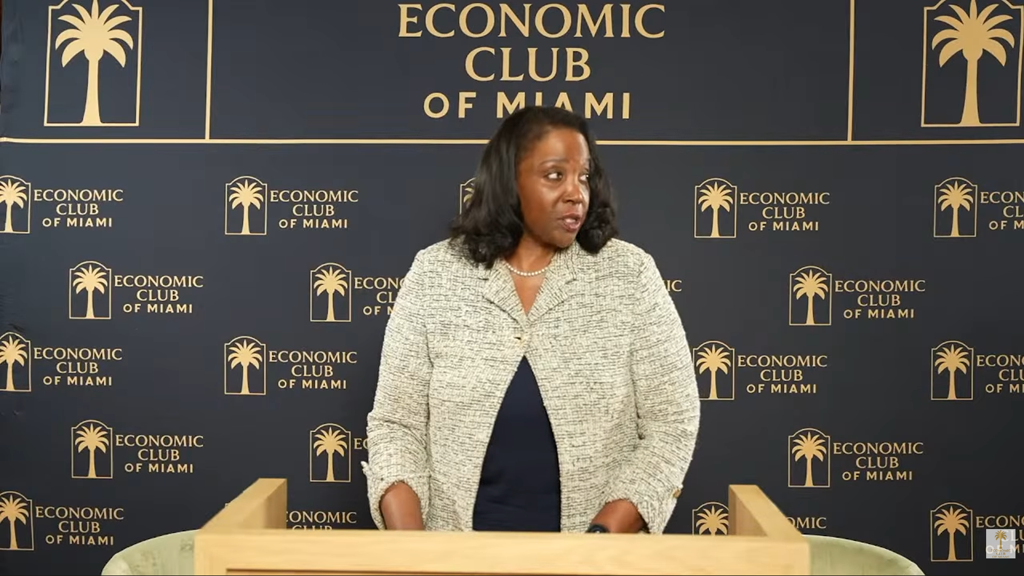
Federal Reserve Governor Lisa Cook has declined to participate in a White House hearing regarding mortgage fraud allegations against her, a move that prolongs the timeline for her potential removal from the central bank. The ongoing dispute centers on whether Cook, who was appointed by President Biden, can be removed from her post following accusations of mortgage fraud. Both the legal and political processes surrounding her status are now stalled, with no immediate resolution in sight.
Explainer Understanding the Supreme Court’s Impact on Law and Liberty
The controversy began when President Trump first sought to dismiss Cook in August 2025. However, D.C. District Judge Jia Cobb issued a ruling that blocked the action, requiring further legal review before any removal could proceed. The case escalated to the Supreme Court, which declined the administration’s emergency request to move forward with Cook’s removal. In a narrow 5-4 decision, the Court ruled that Cook must be given cause and an opportunity to respond before any final decision is made. The justices did not address whether Trump could remove Cook for cause, stating that the facts of the case had not yet been fully assessed and that further proceedings were necessary.
Legal Arguments and Hearing Delays
Cook’s legal counsel, Abbe David Lowell, notified White House Counsel Will Scharf in a letter that Cook would not attend the planned hearing. Lowell argued that the process was biased and did not meet the standards of a fair hearing. He described the committee process as a “façade designed to obscure a predetermined decision to fire Governor Cook or to unreasonably manufacture a supposed ‘adverse inference’ if she does not participate in a process that does not comport with the requirements of a fair hearing.”
The White House established a committee last month to investigate the allegations against Cook. The committee includes Kevin Hassett, Andrea Lucas, and Keith Sonderling. The hearing was initially scheduled for November 5 but was postponed due to Cook’s travel commitments. It was then rescheduled for December 14. Lowell, representing Cook, demanded the removal of Kevin Hassett from the committee, citing Hassett’s previous public comments that Cook’s refusal to step down was partisan and contrary to the Federal Reserve’s independence. Lowell argued that Hassett’s involvement compromised the impartiality of the process.
In response, Scharf stated that Cook could not veto committee members and that she would receive the administration’s evidence seven days before the hearing. He accused Cook’s legal team of continuing "to delay and haggle at every turn," suggesting that their actions were contributing to the drawn-out nature of the proceedings.
"Consequently, this Committee process appears to be a façade designed to obscure a predetermined decision to fire Governor Cook or to unreasonably manufacture a supposed ‘adverse inference’ if she does not participate in a process that does not comport with the requirements of a fair hearing."
— Abbe David Lowell, legal counsel to Lisa Cook
Dispute Over Fairness and Process
Lowell further argued that Cook had "no legal obligation" to participate in what he characterized as an unfair hearing. He claimed the process would undermine the Federal Reserve’s independence, a point of contention that has become central to the dispute. Lowell objected to the committee’s demand that Cook provide documents immediately, while the administration would only share its evidence a week before the hearing. This, he argued, created an imbalance and further demonstrated the lack of fairness in the process.
The committee set a deadline for Cook’s documents and stated there would be no further extensions, according to The Washington Post. Cook’s lawsuit challenging her removal remains on hold while both sides continue to dispute the process and the terms of the hearing. The standoff has led to increased scrutiny of the procedures used to investigate and potentially remove high-ranking officials from independent federal agencies.
Broader Context and Next Steps
The conflict over Cook’s removal highlights ongoing tensions between the White House and independent federal agencies, as well as the legal standards for dismissing high-ranking officials. The case has drawn attention to the balance of power between the executive branch and independent regulators, with implications for the future of agency independence. The White House did not respond to The Federalist’s request for comment on the matter.
As the legal and administrative proceedings continue, Cook’s future at the Federal Reserve remains uncertain. The outcome of this dispute could set a precedent for how similar cases are handled in the future, especially regarding the removal of officials from independent agencies. For now, both sides remain at an impasse, with the timeline for resolution still unclear.