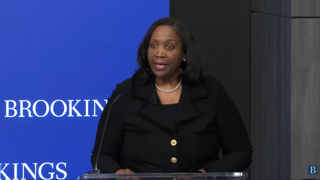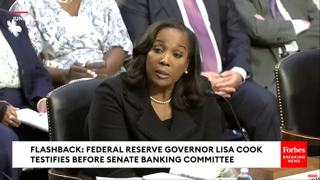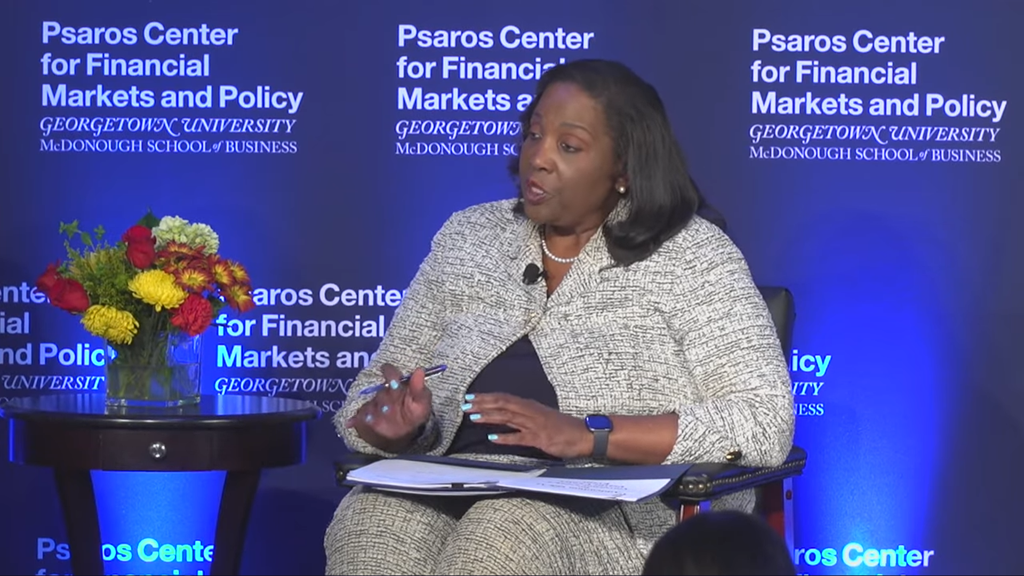
President Trump has ordered the creation of a special committee to investigate Federal Reserve Governor Lisa Cook, following allegations that she made false statements related to mortgage instruments. The directive, outlined in a White House memorandum released Friday, comes in the wake of a recent Supreme Court decision that clarified the limits of presidential authority to remove independent agency officials like Cook.
Explainer Understanding the Supreme Court’s Impact on Law and Liberty
The move marks a significant development in the ongoing debate over the balance of power between the executive branch and the legal protections afforded to officials at independent agencies such as the Federal Reserve. The investigation into Cook underscores the broader tensions between the president's desire to oversee executive branch personnel and the statutory safeguards designed to protect the independence of certain federal officials.
Supreme Court Ruling Sets New Limits
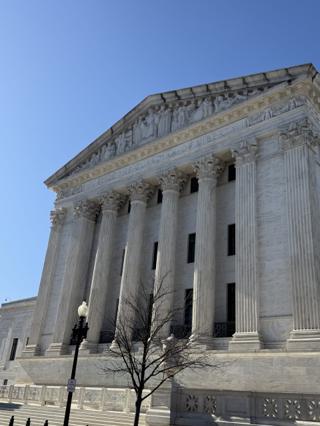
Trump’s renewed push to remove Cook follows the Supreme Court’s decision in Trump v. Cook. In that case, the Court held that the president cannot remove a Federal Reserve governor without cause and due process. The 5-4 majority opinion, written by Chief Justice John Roberts, emphasized that the president must provide a specific reason for removal and allow the official in question an opportunity to respond before any final action is taken. The Court did not rule on whether there was sufficient cause to remove Cook, who was appointed by President Biden, but made clear that she must be given a chance to contest the allegations against her. Read the decision.
The ruling represents a significant check on presidential power, reinforcing the principle that independent agency officials are entitled to procedural protections before being removed. This decision is likely to have implications for other independent agencies beyond the Federal Reserve, as it clarifies the legal process required for removal and affirms the importance of due process in such cases.
Details of the Investigation
According to the White House directive, the newly established committee will be composed of the president’s assistant for economic policy, the chair of the Equal Employment Opportunity Commission, and the director of the Office of Government Ethics. The committee’s mandate is to investigate whether Cook made false statements in connection with mortgage documents and to advise the president on whether there is legal cause for her removal under federal law, as interpreted by the Supreme Court. See the official memorandum.
The investigation process is designed to comply with the Supreme Court’s requirements. The committee is scheduled to hold an in-person hearing on November 5, which will be limited to four hours. Cook will be permitted to submit a written statement at least three days before the hearing and will have the opportunity to present arguments, written evidence, and witness statements. The committee may question Cook directly or authorize Department of Justice personnel to do so. All evidence to be used at the hearing will be shared with Cook in advance, and she may be required to provide documents or other materials as requested. While the hearing will not be open to the public, a transcript will be made.
Background and Legal Dispute
The current inquiry follows Trump’s initial attempt to remove Cook in August 2025. That effort was blocked by D.C. District Judge Jib Cobb, prompting the administration to appeal to the Supreme Court. The Court denied the administration’s emergency request to remove Cook while litigation was ongoing, instead requiring that Cook be given an opportunity to respond to the allegations. In his majority opinion, Chief Justice Roberts wrote that Cook must have an “opportunity to respond to the charges made against her … [before] a final decision [can] be made.”
Dissenting justices, including Clarence Thomas, Samuel Alito (joined by Neil Gorsuch), and Amy Coney Barrett, criticized the majority for limiting the president’s removal powers. Justice Thomas argued that the alleged mortgage fraud constituted sufficient cause for removal and that the relevant statute did not require notice or a hearing. Alito and Gorsuch contended that Trump was likely to succeed on the question of whether “for cause” removal applies to conduct that occurred before Cook took office. Barrett objected to the way the majority handled unresolved legal questions.
President Trump defended his actions, stating, “As President, it is my job to ensure the laws are faithfully executed, including by firing subordinates who cannot be trusted to tell the truth and follow the law.”
Implications for the Federal Reserve and Executive Authority
The dispute over Cook’s tenure highlights the ongoing debate over the independence of the Federal Reserve and the extent of presidential authority over independent agencies. The Federal Reserve is structured to insulate its governors from direct political pressure, a design intended to preserve the central bank’s independence in setting monetary policy. The Supreme Court’s decision and the subsequent investigation into Cook’s conduct are likely to be closely watched by legal experts, policymakers, and financial markets.
Supporters of Cook have not publicly responded to the latest inquiry. The White House has not indicated when a final decision on her removal might be made, leaving the outcome of the investigation uncertain for now.
The case is expected to set a precedent for how future disputes between the executive branch and independent agency officials are handled, particularly regarding the procedural protections required before removal. As the committee prepares for its November hearing, the broader questions about the balance of power between the president and independent agencies remain unresolved.