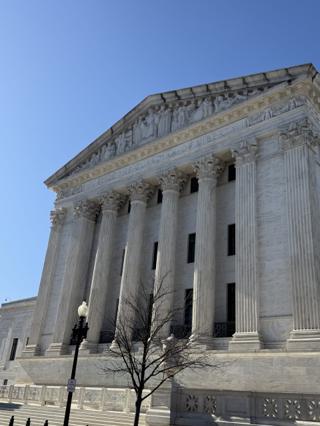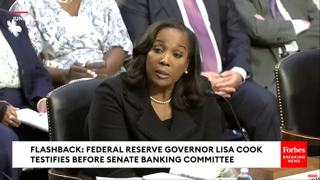
In a pivotal Supreme Court hearing, an attorney representing Federal Reserve Governor Lisa Cook acknowledged that President Trump possesses the legal authority to remove her from her position. This admission emerged during oral arguments in the case of Trump v. Cook, which addresses a request by the Trump administration to lift a lower court injunction currently preventing Cook's removal from her role at the Federal Reserve.
Supreme Court Hears Case on Trump's Authority to Fire Federal Reserve Governor
The core issue at stake in this case is whether the president can dismiss members of the Federal Reserve Board of Governors without providing due process. This question is particularly relevant in light of allegations against Cook regarding mortgage fraud that surfaced prior to her appointment. The case raises significant questions about the limits of executive power and the rights of federal officials, as it could set a precedent for how future administrations handle appointments and removals of federal officials.
Background and Reactions
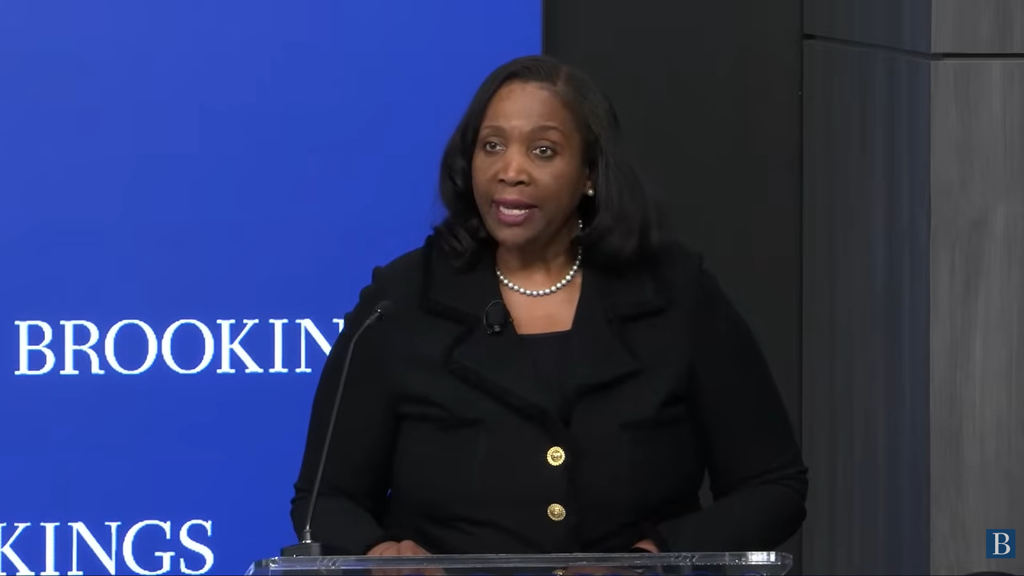
Cook was appointed to the Federal Reserve Board in 2021 and was subsequently fired by Trump in August 2025. Her attorney, Paul Clement, argued that her termination was unlawful. He asserted that pre-office allegations do not justify removal and emphasized that Cook was not properly notified of her dismissal or given an opportunity to contest the claims made against her.
During the hearing, Associate Justices Samuel Alito and Neil Gorsuch pressed Clement on the implications of his arguments. Justice Alito questioned whether firing notices should originate from an independent body rather than directly from the president. In response, Clement acknowledged that it could be the president who issues such notices but recommended a more careful approach to ensure due process. He stated, "If he’s gonna be the final decision-maker and there’s a due process right, then he needs to be a little bit careful and say, ‘These are the allegations.’" This statement underscores the complexities involved in balancing executive authority with the rights of federal officials.
Justice Gorsuch challenged Clement's stance, emphasizing that the statute grants the president the authority to make removal decisions. He asked, "How can it not be the president? The statute authorizes the president to make the removal decision. How could it be anybody else?" Clement conceded that the president indeed has the ultimate authority, affirming, "Yes, yes. At will. Right. Absolutely."
The legal debate centers on the interpretation of the Federal Reserve Act, which does not explicitly require a hearing or review for members removed "for cause." Justice Clarence Thomas highlighted this point during the questioning, suggesting that the law may not mandate due process in such cases. This interpretation raises concerns about the potential for executive overreach and the implications for the independence of federal institutions.
Clement's arguments reflect a broader concern among critics who argue that unchecked presidential power could undermine the independence of federal institutions, including the Federal Reserve. Supporters of Trump's authority, however, contend that the president must have the ability to remove officials who may not align with his administration's policies or ethical standards. This ongoing debate highlights the tension between executive power and institutional independence, a theme that resonates throughout American governance.
The case has drawn significant attention not only for its implications on the Federal Reserve but also for its potential impact on the balance of power within the executive branch. Legal experts note that the outcome could set a precedent for how future administrations navigate the complex landscape of federal appointments and removals.
As the Supreme Court deliberates on this matter, the implications for both Cook and the broader framework of executive authority remain significant. The decision could clarify the extent of the president's power in managing federal agencies and the rights of those appointed to serve in such roles. The justices are expected to issue a ruling in the coming months, which could reshape the landscape of federal governance and the relationship between the executive branch and independent agencies like the Federal Reserve. The outcome of this case will likely resonate beyond the immediate parties involved, influencing the dynamics of power and accountability in federal governance for years to come.