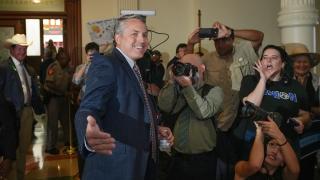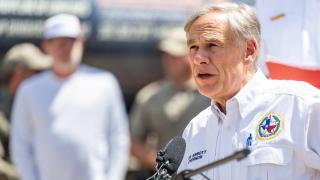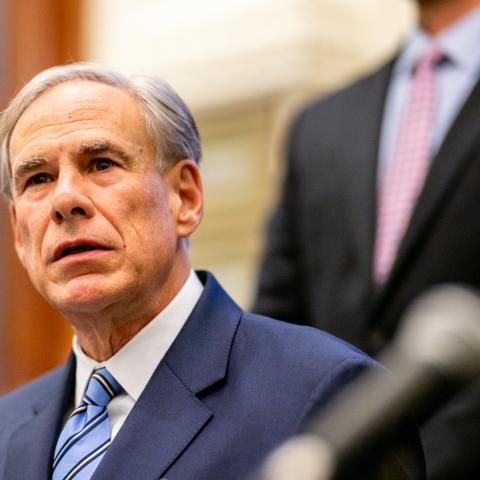
Texas State Rep. Brian Harrison is urging Gov. Greg Abbott to call an emergency legislative session to restrict gubernatorial emergency powers before newly elected Democrats assume office in January. The appeal comes as Republicans, who recently lost control of all statewide offices in Texas, retain legislative authority for several more weeks, sparking renewed debate over executive authority and the future of emergency powers in the state.
Explainer Redistricting Battles: How Maps Shape American Political Power
Democrats swept every statewide race in Texas on Election Day, winning the governorship, the Texas House, and the head of the Texas Senate, according to The Center Square. However, the new Democratic officials, including Governor-Elect Hinojosa, will not be sworn in until mid-January. This leaves a brief window in which Republicans still control the Legislature and the governor’s office, creating a period of transition and uncertainty over the direction of state policy.
Harrison’s Call for Action
Harrison, a Republican representing Waxahachie, has called for swift action by Abbott and the GOP-majority Legislature. He emphasized the urgency of the situation, stating that Republicans have “10 weeks to restore separation of powers and limit the emergency powers that Governor-Elect Hinojosa is set to inherit.” Harrison warned that without immediate legislative action, the incoming governor could use executive orders to advance new policies and potentially reverse many of Abbott’s directives.
“No governor, Republican or Democrat, should have unchecked emergency powers. Now that Texas has elected a Democrat governor, the urgency is undeniable … and inaction is intolerable. Never-ending emergency powers are antithetical to representative government and render people powerless,” Harrison said in a statement.
Harrison specifically urged passage of his previously filed bill, HB 911. The measure would prohibit a governor from suspending or modifying statutes, require legislative ratification of emergency orders after 30 days, and prevent reissuance of expired or rejected orders. The bill also mandates that emergency orders be narrowly tailored and subject to expedited judicial review, aiming to ensure that emergency powers are not used indefinitely or without oversight.
Debate Over Executive Authority
The push to limit emergency powers follows controversy over Abbott’s use of a 1975-era Disaster Declaration Act during the COVID-19 pandemic. Abbott relied on the law to impose lockdowns, business closures, and capacity limits, which led to multiple lawsuits from Republican lawmakers, business owners, and others who argued that the law was unconstitutional and granted too much power to the executive branch.
One high-profile case involved Dallas salon owner Shelley Luther, who was jailed for defying shutdown orders. The Texas Supreme Court later intervened and threw out a contempt order against her. Luther subsequently ran for office and was elected to the Texas House, winning reelection in the recent vote. The episode became a rallying point for critics of executive overreach.
Harrison and other lawmakers have argued that the current law allows a single official to both write and enforce laws, undermining the constitutional system of checks and balances. “Legislative bodies allowing a single executive branch official to both write and enforce laws is the biggest threat to our constitutional system of divided government and should be opposed irrespective of which political party runs the executive branch,” Harrison said.
Incoming Democratic Leadership and Transition
Governor-Elect Hinojosa, who is expected to take office in mid-January, has announced a bipartisan transition team and pledged to work with Republicans, according to The Center Square. Hinojosa is anticipated to reverse many of Abbott’s executive orders and has highlighted issues such as tax breaks for data centers during her campaign. The recent election also resulted in the ouster of Lt. Gov. Dan Patrick, who had championed a $2.5 billion film incentive bill signed by Abbott last year.
Despite Harrison’s repeated calls for special sessions on issues such as property tax reform, banning taxpayer-funded lobbying, and ending corporate welfare, Abbott has rarely responded by calling the Legislature into session. In 2023, Abbott did add executive emergency powers and COVID-vaccine mandate bans to a special session, but Harrison criticized the resulting legislation as insufficient to address the underlying concerns about unchecked executive authority.
Legislative Prospects and Next Steps
With a slim Republican majority remaining in the Texas Senate until the new officials are sworn in, passing new legislation during the transition period may prove difficult. Harrison has warned that if Abbott does not act before the new administration takes office, Hinojosa will “inherit the powers of a dictator” under current emergency powers laws. As of now, Abbott has not publicly responded to Harrison’s latest request for a special session.
The debate over executive authority and emergency powers is likely to continue as Texas prepares for a change in leadership. The outcome of Harrison’s push for reform could shape the balance of power between the legislative and executive branches in the state for years to come.